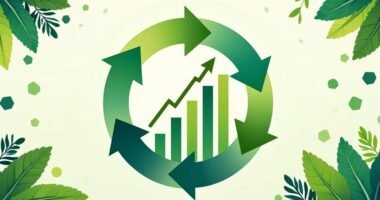
The ROI of sustainability has never been more evident, with businesses slashing costs through eco-friendly tweaks—like swapping old bulbs for energy-savers that pay back faster than a viral meme. Companies outperform rivals, dodge risks from wild weather or regulations, and tap into a $44 billion circular economy for revenue boosts and loyal customers. It’s a smart bet for long-term wins, where every green step uncovers even more profitable secrets ahead.
The Compelling ROI of Sustainability
In the world of modern business, the ROI for sustainability—think of it as the financial payoff from eco-friendly strategies—is quietly revolutionizing how companies thrive.
It’s not just about saving the planet; it’s about smart investments that boost the bottom line.
For instance, firms with solid green practices often outperform rivals over time, slashing operational costs through clever resource efficiency and waste cuts. Imagine swapping old lights for energy-efficient ones—it’s like giving your budget a caffeine boost, with payback periods that turn green upgrades into net profit wins. Real-world examples demonstrate that Gundersen Health saved $1 per sqft annually through effective sustainability initiatives.
Firms with solid green practices outpace rivals, slashing costs through savvy resource efficiency and waste cuts.
But wait, there’s more to this eco-game than just savings.
Neglecting sustainability is like ignoring storm clouds on the horizon; extreme weather events have already cost businesses a staggering $1.5 trillion globally from 2015 to 2021.
By weaving in sustainability, companies build resilience against supply chain hiccups and regulatory curveballs, turning potential risks into compliant, adaptive operations.
And let’s not forget revenue: sustainable products, like those in the circular economy, open doors to $44 billion in U.S. market value, drawing in eco-savvy consumers faster than a sale on organic coffee.
This ripple effect extends to brand equity, where a strong sustainability story boosts loyalty and investor appeal—picture your company as the reliable friend everyone wants at the party. Businesses are increasingly tracking their environmental impact through key performance indicators that quantify progress and demonstrate accountability to stakeholders.
Internally, it sparks employee engagement; workers flock to purpose-driven firms, hiking productivity and retention like a well-oiled machine.
As for the long game, sustainability crafts future-proof models, with tools evolving to measure those enduring benefits.
In short, businesses can’t afford to wait—ROI here isn’t a maybe, it’s a must, blending financial smarts with a dash of world-saving wit, and notably, 41% of executives believe companies are underperforming in assessing this vital metric.
After all, who knew being green could feel this profitable?