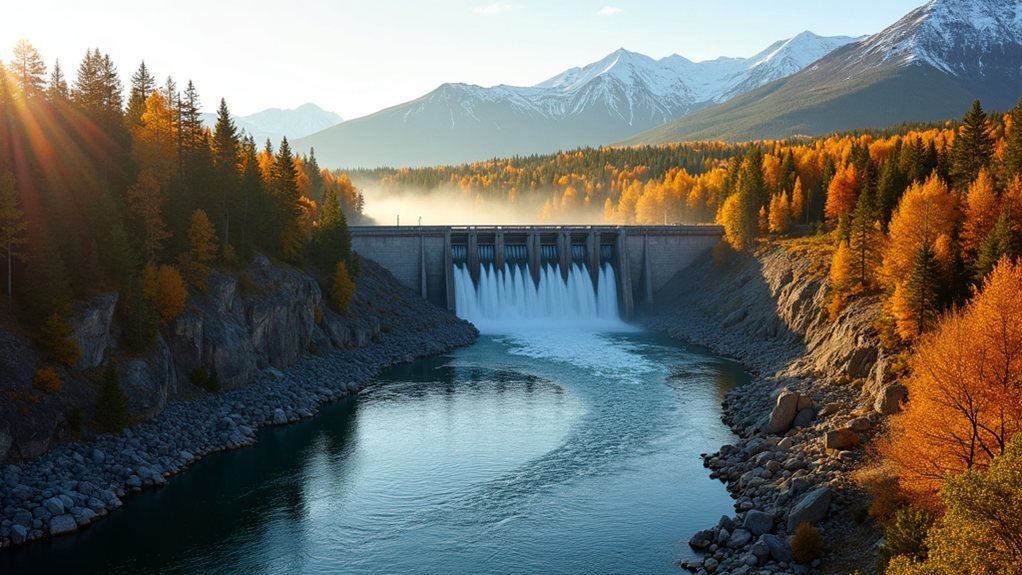
Canada’s Indigenous-led hydropower projects, like Innavik and Matawak, are shaking up the energy world much like a DJ at an eco-friendly rave. These projects blend clean energy with traditional ecological wisdom, helping communities ditch diesel like an old mixtape. By generating independent revenue and staying in tune with nature, they create sustainable energy symphonies that hum with economic growth and environmental health. Enthusiastic for more insights? Stay tuned for the backstage scoop.
Quick Overview
- Indigenous-led projects like Innavik and Matawak highlight sustainable, off-grid energy solutions that can redefine export standards.
- Transitioning from diesel to hydroelectric power supports Canada’s sustainability goals and enhances global energy export reputation.
- Indigenous communities managing energy projects integrate ecological knowledge, promoting resource management that meets international standards.
- Federal funding boosts Indigenous-run hydropower facilities, enhancing global energy independence and reconciliation efforts.
- These projects exemplify culturally aligned modern infrastructure, setting a model for international clean energy development practices.
While energy independence might sound as easy as switching off the lights before bed, the reality is far more complex, especially when discussing Indigenous-led hydropower projects.
Take the Innavik Hydro Project: a 7.5-megawatt marvel, blending tradition with innovation.
Situated by the Innuksuac River, it swaps diesel’s smoky charm for clean, hydroelectric zeal.
Trading diesel’s smoke for hydro’s spark, the Innuksuac River breathes fresh electricity.
Imagine, halving fossil fuel reliance by 50%, merely a teaser for the future—zero diesel by October 2024.
This clever fusion doesn’t just flip power switches; it’s a green imagination station.
The transition has significantly reduced noise and air pollution in Inukjuak, further improving the community’s quality of life.
Less greenhouse gas is like nature’s applause, and 700,000 tonnes not released? Standing ovation deserved.
Indigenous communities have long applied traditional ecological knowledge to guide resource management, ensuring that waterways and surrounding ecosystems remain healthy and resilient for generations to come.
Local employment opportunities have been prioritized, offering jobs to community members during both the construction and operation phases, enhancing social and economic well-being.
How Indigenous Partnerships Are Driving Economic Growth
Switching energy sources might look less like flicking a light switch and more like building a complex block tower. Indigenous partnerships are expertly stacking blocks, driving economic growth with hydropower projects. The Innavik Remote Hydro Project lights up Inukjuak with independent revenue, while Matawak Hydroelectric Power Plant empowers the Atikamekw and Innu nations. These initiatives craft pathways for investment, enriching communities from Manawan to Manitoba. With federal funding through programs like the Clean Energy for Rural and Remote Communities program, the projects have received nearly $17 million—$14.9 million for Innavik alone—no small change. Indigenous communities flex their economic muscles, controlling resources like pros at a game of Monopoly. Rooted in generations of stewardship, these communities draw on traditional ecological knowledge to ensure hydropower development aligns with the long-term health of local ecosystems and waterways. As these projects demonstrate the effectiveness of national funding, they redefine energy landscapes and economies, all while securing sweet, sweet independence.
Modernizing Infrastructure: Indigenous Contributions to Canada’s Clean Energy
Envision this: Canada, a land known for its majestic landscapes, is now setting the stage for a new kind of grandeur – the monumental boom in Indigenous-led clean energy projects. Beneath Canada’s frosty exterior lies a hotbed of innovation. Take the Innavik project, a trailblazing 7.5MW off-grid marvel that says adieu to diesel as it powers Inukjuak. It’s practically an energy makeover show. Meanwhile, the Matawak project, utilizing Hydro-Québec’s Matawin dam, aims for a 17MW splash in 2026. These projects aren’t just modernizing infrastructure; they’re transforming energy access with a dash of Indigenous wisdom. It’s clean energy-meets-Indigenous ingenuity. This funding, part of a broader reconciliation effort, is directed at enhancing community energy autonomy. Notably, the Eastmain-1 Development in northern Québec has already achieved Gold certification under the Hydropower Sustainability Standard, showcasing the potential of sustainable practices in hydropower projects. Aligning these energy initiatives with clearly defined sustainability strategy goals ensures that Indigenous-led projects deliver lasting environmental and economic benefits to their communities.