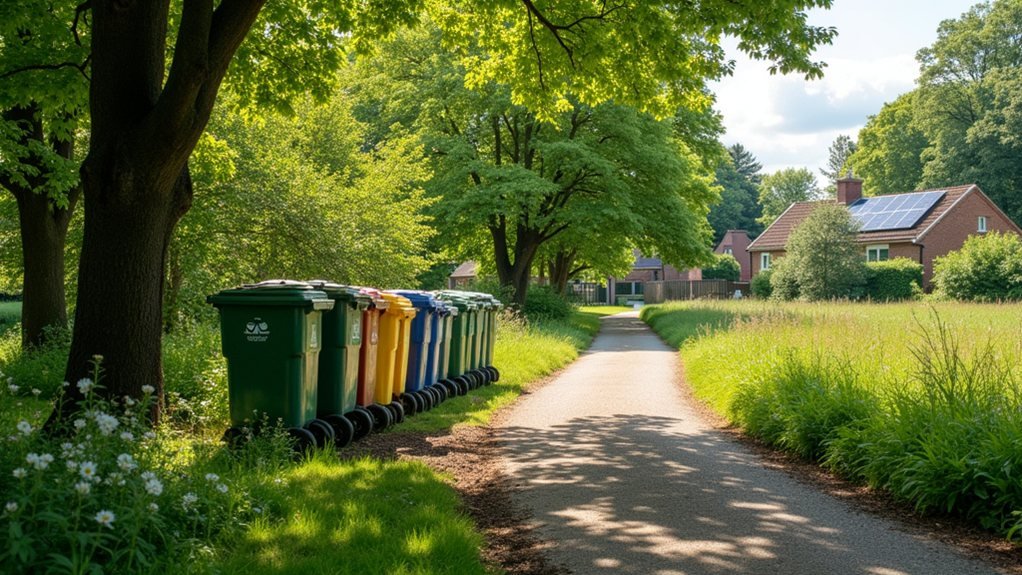

UK local councils are stepping up as energy leaders in the quest for net zero waste. They blend innovative strategies like product lifecycle extension and community repair cafés with exciting campaigns tackling food waste. For example, Bristol’s clever “Slim My Waste, Feed My Face” initiative faces down leftovers like a culinary superhero. Yet, challenges lurk, such as budget constraints and complex recycling rules. As councils aim for a zero-waste future, there’s much more intriguing progress on the horizon.
Quick Overview
- Westminster City Council utilizes an electric fleet powered by its own waste, showcasing leadership in sustainable waste energy management.
- Cardiff’s energy recovery facility converts waste into energy, promoting resource recovery and reducing landfill impact.
- Derry City and Strabane District Council focuses on extending product lifecycles, contributing to net zero waste goals.
- Bristol’s innovative campaigns effectively target food waste reduction, enhancing community engagement in sustainability efforts.
- Pembrokeshire County Council’s repair cafés encourage reuse, aligning with broader net zero waste strategies in local communities.
Implementing Innovative Strategies for Net Zero Waste Management
In the quest for net zero waste, local councils across the UK are rolling out a smorgasbord of innovative strategies that could make even the most seasoned environmentalist raise an eyebrow in admiration. From ambitious recycling targets to redefining waste as a resource, councils are getting creative. Derry City and Strabane District Council, for instance, champions product lifecycle extension, while Pembrokeshire County Council offers a treasure trove of repair cafés. Bristol’s “Slim My Waste, Feed My Face” campaign tackles food waste like a pro. With these initiatives, councils are not just thinking outside the bin; they’re revolutionizing waste management for a greener future. These councils follow the waste hierarchy, prioritizing prevention and reuse before considering recycling and disposal options. This collective effort is crucial as waste management accounts for 4% of UK greenhouse gas emissions, emphasizing the need for innovative solutions. Furthermore, local authorities are encouraged to maximize knowledge from the Net Zero Strategy to enhance their effectiveness in waste management initiatives.
Examples of Effective Waste Management Strategies by Leading Councils
Waste management strategies in the UK are like a fascinating new recipe in the culinary world, where local councils are the chefs whipping up innovative solutions to tackle the ever-growing challenge of waste. The Central Berkshire Councils Partnership showcases collaboration, while West Suffolk Council spices things up with reverse vending machines and a hefty investment in sustainability. The partnership aims to achieve 50% household recycling by 2031, reflecting the ambitious targets set by local authorities. Bromsgrove District Council’s initiative to expand into commercial recycling services in 2017 highlights the importance of diversifying service offerings to meet evolving customer needs.
Westminster City Council’s electric fleet is the cherry on top, powered by its own waste. Bristol City Council diligently aims for reduced household waste, and Cardiff’s energy recovery facility proves that clever management can turn trash into treasure. Many councils are now encouraging residents to adopt conscious consumption practices in their daily lives, which significantly reduces waste before it even enters the management system. Together, these councils serve up success on a sustainable platter.
Tackling Challenges in Sustainable Waste Management
Traversing the intricate landscape of sustainable waste management presents a formidable challenge for local councils across the UK. Financial pressures and budget constraints make ambitious recycling goals feel like chasing a mirage. With councils charging for additional bin services, residents face a dizzying array of waste separation options—some juggling ten different bins! In fact, 56 councils offer six or more bins for waste collection, adding to the complexity residents must navigate. Meanwhile, a staggering 90% of Northern Ireland’s waste flies under the monitoring radar, complicating future planning. Councils must evaluate supply chain impacts when selecting waste management providers to ensure environmental and social responsibility throughout the process. As councils scramble to meet government recycling targets, the reality is clear: achieving a zero-waste future isn’t just a lofty dream; it’s a tough puzzle that requires teamwork, creativity, and a sprinkle of humor. To tackle these challenges, councils must prioritize decarbonisation goals alongside their waste management strategies.