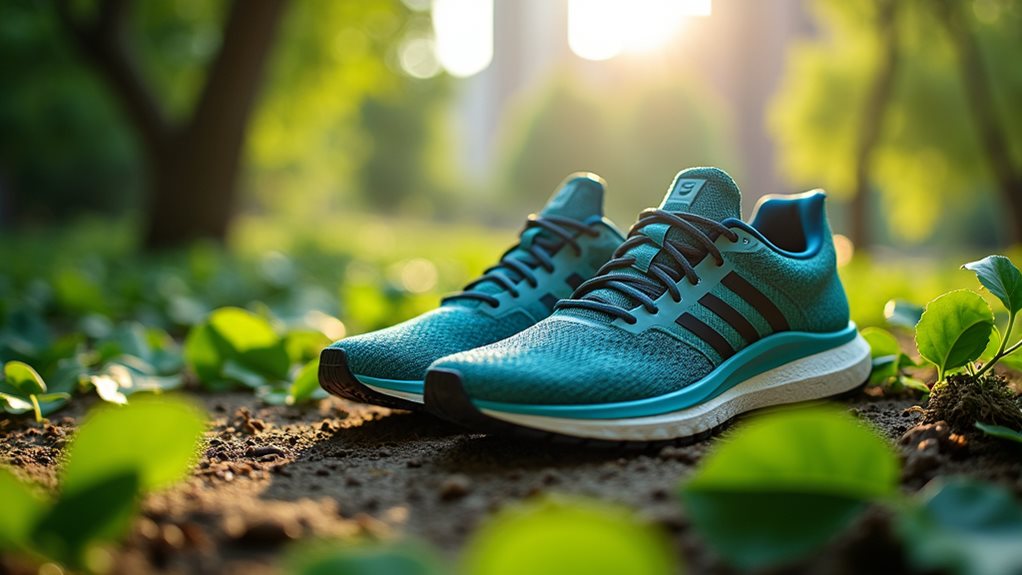

Scientists are revolutionizing running shoes, crafting designs that deliver cushioned landings and enduring durability—think On’s CloudTec tech, where recycled polyester and bio-based EVA bounce like a sprinter’s step without the eco-guilt. These innovations create closed-loop recycling, turning worn soles into fresh ones, like a phoenix in sneakers, slashing emissions while keeping performance fierce. Brands like Allbirds are pioneering this shift, proving sustainability doesn’t mean slowing down. Explore the full impact of these game-changing advancements.
Innovations in Sustainable Footwear
In the domain of sustainable running shoes, innovation is lacing up for a greener race. Scientists are pioneering designs that keep footwear in a perpetual loop, much like a marathon runner circling back for another lap. Take circular models, for instance: brands like Mount to Coast and BASF are crafting shoes for 2025 release that boast 100% recyclability, turning old soles into new ones without dumping them in landfills. This approach minimizes carbon emissions and ditches petrol-derived materials entirely, guaranteeing materials maintain their quality through multiple lifecycles—think of it as a shoe that refuses to retire, just keeps evolving.
Diving deeper, material innovations steal the show. Recycled polyester and bio-based EVA, derived from sources like corn starch, now form the backbone of many designs, blending eco-friendliness with the bounce athletes crave. Sure, PLA plastics sound like nature’s gift, but they often need industrial composting to break down, and even natural rubber might get a chemical makeup that dulls its biodegradability. It’s like borrowing from Mother Nature but returning it with a few strings attached. Proper material disposal methods are critical to ensuring these eco-friendly components fulfill their sustainability promise rather than contributing to environmental waste.
Life cycle assessments add a reality check, scrutinizing everything from greenhouse gas emissions to end-of-life recycling. Brands emphasize transparent supply chains—picture a shoe’s journey mapped out like a GPS for eco-warriors. Meanwhile, performance remains king; sustainable midsoles, such as those with recycled content in adidas Boost, deliver top-tier cushioning and durability, outlasting traditional pairs and slashing long-term resource use. For instance, On integrates CloudTec technology to provide cushioned landings and firm take-offs for better overall performance.
Leading the charge are companies like Allbirds and VEJA, who prioritize ethical sourcing and upcycled materials for uppers and laces. Similarly, On offers 100% recyclable shoes through their Cloudneo line, enabling users to return them for recycling and reducing waste. These shoes aren’t just green; they’re built to last, proving that sustainability and speed can high-five without compromise. In this race, science guarantees every step forward is one giant leap for the planet—faster, lighter, and hilariously resilient.