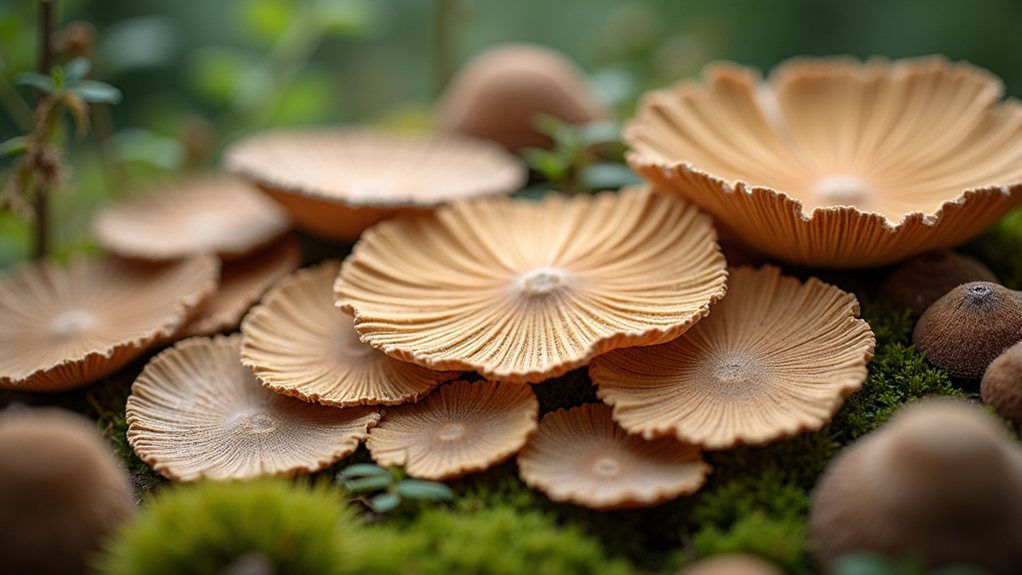
Mycelium leather is reshaping sustainable fashion, and it’s not just mushrooming out of nowhere! This fungi-based material emerges from agricultural by-products and is far kinder to our planet, emitting a fraction of the CO₂ compared to traditional leather. With a production process that uses minimal water and skips harmful chemicals, it yields a fully biodegradable product. As brands embrace this eco-friendly choice, the future looks bright. Curious what’s next for this green revolution? More insights await!
Quick Overview
- Mycelium leather production utilizes agricultural by-products, significantly reducing waste and promoting sustainability in fashion.
- The process emits only 2.4 kg of CO₂ per unit, drastically less than traditional leather.
- It requires minimal water—only 0.11–0.19 m³—compared to 17,127.8 liters for conventional leather.
- With a projected market growth from USD 15.9 million in 2024 to USD 211 million by 2031, demand is surging.
- Over 60% of fashion brands are adopting mycelium leather, showcasing a major shift towards eco-friendly materials.
The Production Process: Cultivating a Sustainable Alternative
In the world of eco-friendly innovations, mycelium leather stands out as a fascinating alternative to traditional animal hides, and its production process is like a backstage pass to nature’s very own craft show.
First, agricultural by-products are sterilized to create a clean growing space—think of it as prepping a fancy kitchen. Next, mycelium spores are sprinkled in, like adding secret spices, before a week-long incubation lets the fungi feast and grow. Unlike conventional synthetic fabrics, mycelium materials are completely biodegradable at the end of their lifecycle. Once harvested, the mycelium mat is shaped and dried, transforming into a texture reminiscent of leather. This process avoids harmful chemicals used in traditional leather production, making it an even more appealing choice for eco-conscious consumers. Additionally, its eco-friendly production uses minimal water and energy, setting it apart in sustainable practices.
It’s a delightful blend of science and artistry, proving that sustainability can be stylish!
Environmental Benefits: Reducing the Footprint of Fashion
Mycelium leather offers a stylish solution with a remarkably low carbon footprint, emitting just 2.4 kg of CO₂ per unit—compared to a staggering 22.48 kg for bovine leather. It’s not just a carbon-cutting marvel; it also conserves water, using a mere 0.11–0.19 m³ compared to cow leather’s 17,127.8 liters. Additionally, the production of mycelium leather requires significantly less land clearing, in contrast to traditional leather, which contributes to substantial biodiversity loss. Furthermore, mycelium production uses organic waste and sawdust, further reducing its environmental footprint. Plus, it sidesteps the chemical cocktail found in traditional tanning, keeping waterways cleaner. This innovation represents a significant step toward circular economy principles in fashion manufacturing. By choosing mycelium leather, fashionistas can strut their stuff while slashing emissions, saving water, and protecting biodiversity. Eco-friendly never looked so chic!
Market Potential: The Future of Mycelium Leather in Various Industries
With sustainability now a fashion statement rather than just an ethical choice, the spotlight shines brightly on mycelium leather as it steps into the limelight. Projected to skyrocket from USD 15.9 million in 2024 to USD 211 million by 2031, this fungi-derived material is catching the eye across various industries. Fashion brands are diving in, while automakers explore its potential for chic interiors. Even packaging is getting a makeover, going biodegradable. However, scalability remains a challenge for manufacturers. Unlike traditional materials, mycelium-based products offer proper disposal options that leave minimal environmental footprint when they reach end-of-life. As innovation surges and government incentives roll in, mycelium leather is poised to revolutionize our eco-conscious future, driving a global market growth at a CAGR of 45.3% from 2025 to 2031. Notably, over 60% of fashion brands are shifting to sustainable materials, highlighting the increasing demand for mycelium leather.