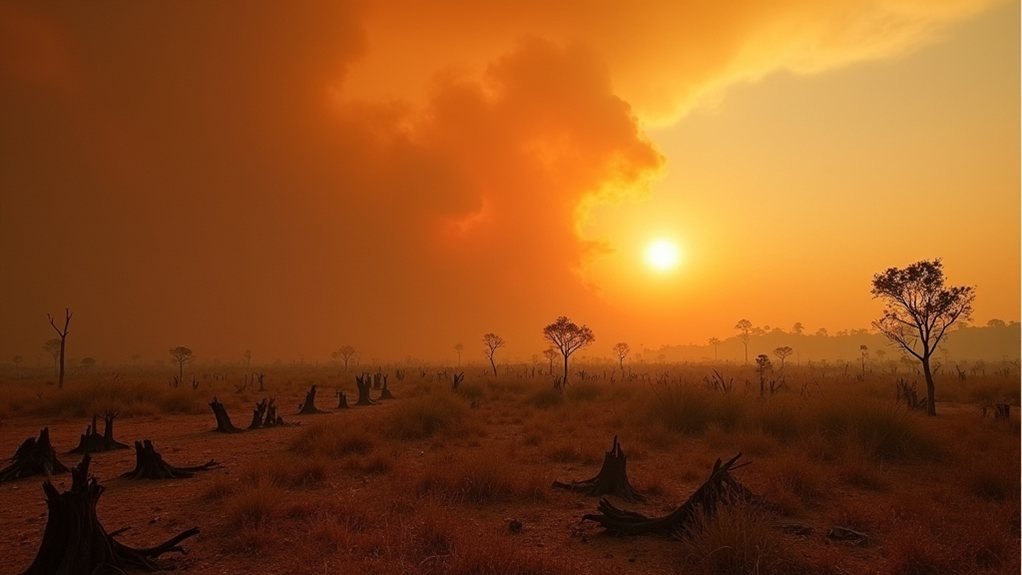

As climate change cranks up the heat, a record-breaking wildfire season is on the horizon. The tinderbox effect, fuelled by drought and warmer temperatures, increases fire risks across the U.S. Here’s the twist: areas like Alberta and California face the biggest challenges as extreme weather turns landscapes into kindling. However, proactive strategies like vegetation management and community preparedness can help mitigate these fiery threats. Stick around to discover even more effective ways to tackle this blazing issue.
Quick Overview
- Climate change has increased the risk of intense wildfires by 35% in areas like Los Angeles due to warmer temperatures and persistent drought.
- Over 43% of the U.S. is experiencing drought conditions, contributing to a heightened fire risk and creating a tinderbox effect.
- In 2025, the U.S. recorded over 3.9 million acres burned across nearly 44,500 fires, highlighting the severity of wildfire seasons.
- Effective vegetation management and fire-resistant building retrofits are essential strategies to mitigate wildfire risks in vulnerable communities.
- Community education and collaboration among agencies improve preparedness and response during wildfire emergencies, ensuring better safety measures.
How Climate Change Affects Wildfire Intensity?
As the world warms, the relationship between climate change and wildfire intensity becomes increasingly undeniable, akin to discovering that your favorite sweater shrank after one too many trips through the dryer.
The fire weather index (FWI) reveals that extreme fire conditions are now 88-152% more likely than in the preindustrial era. Warmer temperatures and persistent drought dry out forests, creating perfect conditions for wildfires. In regions like Los Angeles, the risk of intense fires has surged 35% due to warming. Consequently, climate change transforms once manageable blazes into roaring infernos, making the world’s forests feel like they’re on an unending fire drill. Furthermore, extreme fire years correlate with high fire weather indices, leading to increased large fires and significant carbon emissions. The devastating wildfires in Los Angeles exemplify how these conditions have resulted in catastrophic destruction, affecting communities and ecosystems alike.
As heat waves become more frequent and severe, climate-fire connections provide a clearer picture of how shifting weather patterns fuel fire behavior.
Key Factors Driving Record Wildfires
While many might consider wildfires simply a seasonal nuisance, the reality is that a complex web of factors is driving these record-breaking infernos to become more frequent and intense.
Drought conditions, as seen with 43% of the U.S. parched, create a tinderbox effect. When combined with warmer temperatures, the stage is set for wildfires to run rampant. Climate change is a major driver of this increasing fire activity, leading to larger and more frequent wildfires. In 2025 alone, over 3,997,080 acres burned in the U.S. across 44,470 fires.
Drought grips 43% of the U.S., turning landscapes into tinderboxes for rampant wildfires.
Further fueling the flames are the dry fuels, like grass and brush, that ignite faster than a gossip at a family reunion.
Regional hotspots, like Alberta and California, showcase how these elements align, making wildfires a fierce foe that communities must reckon with. A growing body of research also links shifting precipitation patterns and extended drought periods to longer fire seasons, underscoring the need for proactive management. Resilience planning and adaptive strategies become essential tools as communities confront the mounting fire risk.
Effective Strategies for Wildfire Preparedness
Wildfires may seem like an unstoppable force of nature, but communities have some powerful strategies at their fingertips to tackle this fiery foe. Effective vegetation management, like creating defensible spaces around homes, can greatly reduce risks. Picture fire-resistant retrofits as superhero capes for buildings, shielding them from ember attacks. Grazing animals serve as nature’s lawnmowers, cutting down fuel loads. Plus, solid emergency planning, from evacuation routes to Go-Kits stocked with essentials, guarantees everyone knows their role when flames threaten. With funding opportunities available for community projects, wildfire risks preparedness can turn potential disaster into a well-orchestrated safety dance. Furthermore, updated training and staffing plans ensure that teams are well-equipped to respond effectively when incidents arise.