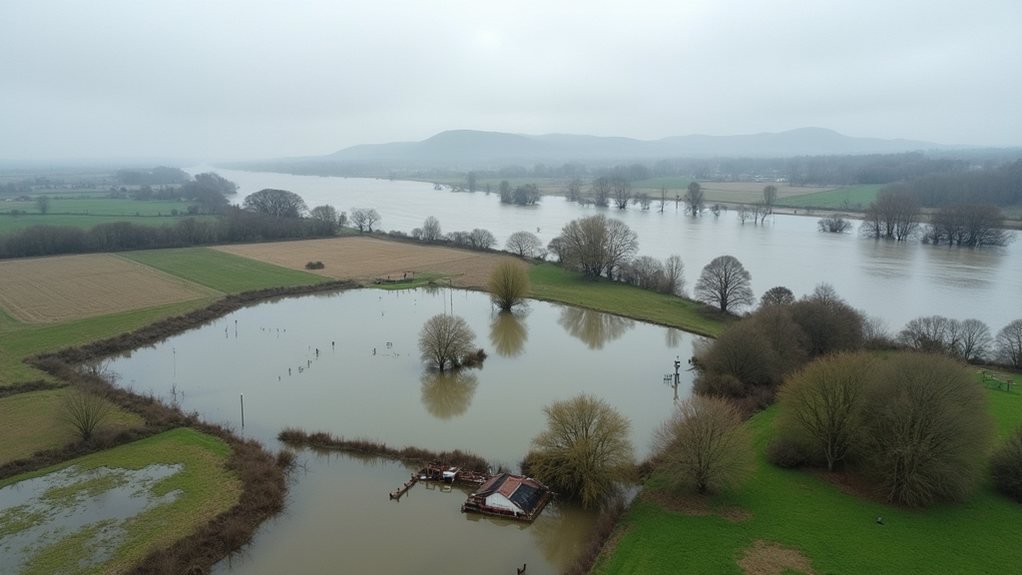

Massive flood risks loom large across England, Wales, and Scotland, with statistics like 6.3 million properties on the brink of disaster. That’s a lot of soggy underpants! Climate change is expected to ramp up these threats, potentially putting 8 million properties at risk by 2050. Effective strategies like nature-based solutions and adaptive pathways aim to bolster resilience. So, while the rainy days seem relentless, there’s hope on the horizon—stick around to learn how communities are combating the flood challenge.
Quick Overview
- Approximately 6.3 million properties in England are currently at risk of flooding, with a significant number facing deep flood threats.
- 275,000 properties in Wales are also at risk, highlighting widespread vulnerability across the nation.
- In Scotland, one in eight homes faces a medium risk of flooding, underscoring regional concerns.
- Future projections suggest that 8 million properties in England could be at risk by 2050, exacerbated by climate change.
- Major cities like London and Manchester are identified as critical flood hotspots needing urgent management strategies.
Current Flood Risks in England, Wales, and Scotland: What You Need to Know
What’s lurking beneath the surface of England, Wales, and Scotland? A tidal wave of flood risk!
In England alone, 6.3 million properties are under siege from water, with 163,300 poised to experience flooding over 30cm deep. Approximately 38% of all roads are currently in areas at risk from flooding, heightening concerns about infrastructure vulnerability.
Wales isn’t far behind, with about 275,000 properties at risk, while Scotland sees one in eight homes at risk of medium flooding. Approximately 342,436 properties are at risk of flooding in Wales as of April 2025, from the bustling streets of London to the serene landscapes of Scotland, communities brace for the deluge.
It’s a soggy situation that calls for vigilance and preparation—because when water decides to show up, it doesn’t knock first! Urban planning and flood risk assessment are essential tools in building resilient communities and safeguarding critical infrastructure against rising water threats.
Future Flood Risks From Climate Change: Projections and Implications
As climate change continues to reshape the landscape of England, Wales, and Scotland, the future flood risks paint a formidable picture for communities across these nations.
Projections indicate that 8 million properties could be at risk by 2050, with major cities like London and Manchester becoming flood hotspots. Increased rainfall intensity, combined with rising sea levels—potentially by over a meter by 2100—will exacerbate coastal flooding. Additionally, the frequency of intense storms could transform once-in-a-century events into annual occurrences. As drier summers lead to sudden downpours, the threat of surface water flooding will loom larger than ever. Furthermore, low water levels due to prolonged dry weather may lead to flash floods as dry soils struggle to absorb intense rainfall. An alarming 27% increase in homes at risk from flooding in England is projected, underscoring the urgent need for climate resilience measures. Increased risk will require adaptive planning and robust infrastructure to protect communities and critical assets.
Proven Strategies for Effective Flood Management and Mitigation
While the threat of flooding looms larger than ever across England, Wales, and Scotland, innovative strategies offer a glimmer of hope in the fight against this formidable foe.
Nature-based solutions—think re-meandering rivers and creating woodlands—act like nature’s sponge, soaking up excess water. Healthy catchments provide essential functions such as water retention, further enhancing these natural solutions. Additionally, the Flood and Coastal Erosion Risk Management (FCERM) strategy emphasizes ongoing collaboration with partners to ensure effective implementation of these initiatives.
Nature-based solutions, like re-meandering rivers and woodlands, serve as nature’s sponge, absorbing excess water and mitigating flood risks.
Sustainable drainage systems (SuDS) transform urban landscapes into flood-resistant havens, with permeable surfaces acting like a magic trick for stormwater.
Meanwhile, the Adaptive Pathways Program plans for the long haul, preparing for conditions decades ahead.
With a £5.2 billion investment, these strategies combine foresight and creativity, proving that when it comes to floods, preparedness is key.