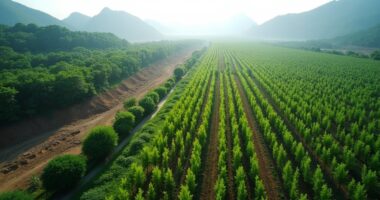

Tree-planting projects can sound like the ultimate nature win, but the truth is often a gut punch. With overall success rates hovering between 15-20%, it’s hard to celebrate. A staggering 44% of trees perish within five years, and nearly half of replanted forests take their final curtain call by ten years. Poor planning and care, along with species diversity issues, take a toll. It’s a bit like styling a tuxedo—great idea, but details matter. Curious about what makes a difference? Keep on exploring!
The Reality of Tree-Planting Success Rates
Have you ever wondered why tree-planting initiatives often seem to sprout more disappointment than success?
The reality is, despite the noble intentions behind these projects, survival rates reveal a sobering truth.
Studies show that tree-planting efforts achieve a mere 15-20% success rate, with a staggering 44% of trees dying within five years.
Tree-planting efforts often disappoint, with a mere 15-20% survival rate and 44% of trees perishing within five years.
By the ten-year mark, nearly half of replanted forests have succumbed to the inevitable fate of mortality.
Take, for instance, the Philippines’ National Greening Program, which managed to achieve only one-tenth of its ambitious goals.
Meanwhile, Sri Lanka’s mangrove program found that in 9 out of 23 sites, not a single plant survived.
These failures often stem from unrealistic government targets and a lack of follow-up care.
It’s as if they’re throwing seeds into the wind, hoping for a forest to magically sprout.
But what exactly trips up these initiatives?
A common culprit is the planting of single species, which leaves forests vulnerable to disease, much like a single cookie flavor at a party—eventually, someone gets bored and leaves.
Competing land use and changing climate conditions further complicate matters.
And let’s not forget poor planting techniques, which often lead to a quick demise for young saplings.
The first-year mortality rate averages a staggering 18%, as if the trees are playing hide-and-seek with survival. Some sites achieve over 80% survival after five years if the conditions are favorable.
Urban trees face their own set of challenges, with annual mortality rates varying from nearly zero to a dizzying 68.47%.
Location-specific factors can heavily influence survival, making each planting location a gamble. Evaluate if tree planting aligns with overall sustainability strategy is crucial for ensuring the long-term success of these initiatives.
Implementing agroforestry systems could significantly improve tree survival rates by combining trees with crop production for mutual benefits.
In a world where tree planting is sometimes used as corporate “greenwashing,” flashy events overshadow the critical need for long-term care.