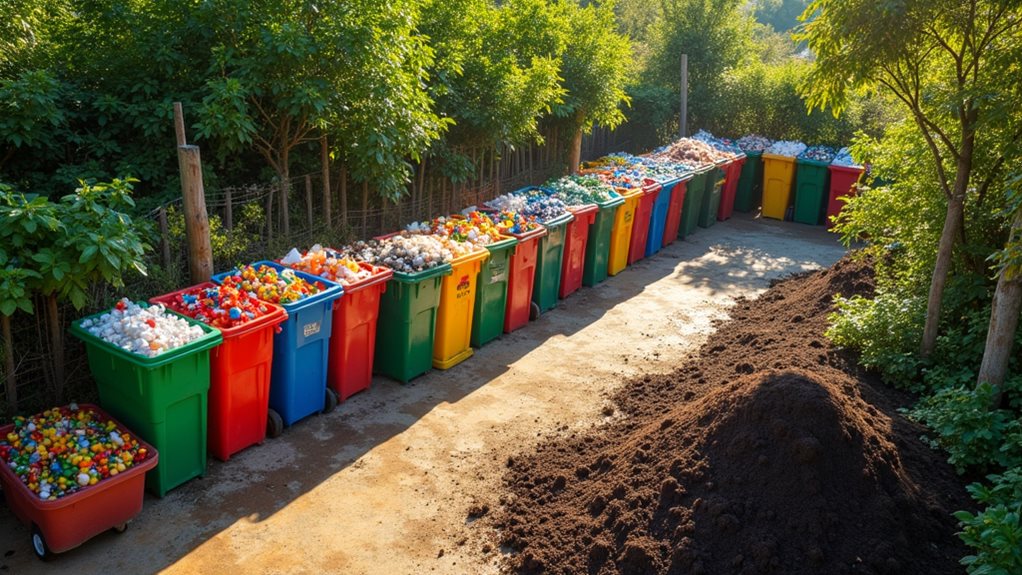

In a world where the phrase “reduce, reuse, recycle” has become almost as common as “What’s for dinner?” the principles of a circular economy in waste management are stepping into the spotlight, transforming how we think about trash. Instead of the old linear “take-make-dispose” model, where products live a short, unsatisfying life before ending up in landfills, the circular economy invites us to embrace a more sustainable way of living.
Picture it as a never-ending party where products are passed around, reused, and cherished rather than tossed aside.
At the heart of this change lies the goal of eliminating waste and pollution through smart design. It’s like fashioning a pair of jeans that can be worn, repaired, and recycled multiple times, rather than a one-hit-wonder that gets discarded after a season. This shift not only boosts the longevity and repairability of products but also keeps materials in use at their highest value. Minimization of waste is a critical goal that drives the circular economy, ensuring that every resource is utilized to its fullest potential. Waste management is central to circular economy principles, emphasizing the importance of managing resources responsibly.
Think of it as a well-organized potluck dinner; everyone contributes something delicious, and nothing goes to waste.
But let’s not forget the challenges that come with this ambitious shift. Moving to circular waste management involves high upfront costs and requires a change in consumer behavior. It’s not just about telling people to recycle; it’s about making it easy and appealing. Continuous reuse of materials represents the foundational concept that distinguishes circular systems from traditional linear approaches.
Innovative technologies like IoT sensors and AI-driven sorting systems are here to help, acting like the ultimate party planners that guarantee every piece of waste finds a new purpose.
With supportive policies, like landfill bans and recycling targets, the road to a circular economy becomes clearer. When executed well, these practices not only reduce landfill waste but also create green jobs and improve resource efficiency.