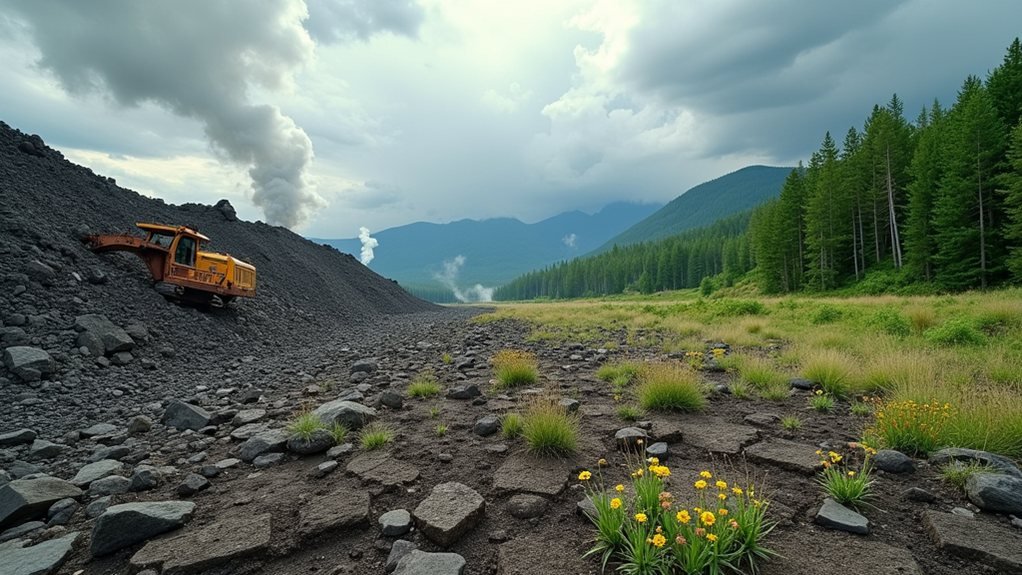

A recent tribunal has spotlighted the alarming environmental damage caused by Canadian mining companies, underscoring their role in biodiversity loss. From poisoning waterways to clearing essential habitats, these operations are not just mining minerals—they’re digging their own graves in the ecological narrative. It seems profit often trumps protection in this game. Fortunately, solutions exist! By prioritizing community rights and strengthening regulations, we can forge a path towards sustainability and safeguard our planet’s riches. Want to know how?
Quick Overview
- A tribunal has linked Canadian mining operations to significant biodiversity destruction across Latin America, particularly affecting local ecosystems and wildlife.
- Evidence shows that Canadian companies’ mining practices contribute to habitat loss, endangering numerous species and causing long-term ecological damage.
- Mining activities frequently violate Indigenous rights, leading to further biodiversity loss and threatening the cultural identity of affected communities.
- Contaminated water sources and toxic emissions from Canadian mines have severely impacted fish populations and overall biodiversity in regions like British Columbia.
- Strengthening legal frameworks and community engagement is essential to hold Canadian companies accountable for their environmental and social impacts in mining.
Key Cases of Rights Violations in Mining
What happens when the quest for shiny gold and rare minerals runs headlong into the rights of local communities? Chaos, it seems.
Take the Belo Sun project in Brazil, which disregards Indigenous consent, bulldozing through the Xingu territory like a bulldozer at a picnic. This project is just one example of the over 600 allegations of human rights abuses linked to large-scale mining operations. Additionally, the tribunal has called for Free, Prior, and Informed Consent to be respected in such projects.
Belo Sun tramples Indigenous rights in Brazil, bulldozing Xingu territory with reckless abandon.
Meanwhile, in Chile, Aclara Resources is deforesting protected areas, playing fast and loose with environmental standards. Responsible practices like sustainable forest management can help balance biodiversity protection with resource use.
Over in Argentina, the Jáchal River mining operation is turning water into a toxic soup, while Canada’s uranium mines are spewing radioactive dust.
It’s a game of high stakes, where the only winners are companies, and communities are left to pick up the pieces.
What the Tribunal Found About Mining and Biodiversity
Amid the cacophony of mining operations clashing with local rights, the spotlight now shines on the courtroom dramas that reveal the stark realities of biodiversity loss.
The tribunal uncovered alarming truths: gold mining in Serbia threatens 143 species, while coal mines in British Columbia leach toxic selenium, decimating fish populations. Moreover, the toxic gold mining along the British Columbia-Alaska border poses a significant threat to salmon and eulachon populations that Indigenous peoples rely on for food security and cultural identity.
Additionally, mining in the Amazon endangers Indigenous territories and unique ecosystems. Contaminated water sources and habitat destruction leave wildlife, like the Westslope cutthroat trout, gasping for survival. Reports indicate that Canadian corporations are involved in projects that significantly harm local biodiversity across Latin America.
Each finding paints a grim picture, showcasing the urgent need to address ecological devastation in the name of profit. Conservation efforts such as habitat protection and targeted species recovery programs are essential to halt and reverse these trends.
Recommendations to Tackle Mining Impunity and Protect Ecosystems
While it may seem intimidating to tackle the complex web of mining impunity and its impact on ecosystems, a multi-faceted approach can pave the way for meaningful change. Strengthening legal frameworks is key, ensuring mining companies prioritize community and environmental welfare. Training programs for law enforcement can spotlight criminal activities, while technology like drones and AI can monitor high-risk areas—think of them as the superheroes of eco-protection! Moreover, addressing the issue of abandoned mines can significantly reduce the risks associated with illegal mining and improve community safety. This is particularly crucial as the growing global demand for minerals exacerbates the threat of illegal mining activities. Collaboration among governments, communities, and industries fosters trust and transparency. Finally, promoting alternative livelihoods can help communities thrive without resorting to illegal mining. Together, these strategies create a sustainable future for both people and nature. Rehabilitation techniques such as site restoration help recover ecosystems and reduce long-term environmental harm.