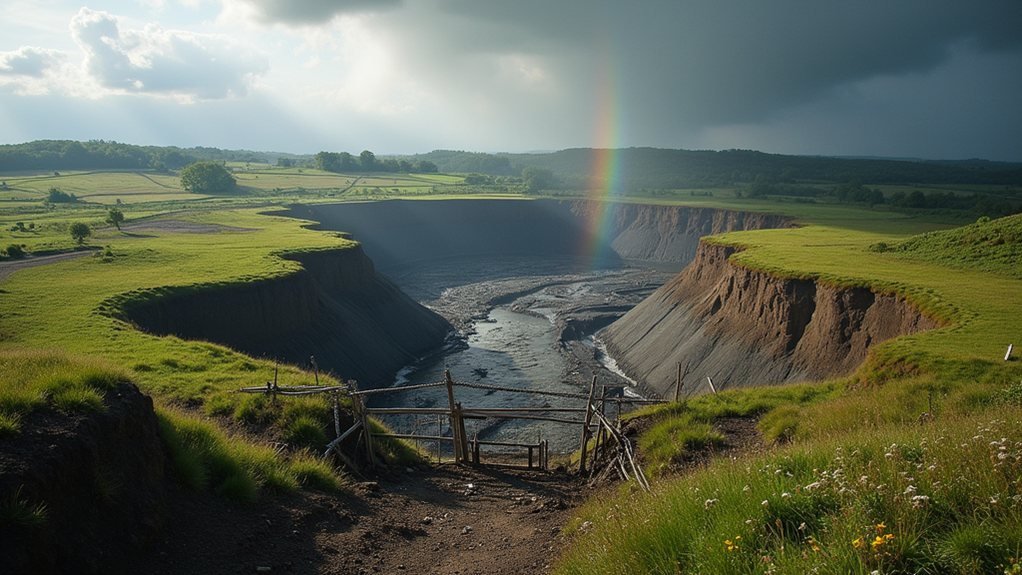

In the UK, coal mining and data centers are sparking protest waves reminiscent of a well-choreographed dance-off between industrial power and grassroots activism. Picture activists swarming around mining projects like a determined hive, challenging not just the coal giants but also the digital behemoths hogging electricity. Legal wrangling and creative protests—from kayak blockades to visual chalk art—are just part of this spirited showdown. Discover the riveting dynamics as communities rally to protect their air, water, and future.
Quick Overview
- The northern coalition opposes Woodhouse Colliery, backed by over 1,000 objections against coal mining proposals.
- Community resistance likened to a rally of bees generates widespread awareness and mobilization against coal infrastructure.
- Closure of Ratcliffe-on-Soar power station signifies success in phasing out coal, pressuring remaining coal infrastructures.
- Legal battles and public scrutiny place mining projects under intense examination, highlighting tensions with fossil fuel companies.
- Creative protests, such as coal shipment blockades, showcase diverse tactics against environmentally harmful mining practices.
How Coal Mining Opposition Shaped UK Activism
In the vibrant tapestry of UK activism, few threads are as influential as the ever-evolving opposition to coal mining. Envision this: February 2018, a northern coalition forms against Woodhouse Colliery. Like assembling a superhero squad, groups like Keep Cumbrian Coal in the Hole, Friends of the Earth, and others unite. Their trick? Turning isolated efforts into symphonies of resistance. Imagine over 1,000 objections, a community rallying like bees around their queen. Imagine legal tussles worthy of courtroom dramas. Insurance giants faced the wrath akin to receiving coal in their Christmas stockings. Amid these battles, a profound highlight came when the Climate Change Committee indicated that coal use in steel could be eliminated by 2035, further fueling the sustainability argument. The closure of Ratcliffe-on-Soar power station in September 2024 further underscores the nation’s significant strides towards phasing out coal. Global momentum has reinforced these local efforts, with IEA projections suggesting that renewable energy capacity will continue to expand rapidly, making fossil fuel investments increasingly difficult to justify. Grassroots activism? More like grassroots revolution. Cue applause.
Navigating Modern Environmental Activism Against Data Centers
Imagine this: data centers sprouting up like mushrooms after rain, but unlike nature’s fungi, these digital behemoths come with consequences disguised in sleek architecture.
Their dazzling facades mask a voracious appetite for energy, guzzling potentially 12% of U.S. electricity by 2030. Cooling operations sip water like parched camels, leaving communities dry. With the urgent need to stop the unrestrained growth of these facilities, activists stress the importance of immediate action.
While tech giants flex their green credentials, emissions spike—their dirty little secret. Low-income neighborhoods bear the brunt, as if life’s a game of environmental roulette. Communities near data centers face disproportionate harm, especially Black neighborhoods that struggle with increased air pollution and water contamination. As regions grapple with these pressures, experts warn that water scarcity concerns are intensifying in areas where data center cooling demands compete directly with municipal and agricultural water needs.
Activists like Food and Water Watch aren’t playing nice, rallying allies to halt these energy-hungry colossi before they swallow whole cities.
Modern Climate Protest Tactics: From Coal Mining to AI
The modern landscape of climate protest unfolds like a high-stakes chess game, where activists cleverly deploy tactics ranging from coal mining blockades to tech office disruptions. Picture kayaks challenging colossal coal shipments—David versus Goliath with nautical flair. In Germany, Ende Gelände’s human barricades herald the urgency of climate action. Meanwhile, in the concrete jungle, tech giants aren’t spared. Activists splash water and chalk on tech office facades, spotlighting AI’s energy-eating habits. It’s imaginative theater with real-world consequences, echoing louder than Santa’s flashy Christmas lights. Fossil fuel villains counter with cunning PR sorcery, spinning tales to muddy greens. Efforts to mislead the public about the realities of climate science often fuel confusion and inaction. Cue dramatic plot twists. Environmentalists argue that addressing waste at its source, through waste prevention strategies, is far more effective than relying on recycling or recovery efforts alone. As communities near Meta’s data centers experience significant water stress, climate protests are increasingly highlighting the environmental strain caused by tech-driven infrastructure expansion.