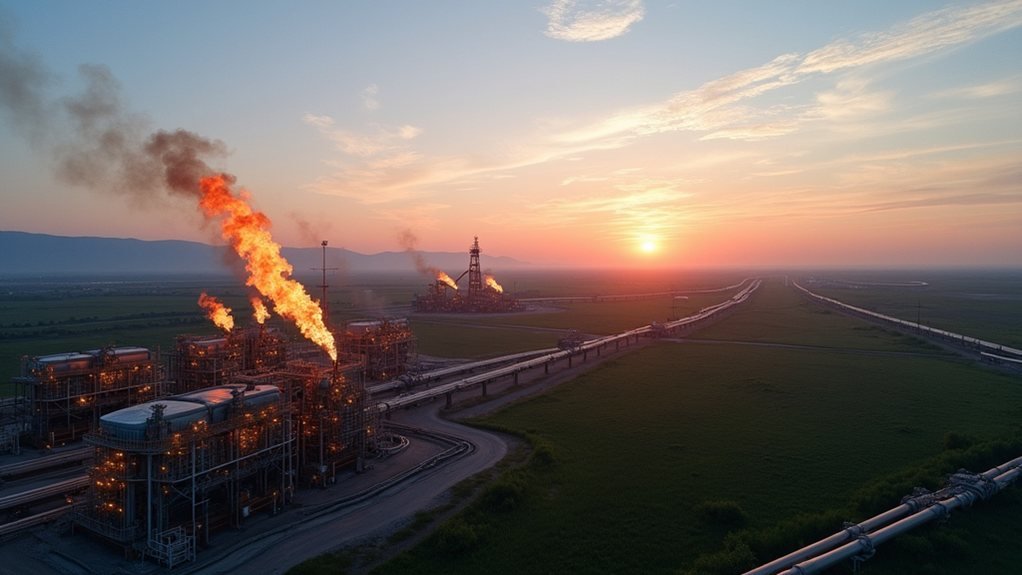

Canada is set to tackle methane emissions head-on by 2026, implementing strict flare bans in the oil and gas sector. With a goal of slashing methane emissions by 72% by 2030, these measures are no small potatoes. Operators will need to demonstrate that gas can be utilized productively, or it’s a no-go on flaring. So, if you think this is just about saving the planet, think again—it’s also about boosting the economy. Curious about how to comply?
Quick Overview
- Canada aims to reduce methane emissions by 72% by 2030, significantly impacting oil and gas operations.
- New regulations will prohibit routine flaring, requiring operators to demonstrate productive use of gas by 2026.
- Alberta accounts for 68% of Canada’s methane emissions, making it a key focus for flare bans and reduction efforts.
- Enhanced flaring regulations are part of Canada’s broader strategy to achieve net-zero emissions by 2050.
- Compliance with Leak Detection and Repair (LDAR) programs and regular inspections is essential for reducing methane emissions in the oil and gas sector.
What You Need to Know About Canada’s Methane Emission Targets by 2026?
What if Canada’s ambitious methane emission targets were the secret sauce to a greener future?
With a primary goal of cutting methane emissions by 75% from 2014 levels by 2035, Canada is moving fast. By 2030, the aim is a 72% reduction, already achieving a 40-45% drop since 2012. Alberta, home to 68% of methane emissions, plays an essential role. New regulations kicking in 2028 will prohibit most venting, tightening the screws on leaks. The majority of methane emissions in Canada originate from oil and gas production, highlighting the need for significant change in this sector. These regulations are expected to lead to a cumulative greenhouse gas emissions reduction of 304 megatonnes CO2 equivalent by 2040.
While the cost to implement these changes is steep—$15.4 billion—Canada hopes that cleaner practices will ultimately lead to a stronger economy. These initiatives may also create opportunities for carbon offset projects that can be traded in emerging carbon markets to further incentivize emission reductions.
How to Comply With Methane Reduction Guidelines?
Maneuvering the maze of methane reduction guidelines might feel like trying to find your way through a cornfield at night—challenging, but definitely doable with the right map. To comply, operators must embrace Leak Detection and Repair (LDAR) programs to spot leaks, perform annual inspections, and maintain continuous monitoring systems. Methane emissions account for approximately 13% of total greenhouse gas (GHG) emissions means that every small reduction can significantly impact overall climate goals. Additionally, new facilities must comply with these regulations by January 1, 2028 to ensure they are contributing to emission reductions from the outset. Prohibitions on venting mean low-bleed alternatives must take center stage. Facilities can choose between prescriptive and outcome-based compliance pathways, making it a bit like picking your favorite ice cream flavor. Regular maintenance and effective gas destruction will keep emissions in check, ensuring a smoother ride to those 2030 targets. Companies should implement direct monitoring methods to accurately measure GHG emissions and validate their reduction efforts.
How Flaring Regulations Affect Methane Emissions in Oil and Gas Operations?
While flaring may seem like a necessary evil in oil and gas operations, regulations are tightening the reins on this practice to combat methane emissions. With prohibitions on routine flaring and strict limits on venting, operators must now prove their gas can’t be used productively. This shift has already shown results, as British Columbia cut annual flare volumes by 23% since 2006. These regulations represent important climate mitigation efforts that directly address the causes of climate change rather than just preparing for its consequences. With a federal goal of slashing methane emissions by 72% by 2030, these regulations not only target methane but also tackle volatile organic compounds, making the air cleaner and safer for everyone—sort of like a gust of pure, untainted air! The need for reducing methane emissions is crucial, as it contributes to 25% of human-caused global warming. Additionally, the estimated cumulative reduction of methane emissions is projected to be 304 megatonnes of CO2 equivalent from 2028 to 2040.