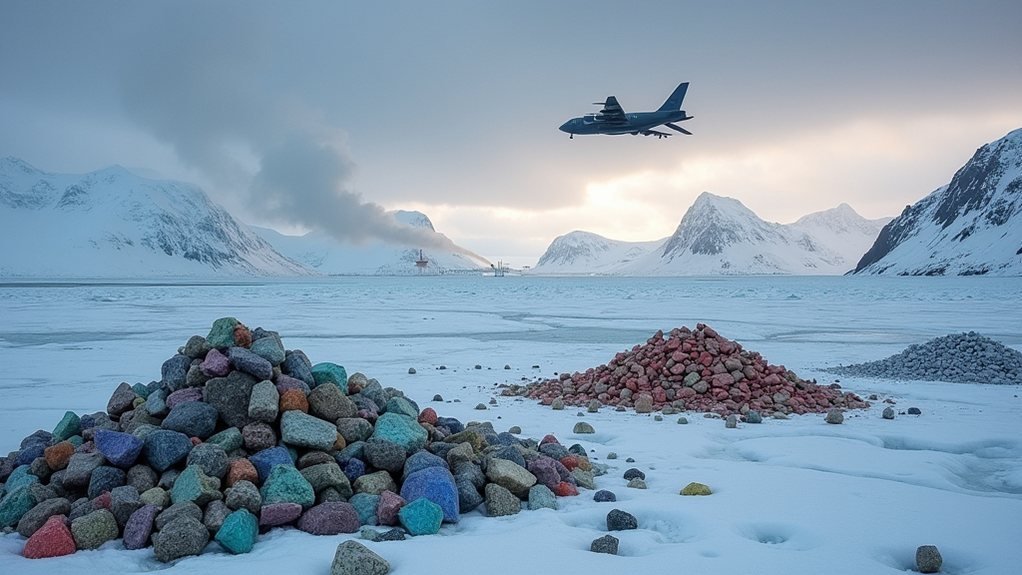

The ongoing tariff threats from the U.S. are stirring up a storm in its relationship with Europe, turning economic disputes into high-stakes games. Picture the U.S. wielding a 50% tariff sword while Europe scrambles to protect its trade balance. Meanwhile, Trump’s Greenland Minerals Deal adds another layer of intrigue, granting total access to precious resources but also complicating military alliances within NATO. Curious about how these elements intertwine? There’s more to this unfolding saga!
Quick Overview
- The U.S. threatens to escalate tariffs on EU imports up to 50%, heightening trade tensions with Europe.
- Trump’s Greenland Minerals Deal aims for strategic access to valuable resources, impacting military and economic dynamics in the Arctic.
- Ongoing tariff disputes and the trade balance deficit with the EU are straining U.S.-European relations significantly.
- Increased military presence from NATO allies in Greenland may alter collective defense strategies amid rising tensions.
- The unpredictable nature of Trump’s foreign policy is prompting European leaders to reevaluate their strategic responses.
How Tariff Threats Are Shaping US-European Relations
As the world watches with bated breath, the ongoing tariff threats between the United States and Europe are transforming the landscape of their relationship, like a dramatic plot twist in a political thriller. The stakes are high, with tariffs soaring to unprecedented levels, reminiscent of a soap opera cliffhanger. The Turnberry Agreement promised significant EU investments in U.S. manufacturing, but the looming tariffs add tension. Companies are increasingly facing pressure to examine supply chain impacts that could result from these trade disputes, including environmental and social consequences across borders. With trade balances shifting and the EU’s surplus narrowing, both sides are feeling the pressure. As negotiations unfold, one can only hope for a resolution that doesn’t involve throwing a metaphorical pie in the face of diplomacy. The U.S. has threatened to raise tariffs on EU imports to 50% if tensions continue to escalate. In 2024, the U.S. recorded a trade balance of -$235,873.9 million with the EU, highlighting the growing economic strain.
Key Components of Trump’s Greenland Minerals Deal
While many may find the intricacies of international agreements tedious, the key components of Trump’s Greenland Minerals Deal are anything but boring.
This deal grants the U.S. total, perpetual access to Greenland’s resources, ensuring operations continue indefinitely, even post-independence from Denmark. Additionally, discussions may involve potential stationing of additional U.S. forces at bases in Greenland to enhance security in the region.
With substantial reserves of rare earth minerals—like gold and gallium—Greenland’s Kvanefjeld and Tanbreez deposits rank among the world’s largest. In fact, Greenland ranks eighth globally in rare earth reserves, making it a strategic asset for the U.S.
The U.S. Export-Import Bank‘s investment in mining highlights a commitment to bolster American firms. These investments could be strengthened through sustainable investment approaches modeled after Community Development Finance Institutions.
Ultimately, this deal embodies a strategic push for military and resource dominance in the Arctic, ensuring America stays in the game, no matter the weather.
Military and Economic Consequences of Greenland Minerals Deal for NATO Allies
The implications of Trump’s Greenland Minerals Deal extend far beyond a simple exchange of resources; they ripple through military alliances and economic landscapes like a stone tossed into a pond. Increased military presence from NATO allies in Greenland, along with heightened tensions, raises questions about collective defense. Trump’s tariff threats, which toy with Danish sovereignty, could shatter decades of NATO cooperation, treating borders like bargaining chips. Meanwhile, local Greenlanders feel left out of decisions affecting their land. As economic strains simmer, the Arctic’s strategic importance transforms, leaving allies scrambling to adapt to this new game of geopolitical chess. This shift comes as Trump announces a “framework for a future deal” following discussions with NATO Secretary General Mark Rutte. The unpredictability of Trump’s foreign policy has left European leaders strategizing openly about potential retaliation against U.S. economic coercion.