
Oil sands, a mix of sand, clay, and bitumen, contribute a hefty 28% to Canada’s greenhouse gas emissions, casting a shadow on climate goals. This energy-intensive extraction not only complicates the country’s environmental ambitions but also highlights the tension between oil production and sustainability. Despite the strides in decarbonization, like carbon capture technologies, the challenge remains formidable. It’s a classic case of “how to have your cake and eat it too,” with a side of climate turmoil. There’s more to the story!
Quick Overview
- Oil sands operations contribute 28% of Canada’s greenhouse gas emissions, undermining national climate goals.
- Production growth in oil sands complicates Canada’s commitment to reducing emissions and achieving climate targets.
- The energy-intensive extraction methods of oil sands lead to higher emissions than conventional oil production.
- Despite efforts for decarbonization, oil sands remain the most expensive and polluting oil production source.
- The Pathways Alliance aims for net-zero emissions by 2050, but immediate action is crucial to address current emissions levels.
What Are Oil Sands and How Do They Impact Emissions?
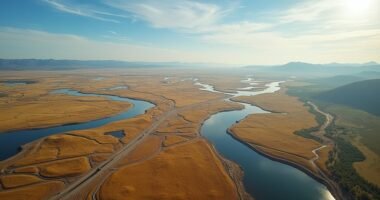
Imagine a vast expanse of earthy delight, where grains of sand, clay, and a gooey substance known as bitumen come together to form a unique natural phenomenon: oil sands.
This mixture, often miscalled tar sands, is primarily found in Alberta, Canada, covering an area larger than England. Bitumen, thick and sticky like cold molasses, requires significant processing to transform into crude oil. The Athabasca deposit is the largest and most developed oil sands project in Alberta.
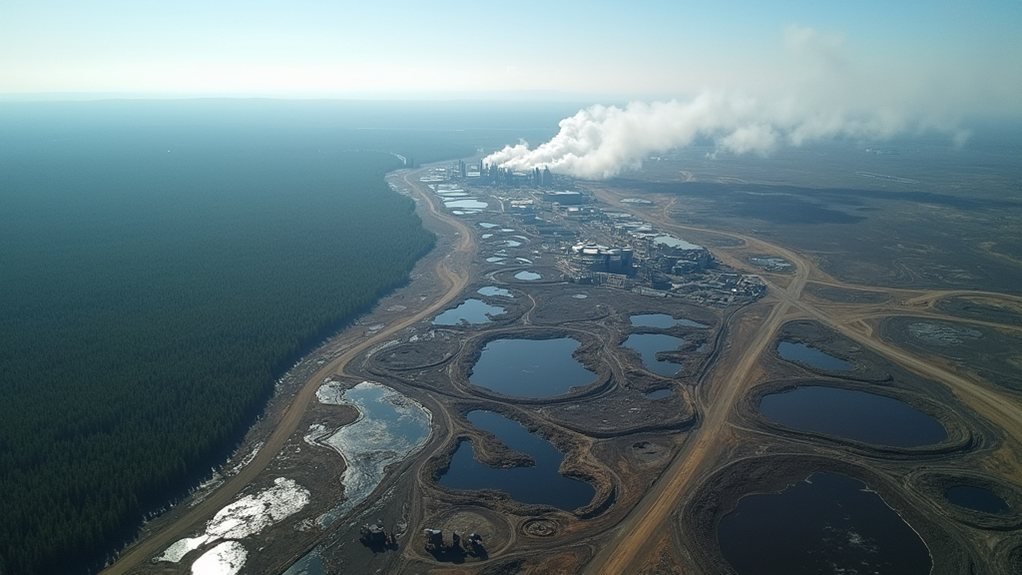
A unique blend of bitumen and sand in Alberta, Canada, awaits transformation into crude oil, yet poses environmental challenges.
Mining methods vary, with surface mining scooping up the top layers and in-situ techniques heating the deeper deposits. However, the energy-intensive extraction methods lead to higher greenhouse gas emissions, complicating Canada’s climate goals while fueling its economy. Oil sands operations are considered the most expensive to produce compared to other oil-producing regions, which further amplifies the debate surrounding their environmental impact. Addressing these emissions effectively requires transitions in energy systems to deploy cleaner technologies.
Oil Sands Production Growth and Its Impact on Climate Goals
As oil sands production continues to surge, it becomes increasingly clear that the implications for Canada’s climate goals are anything but straightforward. Companies should integrate climate risk into strategic planning to identify and manage operational vulnerabilities. With projections showing output rising to 3.9 million barrels per day by 2030, the 58% share of Canadian oil production from oil sands poses a significant challenge. This growth, fueled by efficiencies and favorable economics, undermines efforts to reduce greenhouse gas emissions. The sector’s resilience against price volatility contrasts starkly with climate commitments, making it feel like trying to balance a stack of pancakes while riding a unicycle—impressive but precarious, and not exactly sustainable for the long haul. Additionally, the projected production forecast indicates that Canada’s oil sands production will reach 3.5 million bpd in 2025, exacerbating the climate dilemma. Notably, crude oil exports rose 2.5% year over year in August, further complicating the situation.
Strategies for Decarbonizing Oil Sands Operations
With oil sands production on the rise, the quest for greener operations has taken center stage. The Pathways Alliance, comprising major producers, is aiming for net-zero greenhouse gas emissions by 2050, planning a hefty CAD 24.5 billion investment in carbon capture and storage (CCS). This initiative could sequester over 10 megatonnes of carbon annually. Research into direct air capture and green hydrogen production could complement CCS in reducing residual emissions. Meanwhile, the Bitumen Beyond Combustion Strategy promotes using bitumen for high-value materials, reducing atmospheric release. Federal regulations targeting methane emissions and Alberta’s cap on oil sands emissions further complement these efforts. Oil sands extraction releases more greenhouse gases (GHGs) than other oil production methods, making the transition to sustainable practices even more critical. Additionally, Canada’s oil sands are the third-largest proven oil reserve globally, underscoring the importance of addressing emissions in this sector. It’s a complex dance, balancing production and sustainability, but the steps are being taken.