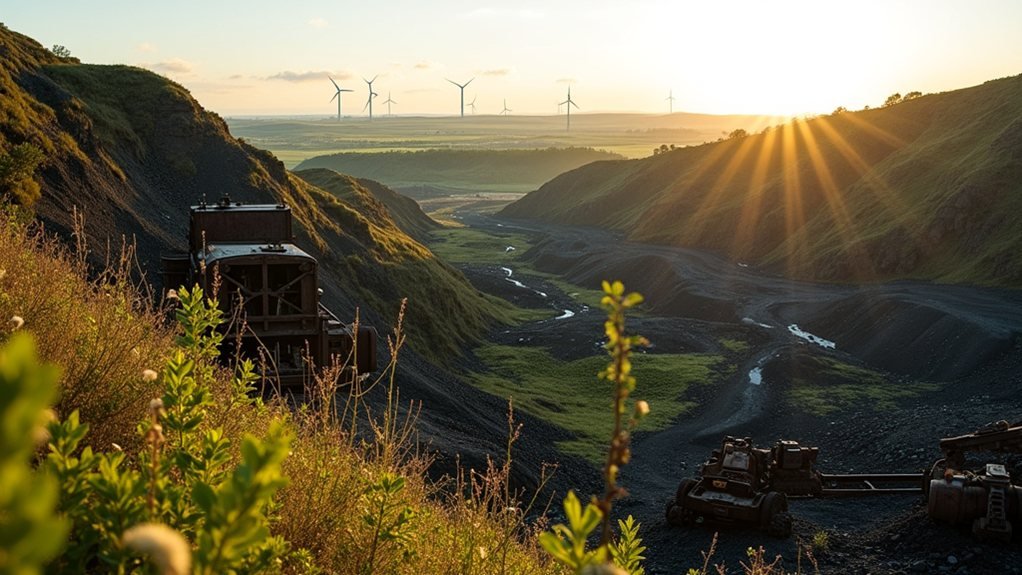

The UK’s coal phase-out has been a game-changer in reducing global emissions. They’ve slashed coal generation by 98% since its peak, dodging about 880 million tons of CO2. That’s like removing an entire country’s carbon footprint for a year! This bold move not only fuels discussions on clean energy but also encourages others to follow suit. With emerging markets figuring out the financial puzzle and renewables on the rise, there’s a fascinating story brewing about our greener future.
Quick Overview
- The UK’s coal phase-out has significantly reduced emissions, avoiding 880 million tons of CO2 since 2012, demonstrating effective coal substitution impacts.
- Despite the UK’s success, emerging markets require substantial investment to transition away from coal, highlighting global disparity in coal substitution efforts.
- The UK’s commitment to net-zero emissions by 2050 sets a precedent, yet not all countries are following suit, risking slower global progress.
- The transition from coal to renewable energy in the UK presents an opportunity for economic growth, but many countries remain hesitant to adopt similar strategies.
- Comprehensive strategies across all economic sectors are essential for global emission reduction, as coal substitution alone isn’t sufficient to address climate change.
The Global Emission Impact of the UK’s Coal Phase-Out
As the UK takes a bold step toward a greener future by phasing out coal, the ripple effects are not just felt within its borders; they extend globally, like the ripple from a stone tossed into a pond.
By reducing coal generation by a staggering 98% since its peak, the UK has set a precedent for other nations. This shift has considerably dropped CO2 emissions, avoiding 880 million tons since 2012—more than double the UK’s total greenhouse gas emissions for 2023. This remarkable achievement aligns with the UK’s position as the 5th country globally to completely phase out coal power, first among large nations. The transition has led to a 74% decrease in power sector emissions, showcasing the profound impact of moving away from coal.
The success of this transition demonstrates how renewable technologies can effectively replace fossil fuels while creating new economic opportunities.
With this pioneering move, the UK showcases a tangible path toward a low-carbon future, inspiring global coal phase-out commitments.
How the UK’s Coal Phase-Out and Substitution Shape Future Energy Policies
The UK’s ambitious coal phase-out is not just a local phenomenon; it has sparked a broader conversation about energy policies worldwide. By committing to legally binding targets, such as net-zero carbon emissions by 2050, the UK has set a formidable precedent. The government’s clear timelines have allowed the market to adapt, while innovative policies like carbon pricing and capacity market exclusions have kept coal at bay. With renewable energy sources rapidly expanding, the country is reshaping its energy landscape. The transition to renewable alternatives offers significant environmental advantages while reducing long-term energy costs. This evolution not only reduces emissions but also inspires global initiatives, proving that local actions can echo through international corridors of power. As the UK prepares to close its last coal-fired power plant, this landmark decision underscores the urgency for other nations to follow suit and transition towards cleaner energy solutions. Moreover, the coal power’s share of the electricity mix dropped from nearly 40% in 2012 to 22% in 2015, highlighting the effectiveness of these measures.
Key Challenges and Opportunities in Transitioning From Coal to Renewables
Shifting from coal to renewables may be one of the most significant energy shifts of our time, yet it comes with its fair share of hurdles and bright opportunities. Financially, emerging markets need around $60 billion annually to phase out coal, while private investors hesitate due to risks. However, by 2025, coal will be pricier than renewables, marking a pivotal economic shift. Additionally, repurposing old coal plants offers immediate emissions reductions. Comprehensive emission reduction strategies must target all economic sectors to achieve meaningful climate goals. With nearly 60% of coal in developed countries scheduled for retirement by 2030, the path forward seems challenging yet promising, akin to switching from an old flip phone to the latest smartphone. This transition is crucial as the coal transition must be completed in OECD countries by 2030 and globally by 2040. Furthermore, the significant growth in renewable and zero-emission capacity presents a clear opportunity for investment in sustainable energy sources.