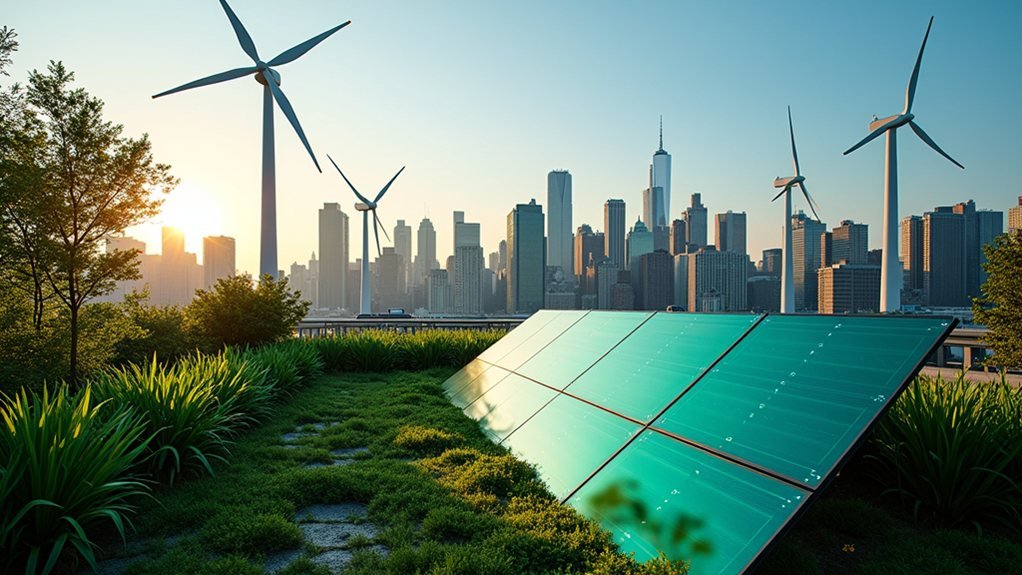

Renewable energy is shaking up New York Fashion Week like a fashion icon revealing a new trend. LED catwalks and biofuel generators are in, putting a spotlight on sustainability. It’s like nature’s catwalk, with solar and wind energy strutting their stuff. Major brands are channeling funds into green energy, a twist worthy of Project Runway drama. As NYFW aims for an eco-friendly revolution, it’s clear: the revolution will be green-powered. Wondering how these shifts play out? Stay tuned.
Quick Overview
- NYFW integrates solar and wind energy to significantly reduce its environmental impact.
- Designers are adopting energy-efficient LED lighting and biofuel-burning generators at fashion events.
- Major fashion brands commit to investing 2% of revenue in renewable energy projects.
- Sustainability initiatives at NYFW aim to phase out fossil fuels and cut emissions.
- The fashion industry faces pressure to address environmental challenges and pollution.
Discover How Renewable Energy Is Transforming NYFW’s Eco-Footprint
While it might seem as improbable as wearing a parka in July, renewable energy is reshaping the dazzling world of New York Fashion Week (NYFW). Let’s recharge our batteries with some lively information. Designers like Missoni and Saint Laurent strut their stuff under energy-efficient LED catwalks powered by biofuel-burning generators. This might sound like a futuristic light show, but it’s just the tip of the iceberg, or more aptly, the wind turbine. Solar and wind energy emerge as fashion’s new sustainable hemlines, leaving fossil fuels in the clearance bin. With cleaner power sources, NYFW keeps its eco-footprint excitingly stylish. According to IEA projections, renewable energy sources are expected to account for nearly 50% of global electricity generation by 2030, signaling an unprecedented acceleration in the clean energy transition. A significant shift is that major brands are being urged to invest at least 2% of their revenue into renewable energy, highlighting a pressing need for the industry to reduce its environmental impact. At The Green Show, hosted at BondSt Hudson Yards, the introduction of sustainable fashion was underscored as an essential component of NYFW’s eco-conscious transformation.
Cutting-Edge Renewable Energy Efforts by Fashion Industry Leaders
In the ever-evolving style universe, fashion industry leaders are now stepping onto the sustainability stage in what one might call a couture climate revolution. Fashion brands are redesigning their carbon-intensive runways by investing 2% of annual revenue in renewable energy. Their strategy is diversified, like a fashion collection, with a landmark 12-brand Corporate Virtual Power Purchase Agreement adding 160,000 MWh to Europe’s grid. It’s akin to fashion’s version of a shared closet, empowering brands to collectively tackle Scope 2 emissions. From phasing out fossil fuels to adopting circular economies, industry leaders are weaving sustainability into their very fabric. Solar and wind installations are increasingly favored choices, as these renewable energy sources offer significant cost savings and reduced carbon footprints over time. A collaborative effort is also underway to educate and engage the fashion community through events, publications, and outreach activities, tackling persistent barriers that have long challenged the fashion industry and underscoring the need for collaboration across the value chain.
Navigating the Future of Sustainable Fashion
After fashion industry leaders strutted onto the sustainability stage with a couture climate revolution, they now face the challenge of steering the future of sustainable fashion. New York Fashion Week is transforming faster than a model’s outfit changes with initiatives like IMPACT NYFW showcasing eco-friendly designers. Fashion brands are donning their greenest hats, committing 2% of annual revenue to renewable energy projects. Mastercard’s 11-story tech hub served as a venue emphasizing innovation and eco-consciousness. Meanwhile, event sustainability strategies outshine some red-carpet soirées. By embracing circular economies and energy-efficient practices, they’re trying to make dumping fast fashion as outdated as leisure suits. Still, they face a catwalk full of carbon challenges. The fashion industry is also reckoning with its role as one of the world’s largest polluters, as textile production contributes significantly to water pollution, greenhouse gas emissions, and mounting landfill waste. Efforts to eliminate single-use plastics during events demonstrate the industry’s commitment to sustainability, aligning with broader consumer preferences for environmentally responsible practices.