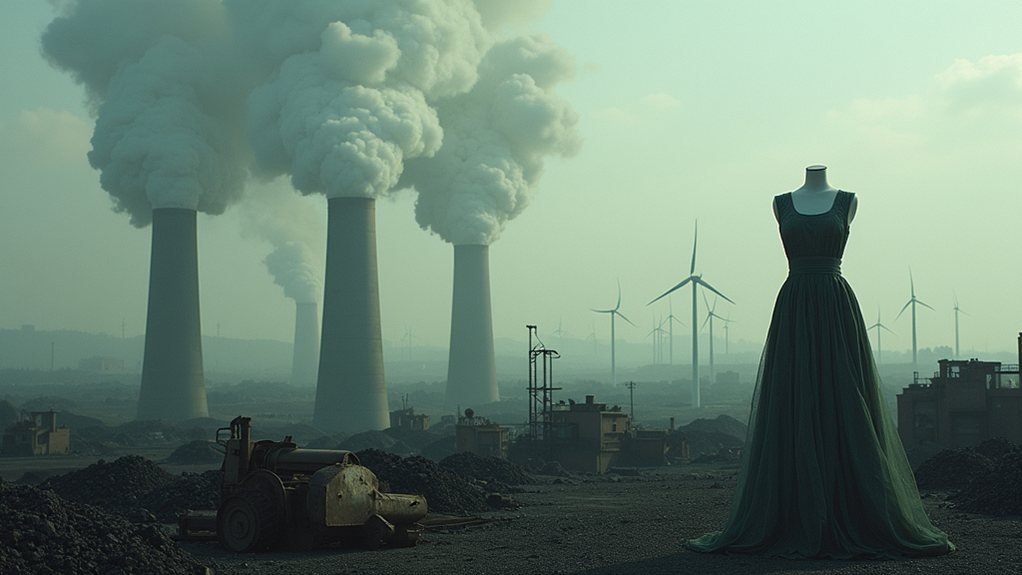

Global fashion giants are in hot water over their coal dependence, akin to having a favorite sweater with a questionable stain. Despite the industry’s glittering façade, behind-the-scenes reliance on coal-powered boilers in hubs like Vietnam and Bangladesh raises eyebrows. With 86% of brands lacking solid coal phase-out plans, they’re like marathon runners without shoes. Yet, there’s hope; electrification and alternative energy might smooth the path toward sustainability. Stick around to discover their next moves.
Quick Overview
- 86% of major fashion brands are unprepared for sustainability commitments, lacking coal phase-out targets.
- Textile hubs like Bangladesh and Vietnam heavily rely on coal for energy, affecting major fashion brands.
- Significant coal dependence in China, Vietnam, India, and Indonesia contributes to fashion industry emissions.
- Fashion industry’s reliance on polyester from oil exacerbates carbon-intensive production practices.
- Fashion brands’ lack of transparency in supply chains impedes effective sustainability efforts.
How Dependent Is the Fashion Industry on Coal Today?
How on earth did coal become the Cinderella of the fashion industry’s energy ball? Coal’s omnipresence in textile hubs like Bangladesh and Vietnam is remarkable. It’s the secret ingredient in over 83% of boilers and grids there, making fashion an unlikely coal enthusiast. In China, Vietnam, India, and Indonesia, coal dominates, providing essential heat and electricity, like a rock concert’s blinding lights. Despite these heavy dependencies, 86% of major brands have yet to set a coal phase-out target, highlighting the gap between sustainable pledges and measurable actions. Meanwhile, India’s coal boost by 2030 seems audacious. Polyester production is another tale, guzzling oil and exhaling massive emissions. Yet, no substantial coal phase-out targets have emerged, leaving brands trapped like a moth in a glaring spotlight. This failure to act reflects a broader neglect of intergenerational equity, as today’s carbon-heavy choices burden future generations with the environmental consequences. 59% of publicly-listed brands fail in traceability, obscuring supply chain transparency and effectiveness.
Is Biomass Really a Sustainable Alternative to Coal?
Why is everyone suddenly buzzing about biomass as the knight in shining armor for coal-addicted industries? The concept is simple yet tantalizing: biomass seems like nature’s cycle—a closed-carbon loop where what goes up, CO₂-wise, must come down through lush, green regrowth.
The kicker? This recycling takes decades. Worse still, whole-tree biomass can release more carbon pollution than coal.
The carbon neutrality of biomass is often debated, especially since it relies on the timely regrowth of feedstocks to offset CO₂ emissions, and this process isn’t as immediate and effective as originally thought.
Yet, embracing biomass for co-firing could transform fossil-fueled power plants if energy plantations aren’t allowed to devour wildlife habitats. Large-scale biomass cultivation can lead to potential biodiversity loss, which is highlighted as a critical issue by ecologists. Sustainable land management practices that mimic natural ecosystem processes can help balance energy production with the preservation of native habitats.
Though it shares a smoky aftertaste with coal, biomass potentially reduces nasty sulfur dioxide by 85%, promising a cleaner, albeit imperfect, path forward.
Can Electrification Truly Decarbonize Fashion?
Could electrification be the unsung hero in the quest to decarbonize the fashion industry? Imagine a world where the clothes you wear are less carbon-rich and more ozone-friendly, courtesy of high-efficiency electric boilers and heat pumps.
These gizmos are like the ninja warriors of manufacturing, stealthily slashing emissions from textile production—where more than half of supply-chain emissions originate. Electrification efforts, such as Nike’s transition from coal-fired steam boilers to electric heating, highlight the significant potential to reduce energy use and cut emissions by adopting more efficient technologies. With renewable energy constituting only 2% of energy use across both tiers, the shift to electrification must be accompanied by a broader transition to green energy sources to achieve true sustainability.
Yet, without renewable energy, electrification risks being a well-dressed emperor with no clothes. Yes, it’s flashy and alluring, but not truly sustainable unless grids go green. Many businesses are increasingly adopting CSR frameworks to ensure that sustainability goals extend beyond energy efficiency and into broader environmental and social commitments.
With the right charge, electrification might stitch up the industry’s carbon footprint for good.