
As the United States ramps up its critical minerals production, driven by the green energy craze, it faces a sticky dilemma. On one hand, there’s the sweet allure of clean tech, and on the other, the environmental and social woes of mining practices. Fast-tracked approvals often sacrifice oversight, leading to pollution and ecosystem damage, particularly in vulnerable nations. Balancing these needs is like walking a tightrope. Keep an eye out for more on how the U.S. can find its footing!
Quick Overview
- The surge in demand for critical minerals raises environmental concerns, particularly regarding potential water contamination and ecosystem disruption from fast-tracked mining projects.
- Political pressures to expedite permit approvals often lead to reduced oversight, risking environmental degradation in the pursuit of mineral resource extraction.
- Ethical considerations arise as poorer nations face significant environmental consequences, emphasizing the need for sustainable resource management principles in U.S. policies.
- Effective waste management and site rehabilitation are crucial to mitigate long-term environmental damages associated with critical mineral mining activities.
- Balancing critical mineral supply needs with social responsibility is essential, requiring international collaboration and adherence to fair labor and environmental practices.
Assessing the Environmental Sustainability of US Critical Minerals Policies
As the demand for critical minerals surges, largely driven by a green energy revolution and national security concerns, the environmental sustainability of U.S. policies becomes a hot-button issue worthy of a standing ovation—or perhaps a dramatic sigh.
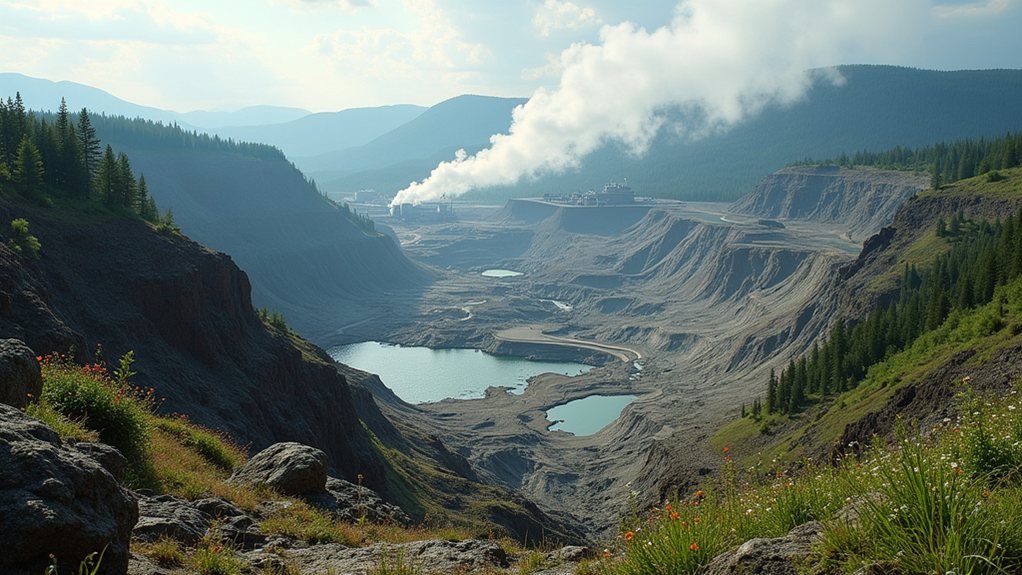
Fast-tracked mining projects sound like a great idea until one considers the implications: water contamination threatens local communities and wildlife habitats.
Imagine chopping down a forest for a lithium bonus! With urgent political pressure speeding up permits and oversight crumbling, nature is playing the ultimate game of dodgeball.
Chopping down forests for lithium? Nature’s in a real game of dodgeball as permits speed up amidst crumbling oversight.
Implementing site rehabilitation strategies and proper waste management protocols could help mitigate long-term environmental damage from accelerated extraction operations.
Will America balance critical mineral needs with environmental sanity? As it stands, that’s anyone’s guess.
How Geopolitical Tensions Impact Environmental Practices?
Geopolitical tensions stir up a complex brew of international relationships, where the quest for critical minerals gets tangled with environmental practices like an intricate dance at an awkward school prom.
As nations prioritize mineral access over sustainability, critical minerals become bargaining chips in international power plays. China’s dominance in rare earth elements puts pressure on global supply chains, leading countries to compromise on environmental standards for strategic advantages.
Meanwhile, fragmented governance reduces oversight, resulting in mining practices that often disregard ecological well-being.
Ultimately, the fiercely competitive atmosphere can leave poorer nations bearing the brunt of environmental degradation, raising urgent ethical concerns. Adopting principles of sustainable resource management could help balance economic needs with environmental protection in critical mineral extraction.
How to Balance Supply Needs With Social Responsibility
Finding the right equilibrium between the pressing need for critical minerals and the responsibility toward social and environmental ethics can feel like juggling flaming torches at a circus—exciting yet perilous.
Initiatives aiming for ESG-aligned production, such as partnerships with laboratories, promise cleaner extraction methods. However, the urgency of supply can compress environmental oversight, risking social tensions, particularly in the Global South.
Balancing demands involves more than just digging; it requires international collaboration, fair labor practices, and mindful processing strategies. After all, ensuring a resilient supply of minerals shouldn’t mean sacrificing the wellbeing of communities or our planet—a true juggling act indeed. Building fair pathways to sustainability means protecting workers and vulnerable communities throughout the transition to mineral-dependent green technologies.