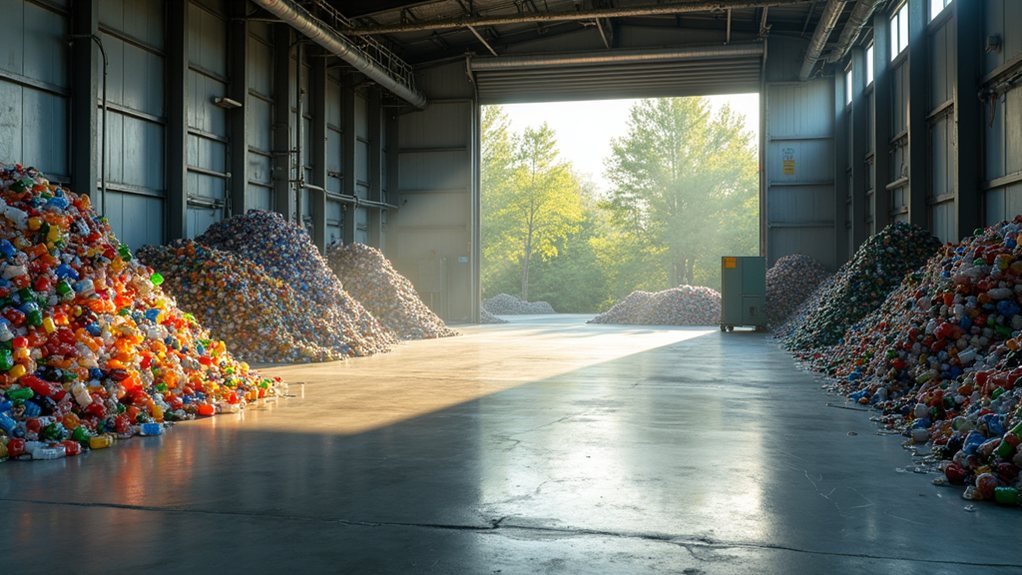

In a move to tackle the messiness of plastic waste, the UK will ban exports to non-OECD countries starting November 21, 2026. Why? Because sending our plastic troubles abroad doesn’t solve the issue; it just shuffles the mess. Often, these plastics end up in landfills or incinerators, releasing nasty fumes that harm local communities. This ban paves the way for better domestic recycling systems. Stick around, as there’s more to explore about sustainable waste management!
Quick Overview
- The UK will implement a full ban on plastic waste exports to non-OECD countries starting from 21 November 2026.
- In 2025, the proportion of UK plastic waste sent to non-OECD countries increased to 20%.
- The ban aims to address environmental injustices faced by vulnerable communities receiving UK plastic waste.
- The UK government emphasizes the need for improved domestic recycling infrastructure and waste management solutions.
- The ban aligns with global movements promoting sustainable living and reducing reliance on plastic consumption.
Environmental and Social Impacts of UK Plastic Waste Exports
As the UK grapples with the staggering environmental and social fallout from its plastic waste exports, one might wonder how this seemingly mundane issue has spiraled into such a global concern.
The reality is grim: exported plastics often end up in landfills or are burned, releasing toxic fumes and harming communities in recipient countries. This waste colonialism disproportionately affects the most vulnerable, including children and refugees, who face dire health risks. With UK exports clogging foreign recycling systems, the consequences ripple across the globe, turning a local problem into an international crisis. In fact, over half of plastic waste is incinerated, exacerbating pollution and contributing to climate change. This situation is further compounded by the fact that exporting plastic waste causes significant environmental damage to the communities that receive it. Comprehensive waste reduction strategies at the source remain our best hope for addressing the growing plastic pollution crisis.
Exported plastics contribute to environmental injustice, as vulnerable communities bear the brunt of toxic waste and health risks.
It’s a messy situation that demands urgent action and accountability.
What Will the UK Plastic Waste Export Ban Entail?
The impending UK plastic waste export ban promises to reshape how the nation handles its plastic problem, steering it away from the current practice of offloading waste onto other countries. This ban aims to hold the UK accountable for its plastic waste, eliminating exports to both OECD and non-OECD nations. Notably, a full ban on plastic waste exports will be effective from 21 November 2026, further emphasizing the need for domestic solutions. Additionally, the proportion of waste sent to non-OECD countries surged to 20% in 2025, highlighting the urgency for this ban. This shift aligns with the global movement toward sustainable living through reduced single-use plastic consumption. Imagine this: no more shipping tons of plastic overseas while local recycling systems struggle. Instead, the UK must invest in domestic recycling infrastructure and prioritize waste reduction. It’s like cleaning your room instead of hiding the mess under the bed—hard work, but ultimately much more rewarding for everyone involved.
How Can We Manage Plastic Waste Sustainably?
Managing plastic waste sustainably requires a multifaceted approach that goes beyond simply recycling; it’s about transforming how society interacts with plastic from the get-go. Source minimization reduces single-use plastics, while eco-design encourages producers to create recyclable products. Think of it as designing a party where every guest is invited to come back! Effective collection systems and sorting methods guarantee waste doesn’t become a rogue intruder in nature. Advanced recycling technologies, like AI-driven sorting, are the superheroes of waste management. Additionally, understanding the chemical nature of plastics is crucial for developing effective recycling methods and ensuring that materials are reused sustainably. Transitioning to biodegradable options can significantly reduce environmental impact when recycling isn’t feasible. With approximately 368 million tonnes of plastic produced globally in 2019, education is essential—after all, even the best systems need informed participants to thrive in the battle against plastic pollution.