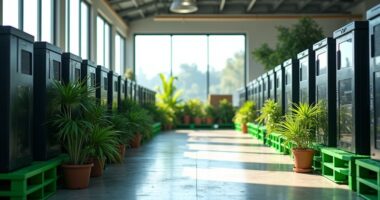
In an age where every piece of trash tells a story, the world of waste management is undergoing a remarkable transformation. Imagine this: a bustling city where smart waste bins equipped with Internet of Things (IoT) sensors know when they’re full, optimizing collection schedules like a well-timed orchestra. These innovations are not just about convenience; they greatly reduce costs and increase recycling efficiency.
AI-powered sorting systems are stepping in to revolutionize the recycling game. They sift through materials with pinpoint accuracy, reducing contamination as if they were seasoned detectives at a crime scene.
But wait, there’s more! The dawn of advanced recycling techniques is upon us, turning discarded electronics into treasure troves of valuable materials. AI-driven sorting systems are improving accuracy and efficiency in e-waste identification, making recycling even more effective. Chemical recycling processes are making plastic more recyclable than ever, rescuing our oceans from the clutches of pollution. Closed-loop systems are stretching material lifecycles, proving that the circular economy can turn waste into economic opportunities, especially in urban settings. Waste management software helps streamline these processes, ensuring that operations run smoothly and effectively.
Enter waste-to-energy (WTE) systems, which are taking waste and giving it a new purpose—energy! Facilities in places like Sweden are converting half of their municipal waste into energy, a feat that would make any eco-warrior proud. Anaerobic digestion of organic waste is another shining star, creating biogas to power homes.
Yet, despite all this progress, the challenges loom large. With global waste projected to hit 3.8 billion tons by 2050, the pressure is on to scale these technologies beyond mere concepts. Following the waste management hierarchy helps prioritize prevention and reuse over less sustainable options like disposal. Stricter regulations and public-private collaborations are pushing the envelope, aiming for a sustainable future.
As cities embrace these smarter solutions, the vision of zero-waste urban areas becomes more attainable. It’s not just about managing waste anymore; it’s about transforming it into a resource for future generations.
In this evolving landscape, waste isn’t just garbage; it’s a story of innovation, sustainability, and hope for a greener future.