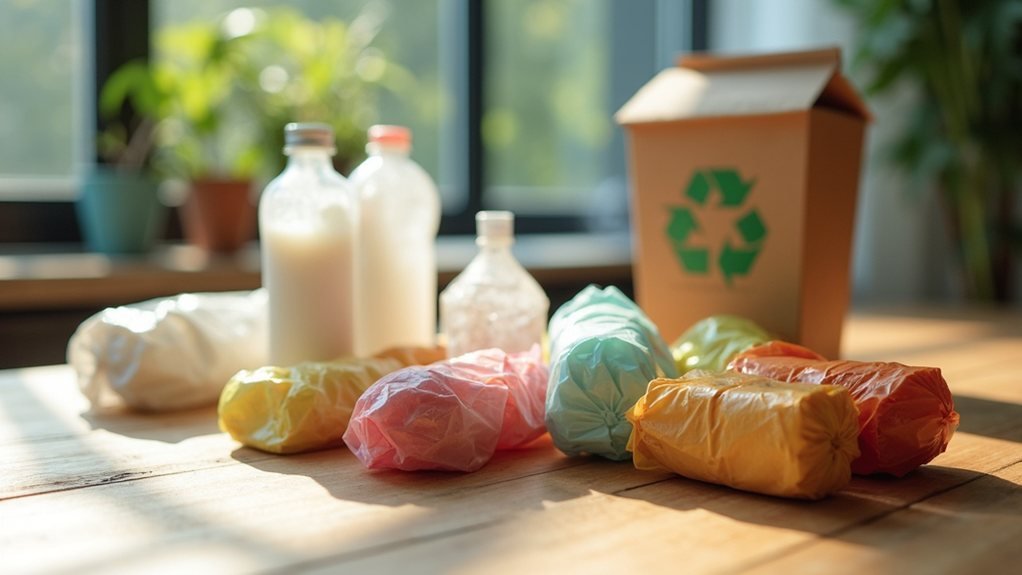

The UK’s new Extended Producer Responsibility (EPR) system is reshaping how retailers handle packaging waste. By shifting the financial burden from taxpayers to businesses, it aims for a circular economy where brands take charge of their packaging’s life cycle. Retailers must now report their packaging data biannually if they’re big players, nudging them towards eco-friendly materials and innovative designs. It’s a packaging revolution—better for the planet, though not as easy as tossing an empty bottle in the recycling bin! Curious about the specific impacts on packaging design?
Quick Overview
- The UK EPR system mandates producers to manage packaging waste from design to disposal, shifting costs from taxpayers to businesses.
- Retailers exceeding £1 million turnover and using over 25 tonnes of packaging must register with the regulator and comply with reporting requirements.
- Biannual reporting for large producers requires detailed documentation on packaging types, weights, and recyclability to ensure accountability.
- Fees linked to material recyclability incentivize the adoption of sustainable packaging choices, promoting eco-friendly materials and designs.
- The EPR system aims to enhance recycling rates and reduce pollution, supporting the transition to a circular economy.
Understanding the Extended Producer Responsibility (EPR) for Packaging
What if the way we manage packaging waste could reshape our entire economy?
Enter Extended Producer Responsibility (EPR), a game-changer where producers foot the bill for packaging waste disposal.
Extended Producer Responsibility (EPR) transforms waste management, making producers accountable for their packaging from cradle to grave.
Think of it as a cosmic shift, moving financial burdens from taxpayers to brand owners.
The goal? A circular economy where recycling rates soar, and pollution plummets.
Producers are now accountable for their packaging’s entire life cycle—design to disposal. Large producers report data at least twice a year with fees that vary based on recyclability, businesses are nudged towards eco-friendly choices.
While the UK implements nationwide requirements, in the United States, state regulations vary significantly across different jurisdictions.
It’s like a recycling boot camp, pushing for smarter packaging designs, ensuring our planet gets a much-needed hug.
Producers are responsible for paying full net disposal costs of packaging placed on the market, which reinforces the need for sustainability in packaging practices.
Compliance and Reporting Obligations for Retailers
Traversing the labyrinth of compliance and reporting obligations can feel like trying to assemble IKEA furniture without the instructions—daunting, to say the least.
Retailers must navigate their obligations based on packaging volume and turnover. If an organization exceeds £1 million in turnover and 25 tonnes of packaging, it’s time to register online with the environmental regulator. Large producers face biannual reporting, while small producers report annually. Detailed data on packaging types, weights, and recyclability must be meticulously documented. Moreover, this shift in responsibility for packaging waste to producers aims to promote sustainable packaging practices and just when you think you’re done, there’s always an audit trail lurking around the corner, waiting to keep you on your toes. This new extended producer responsibility initiative not only enhances accountability but also drives companies towards more sustainable packaging solutions. Retailers are increasingly exploring biodegradable options to comply with regulations while meeting growing consumer demand for environmentally responsible products.
Impacts on Packaging Design and Sustainability Efforts
The landscape of packaging design is evolving faster than a cat can knock something off a table, and the UK’s Extended Producer Responsibility (EPR) system is at the heart of this transformation.
Retailers now feel the pinch of fees tied to material choices, nudging them toward lighter, recyclable options.
Gone are the days of heavy glass; it’s all about lightweight, mono-materials that play nice with recycling systems.
As brands collaborate with recyclers, innovative designs emerge—think refillable packs and modular formats. This isn’t just a cost-cutting measure; it’s a leap toward sustainability that makes Mother Nature nod in approval. Understanding eco-friendly materials and their environmental impact is crucial for businesses adapting to these new regulations. To further this effort, the EPR regulation shifts financial responsibility for household packaging waste to businesses, encouraging them to adopt more sustainable practices. The scheme also promotes a shift to recyclable materials, which aligns with broader environmental goals.