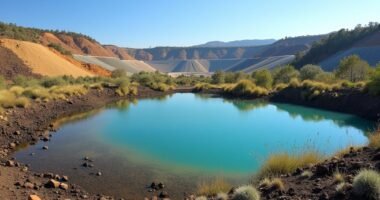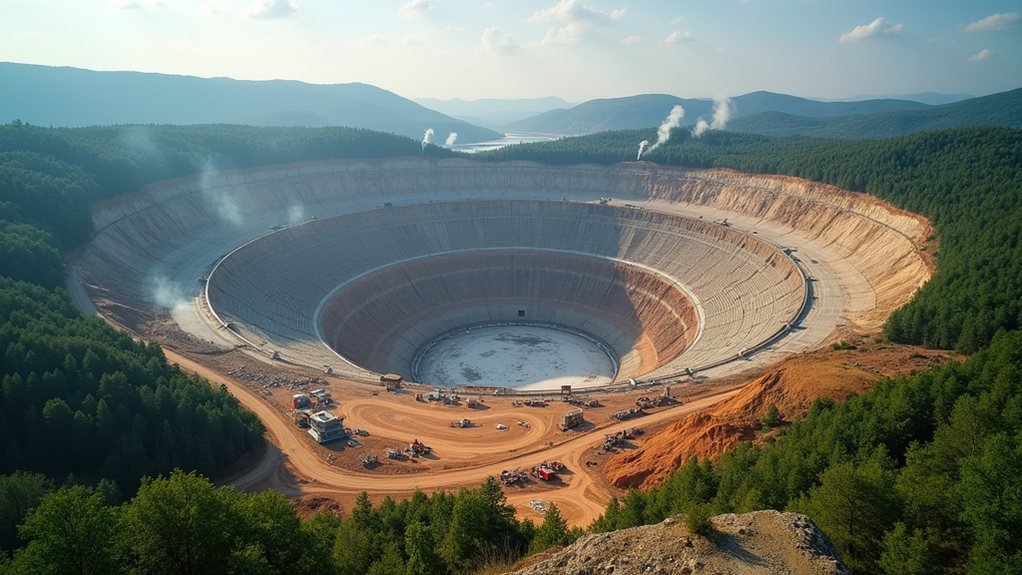

The Star-Orion Mine isn’t just big; it dwarfs even the largest stadiums, showcasing a treasure trove of diamonds. With over 70 million carats waiting to be mined, its economic potential is dazzling—with projections of $5.4 billion in net value. However, the extraction plans face serious oversight challenges, risking both environmental integrity and worker shifts. Just like a grand stage play, timing and execution are everything, and when it comes to diamonds, there’s a lot more at stake!
Quick Overview
- The Star-Orion Mine, with significant diamond resources, outshines many stadium projects in scale and economic impact.
- Oversight failures in mining regulation can lead to environmental risks and community disruptions around the Star-Orion Mine.
- The mine’s potential value of $5.4 billion highlights the economic opportunities that may be overlooked in regulatory oversight.
- Environmental assessments are crucial to avoid the detrimental impacts that can arise from inadequate oversight in mining operations.
- Ensuring balanced oversight is vital for sustaining both the mine’s profitability and the surrounding ecosystems.
The Star-Orion Mine: A Giant Resource in Diamonds
Nestled in the heart of central Saskatchewan, the Star-Orion Mine dazzles like a diamond in the rough, boasting one of the world’s most significant untapped diamond resources.
This geological treasure trove holds a staggering 34.8 million carats in the Star deposit and 36.9 million carats in Orion South, making it the largest undeveloped diamond deposit globally. With a history of over 150,000 diamonds extracted, these gems are not just pretty baubles; they’re Type IIa diamonds, known for their exceptional purity.
Imagine unearthing a diamond worth over $100,000—now that’s a glittering find! The future shines bright for this mine, especially with the significant increase in mineral resources reported for both deposits. Additionally, the grade on Star increased by 20% to an impressive 19.4 cpht, further enhancing the project’s economic viability.
The mine development plans must incorporate biodiversity conservation strategies to ensure the surrounding forest ecosystems remain viable while extracting these valuable resources.
Economic Potential of the Star-Orion Mine
The Star-Orion Mine is more than just a geological marvel; it represents a financial goldmine waiting to be tapped.
With a projected net present value of up to $5.4 billion and an impressive internal rate of return of 32% in high diamond price scenarios, the mine promises substantial economic benefits.
The recovery of 66 million carats over its 38-year lifespan could generate an astounding $25 billion for Saskatchewan. Additionally, the mine boasts total indicated mineral resources of 72 million carats, enhancing its economic viability.
The Star-Orion Mine could yield 66 million carats, generating a remarkable $25 billion for Saskatchewan over 38 years.
Employment opportunities abound, with over 500 jobs sustained throughout the mine’s life.
It’s a potential windfall for local communities, transforming an ordinary landscape into a bustling hub of economic activity.
However, ensuring a fair transition for workers and vulnerable communities will be essential to building a truly sustainable economic model around this development.
Moreover, the mine’s total potential plant feed of 470 million tonnes ensures robust production capabilities, further solidifying its economic promise.
Common Risks in Managing Diamond Mining Projects
With the Star-Orion Mine poised to deliver impressive economic returns, it’s easy to overlook the intricate web of risks that come with managing diamond mining projects.
From securing funding to dodging natural disasters, project managers face a tightrope act. Imagine losing key team members and watching budgets balloon. Thorough risk assessment is crucial for understanding the financial impact of disruptions.
Environmental disasters can turn profits into pitfalls, while fire—yes, that sneaky villain—leads to significant losses. A comprehensive lifecycle assessment helps quantify environmental impacts from extraction through disposal, revealing hidden costs.
Regulatory hurdles loom large; one misstep could mean hefty fines or worse.
It’s a high-stakes game, where every decision impacts the diamond’s gleam and the project’s bottom line. Balancing opportunity with risk is no small feat.