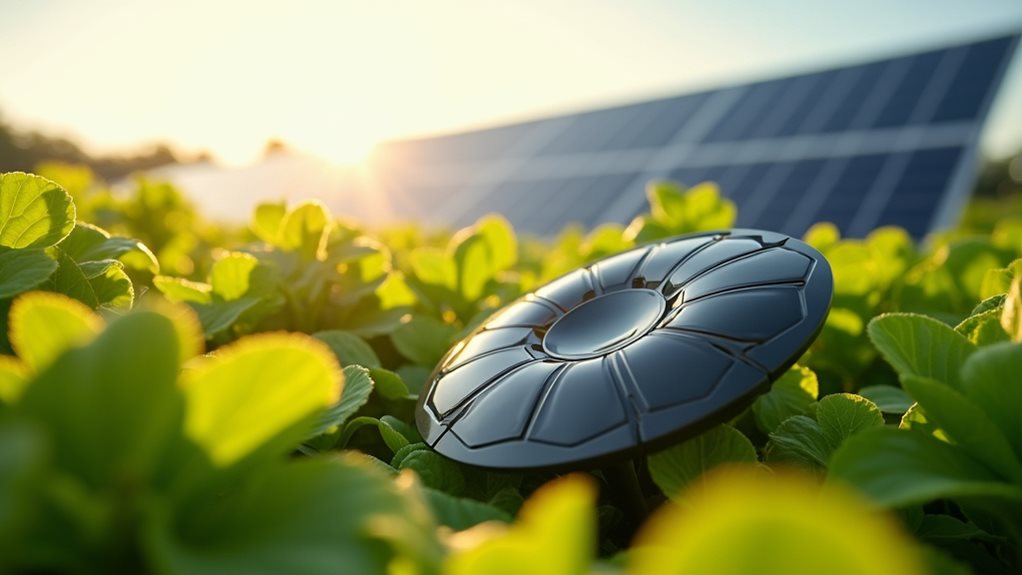

The revolutionary mimosa seed device is a game-changer in energy storage! It cleverly combines supercapacitor tech and solar cells, making it self-charging and super efficient. With an astounding energy density of 35.5 Wh/kg, it’s like the energy version of a high performer at school. Built from common black silicon, it powers off-grid homes and factories alike. This eco-friendly marvel not only avoids harmful waste, but it’s also eyeing ambitious global targets. Curious how it all works?
Innovative Self-Charging Energy Solution
At the heart of these devices is a self-charging mechanism that combines supercapacitor technology and solar cells.
Imagine a battery that never needs a plug—now that’s a game changer!
With energy densities of 35.5 Wh/kg, these devices outperform previous models by leaps and bounds, which only managed a paltry 5-20 Wh/kg.
They’re like the overachievers in a class full of slackers.
The mimosa panels, constructed from readily available black silicon and designed for modularity, can be easily scaled from small setups to massive installations.
Think of it as building with Legos, but instead of creating a spaceship, you’re crafting a sustainable energy solution.
These panels can generate power in both off-grid and grid-connected scenarios, making them versatile enough for everyone’s energy needs—from cozy homes to bustling factories.
Even better, the performance of these panels shows minimal degradation over repeated use.
They’re like the tortoises of the energy world: slow and steady, but they’ll keep going long after others have quit.
Plus, their eco-friendly design means they produce energy without harmful emissions or hazardous waste, making them a responsible choice for the planet.
Similar to the emerging perovskite technology in the solar industry, these mimosa devices represent a significant advancement in renewable energy efficiency.
With ambitious plans to expand installations to 30GW in Africa by 2030 and a jaw-dropping 700GW globally by 2050, the market potential is staggering.
Ultimately, these mimosa-derived devices not only promise to power homes and businesses but also to do so in a way that aligns with eco-design and circular economy sustainable development goals.
The integration of transition metal ions like Co and Mn into their design further enhances their energy storage capabilities, ensuring long-term usability.