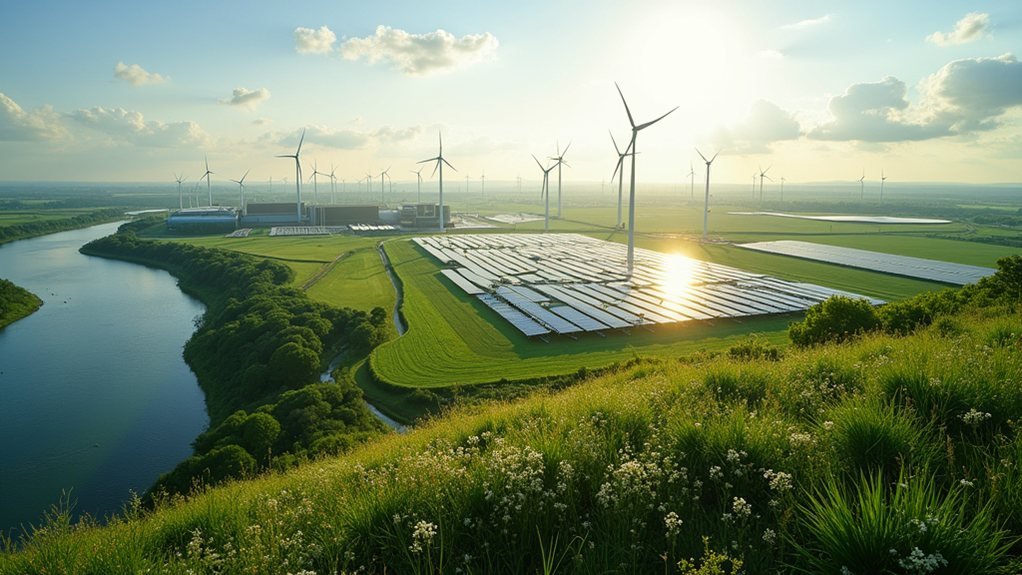

The UK’s renewable energy sector has hit a remarkable milestone, with renewables now contributing 53.7% of the nation’s electricity generation. This surge is driven by steady advancements in solar and wind technologies, making energy cleaner and more accessible. A shift away from fossil fuels is well underway, with coal generation even sidelined. Such progress fuels ambitions for a future powered by 90-95% clean energy by 2030. And there’s more exciting change on the horizon!
Quick Overview
- In 2025, renewable energy sources generated a record 152TWh, supplying 47% of the UK’s electricity, nearing the 53.7% milestone.
- The rise in renewable energy is driven by significant growth in wind generation, reaching 87TWh and contributing to overall electricity supply.
- Solar power saw a 31% increase, generating 19TWh, reflecting the growing diversification of renewable sources in the UK.
- The UK aims for 90-95% clean electricity by 2030, indicating a robust commitment to transitioning away from fossil fuels.
- Technological advancements and government policies are key factors supporting the growth of renewable energy in the UK market.
The Rise of Renewable Energy in the UK
As the sun rises on the UK’s energy landscape, it’s clear that renewable energy is not just a trend; it’s a full-blown revolution.
With renewables generating a record 152TWh in 2025, supplying 47% of the nation’s electricity, the shift is undeniable. In 2024, renewables generated 50.4% of the UK’s electricity, marking a significant increase from previous years. Solar power shone brightly, contributing 19TWh—an impressive 31% increase—while wind generation soared to 87TWh.
Biomass and hydropower added their share, too.
Remarkably, coal generation hit zero, marking a historic milestone.
As the UK embraces this green transformation, it’s safe to say the future is bright—unless, of course, the clouds roll in and block the solar panels! Additionally, the rise of electric vehicles and heat pumps is expected to drive up electricity demand, with approximately 1.8 million EVs and 1 million plug-in hybrids already on UK roads. Energy transition continues to shape policy and industry investment to support this rapid shift.
What’s Driving Renewable Energy Growth?
Renewable energy growth in the UK is often fueled by a mix of government policies, technological advancements, and shifting consumer preferences. Ambitious net-zero targets and a generous budget for offshore wind drive investments, while reduced costs for wind and solar technologies make them increasingly attractive. The UK’s renewable energy market is projected to reach USD 73,600.33 Million by 2034, highlighting the significant financial commitment to sustainable energy solutions. Notably, renewables provided 50.4% of the UK’s electricity in 2024, showcasing the remarkable progress the sector has made. The rise of larger turbines and efficient battery storage helps maximize energy generation, much like upgrading from a flip phone to the latest smartphone. Additionally, consumer enthusiasm for green energy, bolstered by incentives like grants for heat pumps, redefines energy consumption. Together, these forces are crafting a bright, sustainable future for the UK’s energy landscape, with ongoing international cooperation and climate commitments reinforcing the push toward cleaner power and policy alignment.
Future Projections for Renewable Energy in the UK
What might the future hold for renewable energy in the UK? Exciting developments are on the horizon, with predictions suggesting a leap to 172.7 GW of renewable power capacity by 2035. By 2030, the market could swell to a whopping USD 72.14 billion, powered by ambitious offshore wind targets of 43-50 GW and solar ambitions soaring to 45-47 GW. Meanwhile, flexible capacity battery storage is set to revolutionize energy management, with capacities reaching 23-27 GW. As the UK aims for 90-95% clean electricity by 2030, the renewable sector is poised for a thrilling ride, steering clear of fossil fuels like a pro. The wind power segment holds over 38.50% market share in 2024, further solidifying the dominance of renewables in the energy landscape.
A new era of grid resilience supports greater reliance on renewable sources and faster deployment of storage and demand-side measures to maintain reliability.