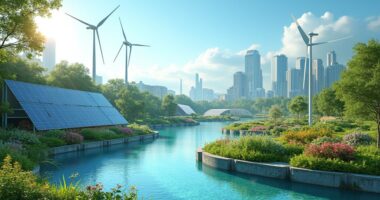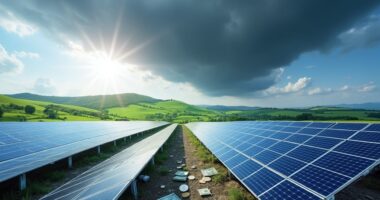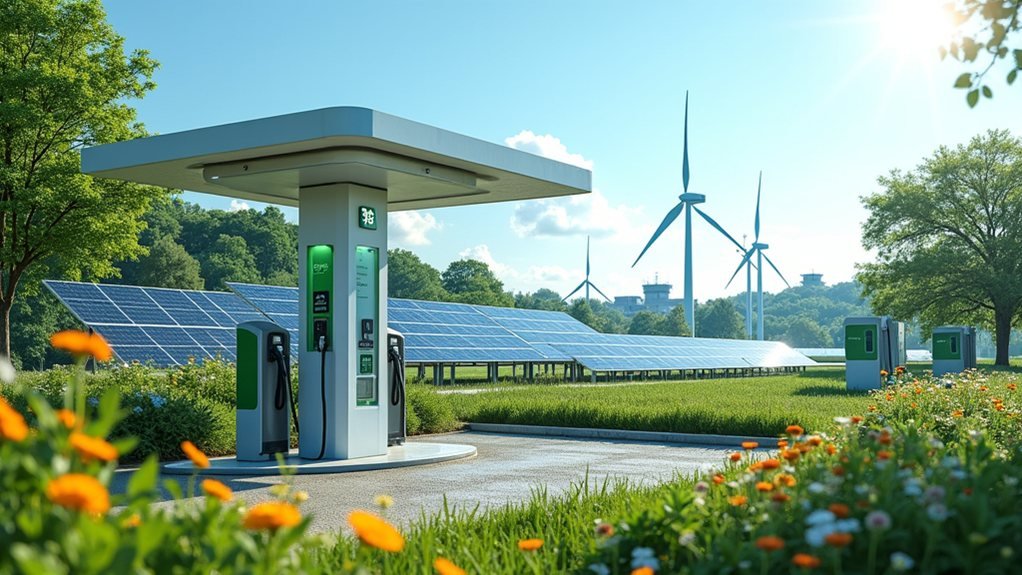

Massachusetts has introduced a dynamic clean energy law that aims to electrify its future—literally! With a target of 46,300 EV charger ports by 2030, the state is turbocharging its charging infrastructure. But it doesn’t stop there; it’s also betting on advanced nuclear and fusion power to balance the grid like a pro juggler. And let’s not forget ambitious renewable energy goals, including massive battery storage. Curious about the nitty-gritty details and what’s next? Stay tuned!
Quick Overview
- Massachusetts aims for 46,300 public charger ports by 2030, significantly increasing from the current 9,413 ports.
- $46 million has been allocated to enhance EV charging accessibility in urban and underserved areas.
- The state integrates advanced nuclear fission and fusion technologies to provide clean and reliable energy.
- Proposed grid-scale battery storage exceeds 38,000 MW, supporting the state’s renewable energy goals.
- Massachusetts targets 535 kWh/person in low-carbon electricity consumption by 2025 through diverse renewable sources.
Expansion of Electric Vehicle Charging Infrastructure
The expansion of electric vehicle (EV) charging infrastructure in Massachusetts is not just a lofty goal; it’s a necessity for a greener future.
With a target of around 46,300 publicly accessible charger ports by 2030, the state is currently at 9,413, showcasing impressive growth. A recent report estimates that a 169% increase in new public fast charging ports has occurred from 2023 to 2024, making Massachusetts a leader in the nation.
Massachusetts aims for 46,300 public charger ports by 2030, already achieving remarkable growth with 9,413 in place.
Since August 2023, charger density has soared, making Massachusetts a leader in the nation.
The Healey–Driscoll administration is fueling this growth with $46 million in funding, ensuring both urban and underserved areas can plug in. A two-year V2X demonstration with 100 bidirectional EV chargers is also underway to enhance grid resilience and renewable energy integration.
This infrastructure expansion aligns with global market trends showing major manufacturers increasingly committing to all-electric vehicle production.
As they say, “You can’t have an EV without a place to charge,” and Massachusetts is charging ahead!
Integration of Fusion Energy and Nuclear Power
How can Massachusetts leverage the power of both fusion and nuclear energy to create a cleaner, more reliable power grid?
By integrating advanced nuclear fission and promising fusion technologies, the state aims to boost its clean energy mix. These sources provide “clean firm power,” which is essential for balancing the whims of wind and solar. Think of it as a backup dancer supporting the main act. With small modular reactors and innovative fusion plants, Massachusetts can minimize energy costs and enhance grid stability. The state could potentially implement coal-to-nuclear conversion projects as part of its comprehensive decarbonization strategy. Plus, streamlined regulations are paving the way for these futuristic solutions, making clean energy a reality sooner than expected. Nuclear energy supplies 20-25% of New England’s annual power demand highlights the importance of these technologies in maintaining a stable energy supply. Additionally, Gov. Healey’s push for fission and fusion leadership will ensure that Massachusetts meets the growing electricity demand in New England.
Advancements in Renewable Energy Generation and Storage
In the quest for a cleaner, more sustainable future, Massachusetts stands at the forefront of renewable energy advancements that could make even the sun blush with pride.
As of January 2025, grid-scale battery storage leads the charge, boasting over 38,000 MW in proposed resources. Lithium-ion batteries, the rock stars of energy storage, are making waves with their efficiency and lower costs. Meanwhile, solar power dazzles, providing nearly a quarter of the state’s electricity in 2023. With ambitious offshore wind plans on the horizon, Massachusetts is not just dreaming of a renewable future; it’s actively building it, one megawatt at a time. Additionally, the state is leveraging renewable energy resources such as hydropower and biomass to further diversify its energy portfolio. The state is also educating residents about the environmental benefits of switching to renewable sources as part of its comprehensive implementation strategy. Furthermore, the state’s clean energy contributions are expected to grow, with a target of reaching 535 kWh/person in low-carbon electricity consumption by 2025.