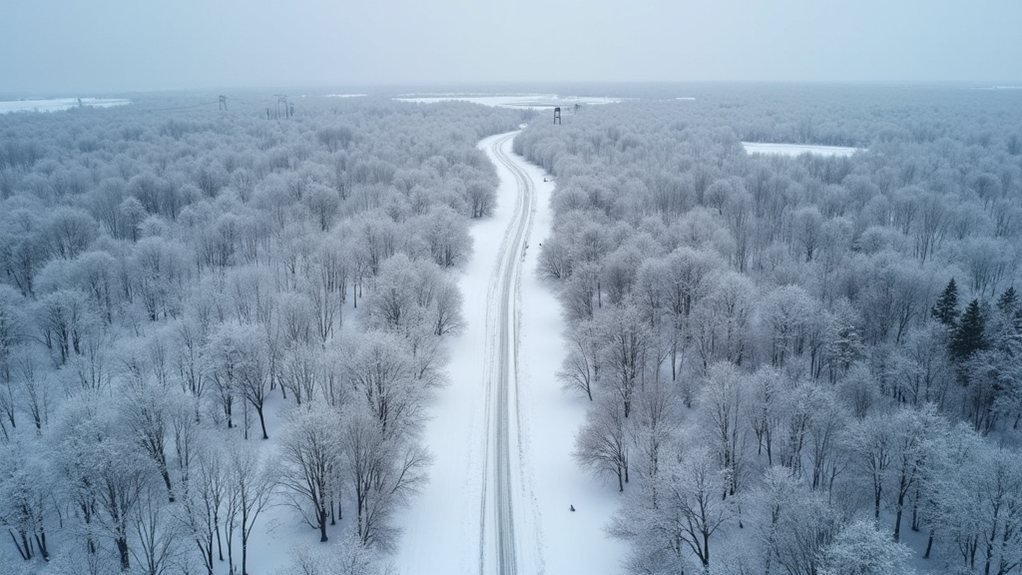

A historic winter storm recently wreaked havoc across a 2,000-mile stretch of the U.S., drenching states in snow and ice like a winter-themed disaster movie. With snowfall totals reaching 31 inches in Bonito Lake, NM, and over 20 inches in parts of New England, the storm was no light flurry. Tragically, it claimed 90 lives and left millions without power, stranding travelers and challenging infrastructure. The aftermath reveals a tale of resilience and the need for improvements in weather-related readiness. Curious about how cities are bouncing back?
Quick Overview
- The historic winter storm impacted a 2,000-mile corridor, affecting approximately 245 million people with severe ice and snow conditions.
- Bonito Lake, NM, received 31 inches of snow, while parts of Massachusetts and New York saw over 50 cm of snowfall.
- The storm resulted in 90 fatalities, primarily due to hypothermia, carbon monoxide exposure, and traffic accidents.
- Over 178,000 homes lost power, especially in Tennessee and Mississippi, with significant infrastructure challenges reported by utility companies.
- Transportation systems faced major disruptions, with over 2,800 flight cancellations and hazardous road conditions leading to numerous collisions.
What Snowfall and Ice Totals Tell Us About the Storm’s Severity?
As the snowflakes danced from the sky, one couldn’t help but wonder just how severe this winter storm truly was.
With Bonito Lake, NM, boasting a staggering 31 inches of snow, it was clear this was no ordinary flurry. Stratham, NH, and Middleton, MA, weren’t far behind, sporting impressive totals over 20 inches. Snowfall totals across the central and eastern U.S. revealed the storm’s widespread impact. In addition, reports indicated that snowfall exceeded 50 cm in parts of Massachusetts and New York, showcasing the storm’s intensity.
Bonito Lake, NM, dazzled with 31 inches of snow, while Stratham, NH, and Middleton, MA, followed closely with over 20 inches.
Meanwhile, ice accretions of up to an inch crippled a 2,000-mile corridor, turning roads into ice rinks. The storm’s reach was vast, impacting 245 million people. This disruption also raised concerns about air quality in affected areas as cold-air pooling and emissions can concentrate pollutants during winter events.
This winter wonderland was less about cozy hot cocoa and more about a weather event that would be remembered for years.
Casualties, Power Outages, and Travel Disruptions From the Winter Storm
While the storm painted a picturesque winter landscape, the consequences were far from charming, as it wreaked havoc across a vast swath of the country.
With a staggering death toll of 90, many perished from hypothermia and carbon monoxide exposure, while others faced tragic accidents. Power outages left over 178,000 homes in the dark, particularly in Tennessee and Mississippi. Nearly 90 fatalities were reported across the United States due to the winter storm. Over 2,800 flight cancellations disrupted travel plans, leaving many stranded as temperatures plummeted. In North Carolina alone, 750 traffic collisions were recorded, with at least one fatal crash involving a motor grader. As temperatures plummeted, the National Guard mobilized, reminding everyone that winter can be as unforgiving as it is beautiful. Communities already facing greater environmental burdens often suffer more during disasters, highlighting the need for environmental justice.
Impact of the Winter Storm on the U.S. Corridor: Transportation and Power Challenges
The winter storm’s impact on the U.S. Corridor created unprecedented transportation and power challenges.
The winter storm unleashed extraordinary challenges, testing the limits of transportation and power infrastructure across the U.S. Corridor.
With peak electricity demand in the PJM footprint soaring above 130,000MW, utilities faced a juggling act, balancing aging infrastructure and harsh weather. Ice-laden power lines sagged dangerously, while trees played unwelcome games of limbo. Extreme cold weather drove sharp increases in electricity demand as heating systems operated continuously to maintain indoor temperatures. Additionally, significant snow and ice led to prolonged power outages affecting hundreds of thousands of customers across multiple states. Utilities also began assessing long-term measures to improve energy efficiency and reduce vulnerability.
Meanwhile, ERCOT struggled with reserve shortages reminiscent of a chaotic movie scene. Emergency measures kicked in, from backup generators to federal disaster declarations.
In a twist, utilities sent crews like superheroes on a mission to restore power. Despite the chaos, the grid held up better than during previous storms, proving that experience counts.