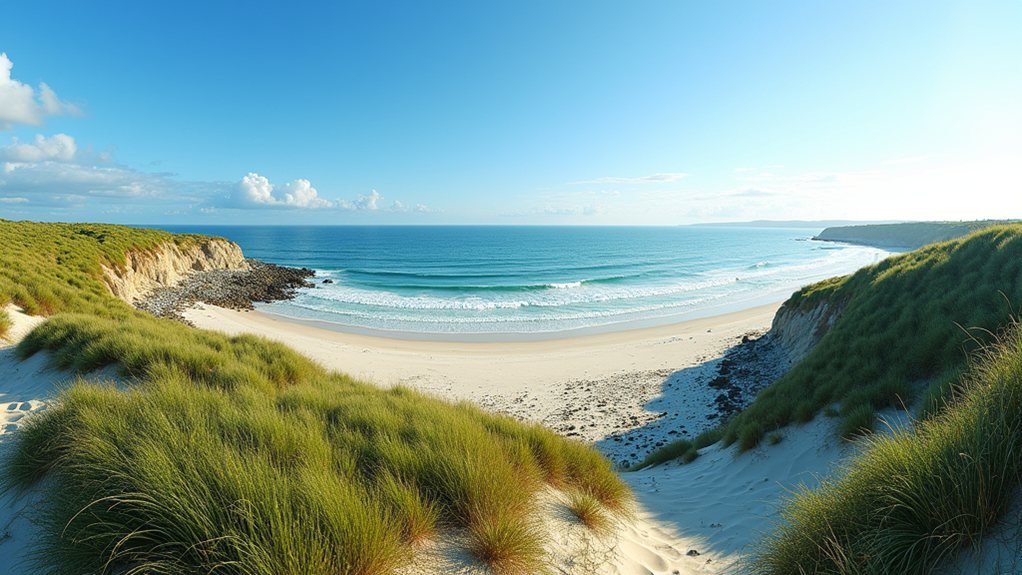

The new £30 million Coastal Fund is like a lifebuoy for coastal communities, aimed at tackling climate challenges such as erosion and rising seas. With £18 million earmarked for adaptation pilots, this initiative emphasizes local investment, requiring communities to pitch in 10%. Targeting vulnerable areas like East Riding of Yorkshire and Norfolk, it focuses on clever solutions like beach nourishment and habitat restoration. Want to know how these strategies reshape coastal management and protect our shores? Keep on exploring!
Quick Overview
- The £30 million Coastal Fund aims to enhance resilience in coastal communities against erosion and rising sea levels.
- £18 million is specifically allocated for Coastal Adaptation Pilots, focusing on sustainable practices and habitat restoration.
- Communities are required to contribute 10% funding, fostering local involvement and investment in adaptation efforts.
- Key projects include property purchases for at-risk homes and developing nature-based solutions like beach nourishment and dune restoration.
- The initiative emphasizes collaborative partnerships and eco-friendly strategies for long-term economic and environmental benefits.
What The £30M Coastal Fund Means For Communities?
As the clouds of climate change loom ever larger over coastal communities, the £30 million Coastal Fund emerges like a lifebuoy tossed to those steering through the turbulent waters of erosion and rising seas.
This funding, with £18 million earmarked for Coastal Adaptation Pilots, aims to bolster resilience in vulnerable regions. Additionally, the requirement for local contributions unveils further investment, creating a collaborative safety net. Local areas are expected to contribute 10% towards the funding, ensuring community involvement in addressing the challenges ahead. This initiative is particularly crucial as England’s coastline is projected to be among the fastest eroding in Europe. Many of these projects will also explore sustainable fisheries and habitat restoration to support long-term coastal health.
Key Coastal Erosion Projects And Initiatives For Adaptation
Coastal erosion projects are like the superheroes of seaside communities, swooping in to save the day from the relentless forces of nature. With £30 million in funding, these initiatives tackle erosion in areas like East Riding of Yorkshire, Norfolk, and Suffolk. The advanced adaptation efforts include property purchases for at-risk homes and innovative community partnerships. Furthermore, these projects are crucial as nearly 20,000 properties may face erosion risk by 2100. Additionally, the focus on climate change adaptation aligns with the objectives of national and local government plans to enhance resilience. Meanwhile, smaller-scale readiness actions funded by Regional Flood and Coastal Committees enhance resilience, relocating community buildings and testing early warning systems. It’s like giving coastal communities a lifebuoy, ensuring they stay afloat despite the waves of change crashing around them. Sustainable urban development also supports these efforts by integrating green infrastructure into coastal resilience planning.
Future Strategies For Sustainable Coastal Erosion Management
While the challenges of coastal erosion may seem intimidating, innovative future strategies are emerging that promise to reshape how communities tackle this issue.
Nature-based solutions, like beach nourishment and dune restoration, not only restore natural beauty but also provide protective buffers. Beach nourishment projects help replenish eroded beaches, enhancing both their aesthetic appeal and their capacity to protect against wave action. Additionally, the use of native vegetation for soil stabilization can significantly improve the resilience of coastal areas against erosion.
Imagine a living shoreline, where oysters and plants create habitats while softening wave impacts—nature’s own shield! Protecting upstream watersheds also helps maintain sediment balance and water quality that influence coastal resilience.
Hybrid approaches combine these green strategies with traditional structures, like integrating mangroves with seawalls.
Plus, these eco-friendly methods are not just good for the planet; they save money too.
Who knew saving the coast could be a win-win for both nature and wallets?