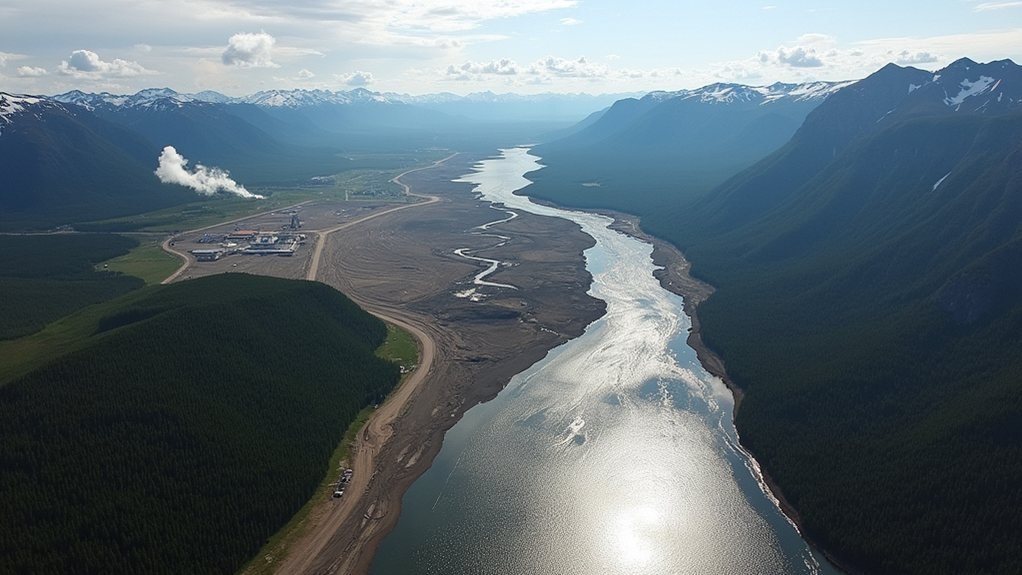
The Fording River mine expansion has led to alarmingly high selenium pollution levels, with readings at 31.5 times above British Columbia’s safety limit for aquatic life. That’s like adding a whole swimming pool’s worth of contaminants to a fishbowl! This toxic metal can deform fish and bioaccumulate in the food web, threatening larger predators like us. Regulatory actions and costly remediation plans are in motion, yet the battle to protect our rivers is far from over. Stay tuned for more on this unfolding story.
Quick Overview
- Selenium levels in the Fording River are 31.5 times above B.C.’s safety limit for aquatic life, with peaks reaching even higher.
- Fish in the river show deformities, indicating severe ecological impacts from selenium pollution.
- Teck Coal Limited has faced significant fines, totaling $76 million, for violations related to selenium contamination.
- The Elk Valley Water Quality Plan includes a $1.5 billion investment in water treatment facilities to address ongoing pollution issues.
- Urgent strategies are necessary to prevent further ecosystem damage and protect aquatic health amidst industrial activities.
Understanding Selenium Pollution Levels in the Fording River
As the sun glints off the Fording River, one might not suspect that this picturesque waterway has been grappling with an insidious enemy: selenium pollution.
Currently, selenium levels downstream can reach a staggering 63 parts per billion—31.5 times above the B.C. safety limit for aquatic life. Last year, these levels peaked at an alarming 38.5 times the safety threshold, with nearby Elk Valley waters measuring 267 times higher. Despite treatment attempts, selenium continues to flow untreated, leaving the river’s health in jeopardy. The majority of selenium and nitrate pollution‘s grip on the river is a grim reminder of the delicate balance between nature and industrial activity. Effective marine protection strategies must be implemented to prevent further damage to this vulnerable ecosystem and the life it supports. With the Elk Valley Resources facing fines for water pollution, the urgency to address this contamination has never been more critical.
Selenium Pollution’s Effects on Aquatic Life and Human Health
While the shimmering waters of the Fording River may seem inviting, lurking beneath the surface is a troubling reality: selenium pollution is wreaking havoc on both aquatic life and human health.
Fish are suffering deformities—think twisted spines and weird fins—thanks to toxic selenium levels. This poison doesn’t just stop at fish; it bioaccumulates, sneaking into the food web and eventually our plates. Selenium contamination triggers a cascade of bioaccumulation events that can lead to serious long-term ecological damage.
For humans, consuming contaminated fish can lead to selenosis, a fancy term for selenium poisoning. So, while dinner might look tasty, it could come with a side of serious health risks. Adopting sustainable food practices could help mitigate exposure to such environmental contaminants while promoting healthier ecosystems.
Bon appétit? Not quite.
Regulatory Actions and Remediation Plans
Regulatory actions and remediation plans surrounding the Fording River Mine expansion are akin to a high-stakes game of environmental chess, where each move is scrutinized and carries significant consequences.
Teck Coal Limited faced hefty fines totaling $76 million for violating the Fisheries Act due to selenium pollution. With selenium levels occasionally spiking 38.5 times above safety limits, the pressure is on. The estimated cost to treat severe selenium contamination in Elk Valley has reached $6.4 billion, highlighting the financial implications of these environmental challenges. The company was also ordered to pay the Environmental Damages Fund $58 million to support environmental projects aimed at restoring affected ecosystems.
The Elk Valley Water Quality Plan aims to stabilize these trends, investing $1.5 billion in water treatment facilities. Yet, with the clock ticking—these facilities must operate for a century post-closure—the stakes remain alarmingly high for aquatic health. Investors are increasingly examining these environmental issues through ESG frameworks that evaluate corporate performance beyond financial metrics alone.