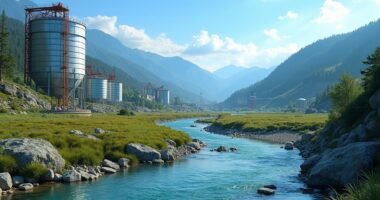
Digital acceleration is shaking up the mining industry, with AI partnerships between tech powerhouses like Microsoft and Google Cloud. These collaborations are introducing real-time data analytics, making resource sorting as easy as sorting socks—efficient and less messy. As mining operations embrace digitalization, they boost recovery rates and lower costs. However, it’s not all rainbows; challenges like regulations and workforce training remain. Stick around; there’s more to uncover about this high-tech transformation!
Transforming Mining Through Digital Innovation
As the mining industry stands on the brink of a digital revolution, one might wonder how the age-old practice of extracting minerals is being transformed by the latest technological marvels. Enter the era of digital acceleration, where artificial intelligence (AI) and cloud computing are not just buzzwords but powerful allies in reshaping the mining landscape. With industry leaders like Microsoft and Google Cloud teaming up with mining giants like BHP and US Steel, the transformation is nothing short of spectacular.
Imagine a mining operation where real-time data analytics are as common as picking up your smartphone. Thanks to AI, ore sorting has become so efficient that it boosts recovery rates while slashing processing costs, making miners feel like they’ve hit the jackpot. Predictive maintenance is on the rise too, allowing companies to keep their equipment running smoothly and minimize those dreaded downtimes. It’s like having a crystal ball—except instead of predicting your love life, it’s predicting when your drill might need a tune-up. Furthermore, a significant push for digital technologies is underway to improve exploration and operations, highlighting the industry’s commitment to innovation. Additionally, AI models forecast demand for specific products and optimize inventory levels, ensuring that mining companies can streamline their processes effectively. Similar to sustainable agriculture, mining operations are increasingly deploying precision sensors to optimize resource inputs and minimize environmental footprint.
Imagine a mining operation where AI transforms ore sorting and predictive maintenance into efficiency powerhouses, revolutionizing the industry like never before.
However, it’s not all rainbows and unicorns. The industry faces challenges, like regulatory hurdles and the need for a workforce that’s ready to embrace these shiny new technologies. Smaller mines often find themselves in a pickle, grappling with the high costs of cutting-edge equipment. And let’s not forget about internet connectivity in remote locations. If only Wi-Fi could magically appear in the middle of nowhere!
But the benefits of these partnerships and technologies are crystal clear. Between $290 billion and $390 billion in annual savings could be realized by using AI in mining. That’s a lot of resources, and not just regarding money—think energy efficiency and sustainability.
With IoT sensors monitoring environmental impacts and autonomous vehicles taking on risky tasks, the future of mining is not only about extracting minerals but also about doing so responsibly. As digital acceleration gathers momentum, the mining industry is poised to become a model of innovation and efficiency.