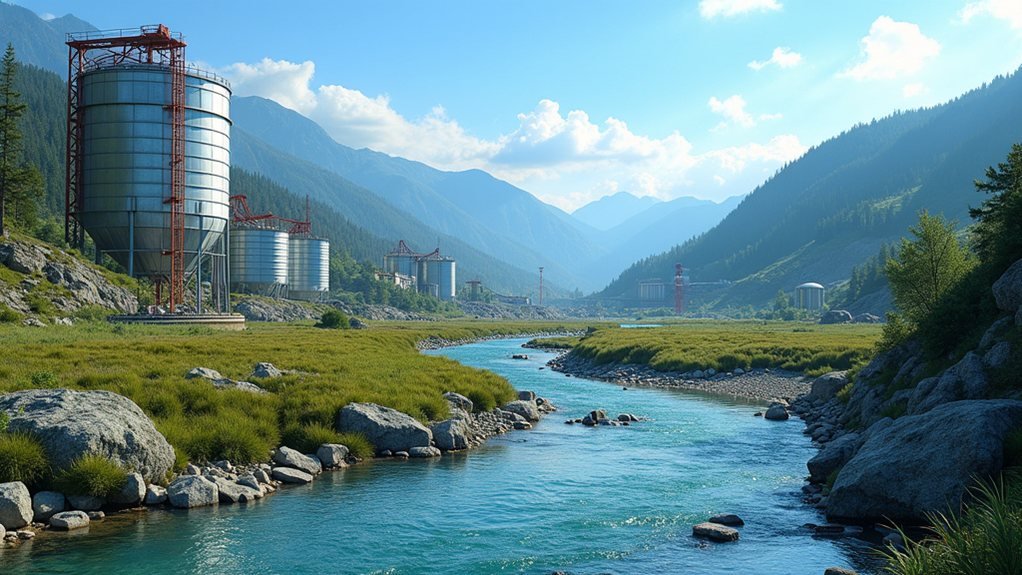

GRI 14 is shaking things up for US mining operations by introducing new water disclosure mandates. Picture it: mines now have to spill the beans about their water impacts, especially in areas with a thirsty earth. Think of it as a transparency spotlight—keeping companies accountable for their water usage and quality. In this grand game of stakeholder trust, everyone’s watching. Get ready to learn about how to navigate these new waters and meet expectations like a pro!
Quick Overview
- GRI 14 mandates US mining companies to disclose water impacts and management strategies starting in 2026, enhancing operational transparency.
- Companies must report water usage at the mine-site level, especially in regions facing water scarcity concerns.
- The standard emphasizes identifying both direct and indirect water use to create effective reduction strategies.
- Engaging local communities in monitoring water impacts fosters trust and improves transparency in operations.
- Compliance with GRI 14 can elevate the reputation of US mining operations amidst increasing scrutiny on environmental practices.
What Is GRI 14 and Its Relevance to US Mining?
In the ever-evolving landscape of mining, GRI 14 emerges as a beacon of transparency, shining a light on the industry’s often murky waters. This global standard, tailored for mining, aims to address the sector’s far-reaching impacts on the economy, environment, and communities. Officially effective in 2026, GRI 14 encourages mining organizations to report thoroughly, ensuring stakeholders get the full picture. With increasing scrutiny from regulators and investors, the standard fosters responsible mineral supply chains. Think of GRI 14 as a GPS for mining companies, guiding them through the complex terrain of accountability and sustainable practices. As over 14,000 companies report under GRI standards globally, the importance of compliance and transparency cannot be overstated. By committing to water stewardship, mining companies can significantly enhance their reporting practices and stakeholder engagement. Forward-thinking operations are increasingly implementing pervious pavements and other natural water solutions to mitigate runoff issues at mining sites.
What Are the New Water Reporting Requirements Under GRI 14?
How exactly do mining companies tackle their water reporting responsibilities under GRI 14? They must navigate the tricky waters of transparency by disclosing impacts and management of water and effluents.
This means reporting at the mine-site level, especially in water-stressed areas. Each company needs to treat water quality degradation—like acid mine drainage—as a serious concern, not just an afterthought. Moreover, the standard emphasizes site-level transparency to ensure stakeholders can assess potential impacts.
They also have to explain any omissions in their disclosures, ensuring stakeholders can assess potential impacts. Companies must identify both direct consumption and indirect water use throughout their operations to develop effective reduction strategies.
Think of it as a high-stakes game of show-and-tell, where the stakes are the environment and local communities.
How to Meet Stakeholder Expectations Despite Disclosure Limitations?
While steering through the complex world of water reporting, mining companies often find themselves in a tight spot, balancing stakeholder expectations with the limitations of their disclosures.
To smoothen this bumpy ride, integrating transparent strategies is key. By simplifying water quality into high and low categories, stakeholders can grasp the essentials—like a menu with clear options. Additionally, a proactive approach to water management helps companies enhance sustainability and address emerging contaminants that threaten water quality. Implementing standardized water reporting metrics can also provide a clearer framework for companies to communicate their water usage effectively. Conducting supply chain evaluations can reveal critical environmental impacts that extend beyond direct operations, providing a more comprehensive view of water usage and risks.
Engaging local communities in monitoring and establishing grievance mechanisms builds trust, making companies seem less like aloof giants and more like friendly neighbors.
Ultimately, maneuvering regulatory waters with proactive measures not only meets expectations but also transforms potential pitfalls into opportunities for genuine connection.