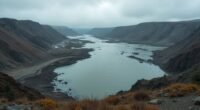
The push for critical minerals, highlighted by Trump’s interest in Greenland, shapes a race that could jeopardize our planet. Nations are scrambling for resources like rare earth elements, essential for tech and national security. However, this scramble risks environmental harm, with biodiversity declines and pollution becoming ever more pressing. Think of it as a high-stakes game of musical chairs—sooner or later, someone will end up without a seat, and it might be Mother Nature. Discover more surprising angles on this unfolding saga.
Quick Overview
- Trump’s interest in acquiring Greenland highlights the strategic competition for critical minerals essential for national security and technological advancement.
- Increased mining activities for rare earth minerals in Greenland can exacerbate environmental degradation and contribute to global carbon emissions.
- The U.S. reliance on foreign sources for critical minerals, particularly from China, intensifies the urgency for resource acquisition, risking diplomatic tensions.
- Indigenous communities in Greenland may face severe impacts on their livelihoods and cultural heritage as mining operations expand in their territories.
- Sustainable mining practices are crucial to balance mineral extraction with biodiversity conservation and the protection of vulnerable ecosystems.
Understanding Trump’s Greenland Acquisition and Its Impact on Critical Minerals
What drives a nation to eye a vast, icy land like Greenland? For the United States, it’s all about vital minerals.
With rare earth deposits like neodymium and graphite, Greenland is a treasure trove for strategic resources essential for national security. Trump’s rhetoric has reignited interest post-Venezuela raid, suggesting that seizing Danish territory could bolster U.S. interests. Moreover, Greenland is rich in natural resources, including significant reserves of rare earth elements, which further elevates its strategic importance. The US National Security Strategy emphasizes securing critical minerals supply from Greenland as a priority for enhancing national defense capabilities.
Meanwhile, China’s dominance in rare earth mining adds urgency to the U.S. push. It’s like a high-stakes race for the last piece of cake, and everyone wants a slice—especially when that cake is packed with minerals vital for technology and defense. Companies involved in mining these resources should conduct thorough biodiversity impact assessments before expanding operations in these sensitive Arctic ecosystems.
What Happens When Resources Are Seized? The Sovereignty and Supply Chain Risks?
How does the sudden seizure of essential resources ripple through the intricate web of global supply chains and national sovereignty? When resources vanish overnight, countries find themselves grappling with not just economic fallout but also a sense of lost control.
Think of it like someone swiping your favorite snack—chaos ensues! Nations face diplomatic isolation, legal battles, and rising resource nationalism, as they scramble to reclaim what’s theirs. Meanwhile, supply chains buckle under pressure, leaving industries gasping for air. Prices soar, and investment dwindles, creating a perfect storm of instability that leaves everyone wondering: who’s really in charge here? Building resilient supply networks requires long-term planning that addresses both immediate disruptions and future sustainability needs. The concentration of critical minerals supply chains in a few countries, primarily refined in China, only exacerbates these challenges. As the U.S. becomes increasingly dependent on foreign sources for critical minerals, the stakes of resource control escalate even further.
How Global Competition for Critical Minerals Affects Environmental Sustainability
As nations scramble to secure their foothold in the critical minerals race, the environmental consequences of this competition are becoming alarmingly clear.
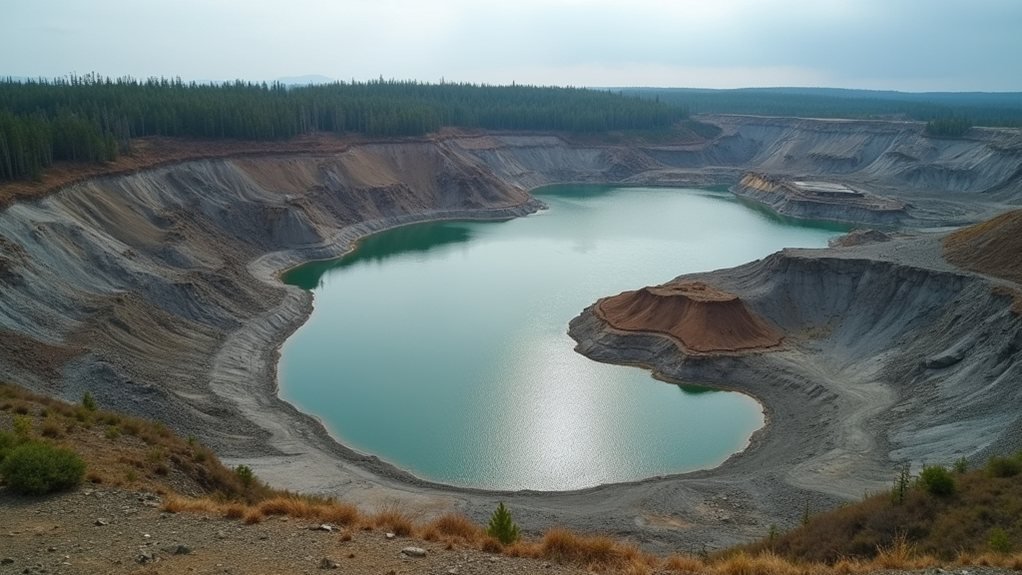
Mining operations, responsible for about 8% of the world’s carbon footprint, release significant greenhouse gas emissions while devastating ecosystems. The extraction processes disrupt habitats and contaminate water supplies, leaving local communities gasping for clean water. Critical minerals are crucial for clean energy technologies, yet their extraction often comes at a steep environmental and social cost. Furthermore, the recovery of these minerals from existing U.S. mines could significantly reduce the environmental impact of mine waste.
With over 1.4 million hectares of forest lost to mining since 2001, biodiversity plummets, and Indigenous livelihoods are jeopardized. Implementing sustainable management practices in mining-adjacent forests could help preserve biodiversity while still providing necessary timber and resources.
As the global demand for minerals surges, the race poses dire threats to both the planet and the people who depend on its resources.