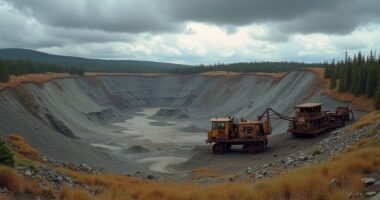

US mining towns are grappling with the rollercoaster ride of boom-bust economies, driven by volatile commodity prices and fickle policy changes. When mineral demands skyrocket, these communities often scramble to keep up—think infrastructure overload! To avoid this shaky ride, towns can create smart capital plans and diversify their economies. It’s all about building resilience. Buckle up because there’s more to uncover about how these towns can navigate the ups and downs of mining!
Quick Overview
- Mining towns are vulnerable to economic fluctuations, with reliance on a single industry amplifying the boom-bust cycle risk.
- Commodity price volatility can rapidly transform mining booms into economic busts, affecting local communities significantly.
- Sudden influxes of workers during booms strain infrastructure, leading to long-term challenges for mining towns.
- Implementing disciplined capital planning and land use policies can mitigate the impact of boom-bust cycles in mining communities.
- Transitioning to diverse economies and fostering sustainable development are crucial for resilience against future economic downturns.
How Policy Changes Really Affect Mining Towns
While it might seem that policy changes in Washington, D.C., are just distant echoes for small mining towns, the reality is far more immediate—and often chaotic.
President Trump’s 2025 executive order to expedite mineral production has led to a flurry of fast-tracked projects, but the rush to approve can ignite local opposition. Brazil’s National Mining Plan 2050 emphasizes the need for sustainable development, a principle that could guide similar policies in the U.S.
Communities often feel like they’re in a high-stakes game of poker, where the stakes include environmental concerns and public health. Rising demand for minerals necessitates both imports and domestic mining, adding to the complexities faced by these regions.
Communities navigate a precarious gamble, balancing environmental risks and public health in the rush for mining approvals.
Implementing biodiversity conservation practices in mining-affected forests could create a more balanced approach to resource extraction while preserving ecological integrity.
Without meaningful engagement, developers risk litigation and reputational damage.
As they say, haste makes waste—especially when it comes to mining, where local trust is the gold standard.
Understanding the Economic Risks of Mining Fluctuations for Local Communities
Mining towns often find themselves riding a rollercoaster of economic highs and lows—think of it as the ultimate game of musical chairs, where the music stops and everyone scrambles for a seat when prices dip.
The volatility of commodity prices means a mining boom can quickly flip into a bust, leaving communities struggling. Over-reliance on a single industry amplifies the impact, as infrastructure crumbles under sudden influxes of workers. When demand for metals like lithium and cobalt surges, towns thrive, but when it falls, they face stark realities—think ghost towns instead of bustling hubs. This instability is further exacerbated by resource and reserve depletion driven by declining ore quality and underinvestment, as anticipated demand requires an investment of US$5.4 trillion in mining and metals by 2035, highlighting the need for sustainable practices. Implementing site rehabilitation strategies can help mining towns transition to more diverse economies after extraction activities cease.
It’s a precarious balancing act.
What Communities Can Do: Strategies to Mitigate Mining Boom-Bust Cycles
When communities face the unpredictable tides of mining boom-bust cycles, a proactive approach can be their best defense.
Disciplined capital planning helps mining companies avoid reckless expansions during booming times, like a kid holding back on candy before dinner. Communities can craft land use policies that set the stage for sustainable development, keeping the chaos at bay. Additionally, the mining sector’s reliance on political variables necessitates careful consideration of external influences in planning for the future. Establishing integrated management systems that address environmental and safety concerns can help mining operations maintain compliance while protecting community health.
Revenue-sharing agreements, akin to putting money in a rainy-day fund, guarantee benefits last beyond the boom.
Finally, fostering diverse economies prepares towns for downturns, turning them into resilient fighters rather than casualties of the next market dip. Smart planning is the name of the game!