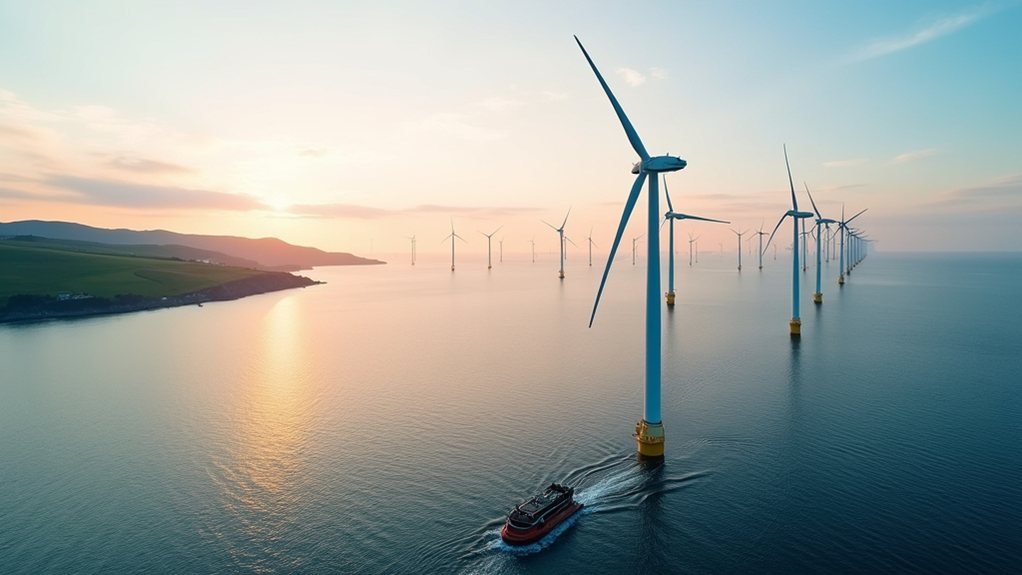

The UK’s wind power generation has soared to record heights, greatly impacting energy prices. This green powerhouse hit a peak of 22,711 megawatts on November 11, 2025, supplying electricity to over 22 million households! Wind energy has dropped wholesale prices by a whopping 25%, saving the average household about £250 yearly. With ambitious projects ahead, including a massive offshore expansion, wind energy not only brightens homes but also offers a promising glimpse into a sustainable future. Curious about what’s next?
Quick Overview
- UK wind energy generation peaked at 22,711 megawatts, meeting 43.6% of electricity demand and contributing significantly to price reductions.
- Wind power reduced wholesale electricity prices by up to 25%, resulting in lower average bills for consumers.
- The average electricity bill dropped from £101/MWh to £76 due to increased wind energy capacity.
- Over 13 years, wind generation has led to a £104.3 billion reduction in energy bills across the UK.
- Continued investment in wind energy is essential for maintaining low energy prices and supporting the clean energy transition.
Record-Breaking Wind Energy Generation in the UK
In an exhilarating turn for renewable energy enthusiasts, the UK recently shattered wind power generation records, showcasing just how far the country has come in harnessing nature’s breezy bounty.
On November 11, 2025, peak generation soared to an impressive 22,711 megawatts—enough to power over 22 million homes during a chilly evening. This remarkable feat met 43.6% of the nation’s electricity demand, surpassing the previous record set just under a year earlier. This achievement set a new record generation for wind energy that illustrates the increasing reliance on renewable sources.
With onshore wind leading the charge, this milestone not only highlights wind energy’s pivotal role in the UK’s clean energy evolution but also signals a promising future for homegrown energy security. wind energy and the broader transition to low-carbon power are central to the ongoing shift away from carbon-intensive energy systems.
How Wind Energy Helps Cut Down Energy Bills?
How Wind Energy Helps Cut Down Energy Bills?
Wind energy isn’t just a champion of sustainability; it’s also a savvy wallet-friendly ally for consumers. By displacing older gas-fired plants, wind power slashed UK wholesale electricity prices by up to 25% in 2024. Imagine dodging a hefty £101/MWh bill for a breezy £76—talk about a financial windfall! In fact, the expansion of wind capacity accounted for 30% of UK electricity generation, demonstrating its significant impact on the market. Furthermore, the £104.3 billion reduction in energy bills over 13 years shows that wind generation saved consumers £104.3 billion, proving that green energy pays off. Each household could save around £250 annually, all while keeping gas prices in check. As renewable energy benefits continue to accumulate, more households may benefit from lower bills through sustained deployments and supportive policy frameworks.
Future Prospects for Wind Energy Expansion in the UK
As the UK looks toward a future powered by renewable energy, the potential for wind energy expansion is nothing short of exhilarating.
With offshore wind capacity set to quadruple over the next decade, the nation is banking on projects like Dogger Bank to bolster its grid by 2026. The Clean Power 2030 Action Plan guarantees that investment flows are steady, while revamped grid infrastructures prioritize swift, ready projects. To achieve this ambitious growth, substantial improvements in grid infrastructure will be essential. Furthermore, the expert advisory services provided by firms like OWCL will be crucial in navigating regulatory compliance and facilitating investments in these offshore wind projects.
However, challenges lurk—environmental concerns and logistical hurdles must be navigated. If successful, this wind expansion could not only meet clean energy goals but also serve as a global model for renewable shifts. In addition, adopting sustainable energy strategies can further enhance grid resilience and long-term cost savings.