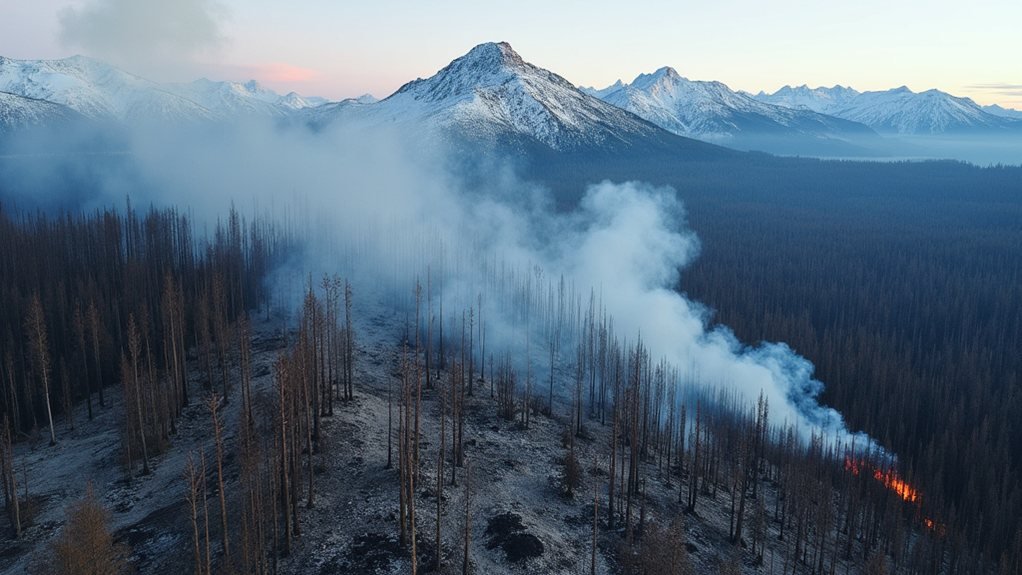

In British Columbia, a peculiar situation unfolds as 24 wildfires, dubbed “zombie fires,” continue to smolder beneath the winter snow. These underground fires feed off organic materials like peat, reaching sizzling temperatures up to 800°F. But here’s the kicker: they release massive amounts of carbon dioxide, worsening climate change. The cold weather won’t stop them. Spring might awaken these stealthy flames, creating risks. Curious about how communities can prepare for future seasons? There’s more to learn!
Quick Overview
- British Columbia is currently facing 24 active wildfires known as “zombie fires,” which smolder beneath the snowpack.
- These fires are fueled by organic soil layers and peat bogs, with underground temperatures reaching up to 800°F.
- Detection of zombie fires is challenging due to snow cover, making them difficult to manage and monitor.
- Persistent flames from these fires release significant carbon dioxide, worsening climate change effects.
- Communities can enhance resilience by adopting FireSmart practices and utilizing resources to manage wildfire risks.
Current Status of Zombie Fires in B.C
As winter descends upon British Columbia, the province finds itself in a peculiar predicament: 24 wildfires are still stubbornly flickering to life, despite the snowy season arriving.
In northeastern B.C., these so-called “zombie fires” continue smoldering beneath the snowpack, fueled by organic soil layers and peat bogs.
With temperatures underground reaching a toasty 800°F, these fires are the ultimate survivalists, defying seasonal norms. Soil organic matter can store heat and prolong combustion in these environments, especially where thick peat accumulations exist and contribute to long-burning peat.
The increased wildfire activity in the region is linked to climate change effects, further complicating the situation.
Experts emphasize that the occurrence of multi-winter fire activity is rare, highlighting the unusual nature of this phenomenon.
As snow obscures thermal signals, detection becomes a game of hide and seek.
Unfortunately, spring could bring a risky reemergence, as dry conditions and winds may awaken multiple fires from their winter slumber.
Zombie Fires and Their Impact on B.C
While the snowy blanket of winter may seem like a comforting cover for British Columbia’s forests, it masks a hidden threat: the notorious zombie fires. These underground infernos, fueled by peat and organic materials, can smolder undetected, waiting for spring’s warmth to reignite. With over 100 active zombie fires reported, these persistent flames release gigatonnes of carbon dioxide, exacerbating climate change and creating a cycle of destruction. Climate change is a primary factor driving the rise of these dangerous fires. The challenge? Detecting and managing these stealthy fires is no walk in the park. As B.C. faces this fire crisis, innovative strategies are essential to combat the looming threat lurking beneath the snow. Understanding that microbial activity generates heat in peat soils can help inform these strategies. Fire regimes are shifting due to rising temperatures and altered precipitation patterns, contributing to more frequent and intense burning in vulnerable ecosystems like peatlands and boreal forests, a trend linked to global warming.
How to Prepare for Future Zombie Fire Seasons?
Zombie fires may be the quiet villains of British Columbia’s forests, but they shouldn’t be left to their own devices.
Preparing for future zombie fire seasons involves proactive steps. Homeowners can use the “Begins At Home” guide to modify properties and create FireSmart landscapes. Reducing heat is crucial, as it can help control the movement of future wildfires and protect homes. Additionally, engaging in FireSmart practices can significantly enhance community resilience against wildfires.
Proactive steps are essential for homeowners to create FireSmart landscapes and prepare for future zombie fire seasons.
Communities should adopt shared responsibility principles and establish inclusive governance for coordinated efforts. Managing landscapes to maintain soil health supports long-term ecosystem resilience and reduces fire risk.
Hazardous fuels can be managed through prescribed burns and fuel breaks using natural features.
Finally, accessing funding and training programs boosts wildfire prevention knowledge.
It’s like preparing a delicious feast: a little planning goes a long way in keeping the flames at bay!