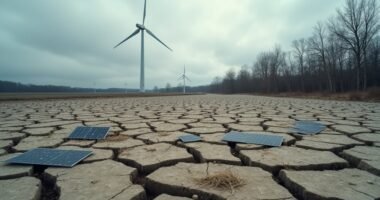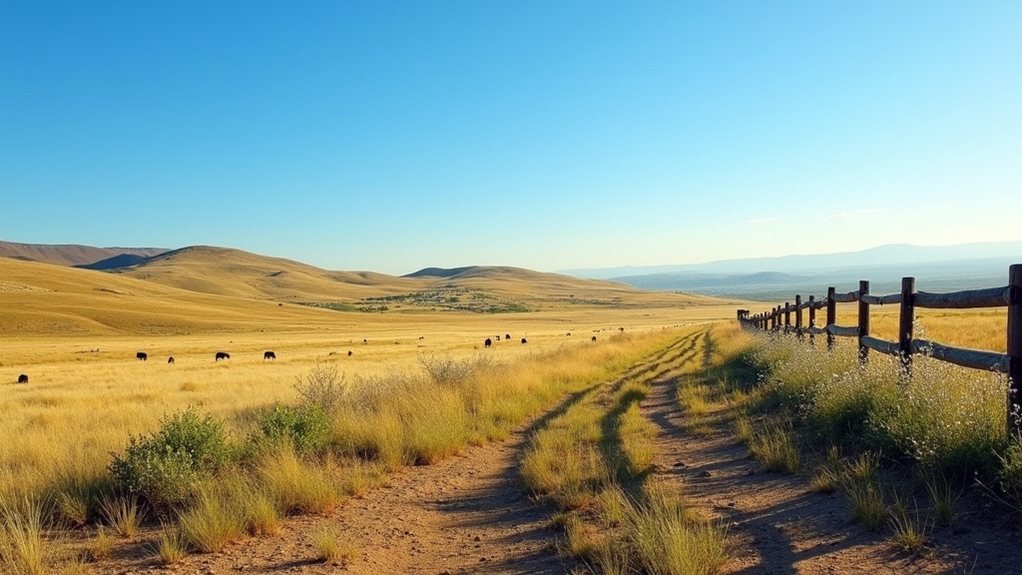

The Trump Beef Plan has raised eyebrows by enabling a quick pass around environmental reviews for grazing permits on public lands. This shortcut compromises essential ecological safeguards, sparking a concern that overgrazing and invasive plants could take over like party crashers. Taxpayers fund a staggering 93% discount on grazing fees, all while ranchers enjoy significant perks. It’s a classic case of balancing economic benefits with environmental risks. Buckle up; there’s more to this story than meets the eye.
Quick Overview
- The Trump Beef Plan promotes bypassing NEPA reviews, undermining environmental safeguards for public lands.
- Categorical exclusions allow outdated assessments, facilitating unchecked livestock grazing expansion on public lands.
- Over 35 million acres of public land lack completed health assessments, risking ecological integrity.
- Taxpayer-funded grazing subsidies cost $100 million annually, benefiting only a small fraction of the nation’s beef supply.
- Weak compliance oversight leads to unauthorized grazing, overgrazing, and significant ecological degradation on public lands.
How Environmental Safeguards Are Being Skipped in Grazing Permits
While the promise of sustainable grazing might sound like a comforting thought, the reality is that environmental safeguards are being sidestepped in surprising ways.
The Trump Beef Plan encourages public land managers to skip National Environmental Policy Act (NEPA) reviews, treating grazing permits like fast food—quick and without nutritional value. Categorical exclusions, originally meant for telecommunications and logging, now apply to livestock operations, enabling outdated assessments to dictate today’s grazing practices. Moreover, this guidance promotes expansion of livestock grazing on national forests and public lands, further compromising ecological integrity. In fact, over 35 million acres lack completed land health assessments, resulting in inadequate monitoring of grazing impacts.
Automatic 10-year permit renewals mean that even degraded lands can be reauthorized without scrutiny. With 75% of permits lacking recent reviews, the future of these lands hangs in a precarious balance. This trend undermines the evaluation of life cycle impacts across the full span of a product or activity, from resource extraction to disposal.
Consequences of Weakening Compliance Oversight in Grazing Permits
The landscape of grazing permits is experiencing a seismic shift, and the consequences of weakening compliance oversight are becoming increasingly evident.
Unauthorized grazing, unchecked by regulations, leads to overgrazing, which spreads invasive plants like a bad rumor in a small town. Stripped vegetation near creeks? That’s like inviting silt to a fish nursery party—nobody’s happy. With the Bureau of Land Management‘s records missing for millions of acres, it’s like playing hide-and-seek with environmental assessments. Meanwhile, automatic renewals for degraded land are akin to giving a messy room a free pass. The stakes are high, and the environment is paying the price. BLM’s rangeland management staff has decreased significantly, limiting the ability to manage these vital resources effectively. The Forest Service’s oversight is challenged, making it harder to ensure compliance with grazing regulations. Responsible stewardship that balances resource production with biodiversity conservation is essential to sustain these landscapes for the future.
How Taxpayer Funds Support Livestock Grazing and Its Economic Impacts
Taxpayer support for livestock grazing may not be the first thing that comes to mind when discussing government spending, yet it plays a surprisingly significant role in the rural economy.
In 2024, ranchers benefited from a staggering 93% discount on grazing fees, costing taxpayers around $100 million annually. Grazing fees are set at a minimum of $1.35 per animal unit month (AUM) for 2023, which further illustrates the financial advantages for ranchers. Additionally, approximately 93.0 million ha authorized for grazing across BLM and USFS lands emphasizes the scale of public land use for this purpose. The policies governing these practices also intersect with broader goals for sustainable food practices on public lands.
With public lands covering millions of acres, the economic ripple effect is notable—over $1 billion in livestock sales stem from these subsidized forages.
However, this support raises eyebrows, as it props up only 2% of the nation’s beef supply while leaving many small operations hanging by a thread.