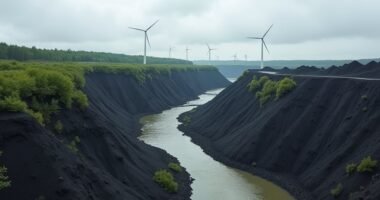

Canada’s tree planting strategy could work wonders, potentially removing up to five times the nation’s annual emissions. Trees, those green superheroes of carbon capture, absorb a whopping 7.6 billion metric tonnes of CO2 each year! The plan involves planting 6.4 million hectares of boreal forest, which could soak up around 3.9 gigatonnes of CO2 by 2100. Talk about a refreshing change! And there’s so much more to explore about the trees’ role in our climate battle.
Quick Overview
- A strategic tree planting initiative could absorb up to 19 gigatonnes of CO₂, significantly exceeding Canada’s current annual emissions of 694 Mt CO2eq.
- Canada’s 2 Billion Trees program aims to plant over 300 species, enhancing biodiversity and carbon sequestration potential.
- Large-scale planting in Canada’s northern boreal forest could capture 3.9 gigatonnes of CO₂ by 2100, contributing to climate targets.
- Sustainable management practices are essential, maximizing the carbon benefits and promoting healthier ecosystems through diverse and mixed-species forests.
- Community engagement and long-term commitment are crucial for effective tree planting initiatives, ensuring ongoing ecological and carbon storage benefits.
Addressing Canada’s Emissions Challenge: The Role of Tree Planting
As Canada grapples with the intimidating challenge of reducing its greenhouse gas emissions, tree planting emerges as a surprisingly effective ally, like a trusty sidekick in an action movie.
With current emissions hovering around 694 Mt CO2eq, and targets set for significant reductions by 2030 and 2035, the urgency is palpable.
Trees, those silent champions, absorb CO2 through photosynthesis—think of them as nature’s air purifiers. Canada is a signatory to the UNFCCC and the Paris Agreement, which underscores the importance of enhancing tree cover to meet these climate commitments. In fact, boosting tree cover could help address the growing emissions from the oil and gas sector, dramatically enhancing Canada’s ability to meet its ambitious goals.
Ecosystem restoration and habitat protection are complementary approaches that can amplify tree planting benefits by supporting biodiversity and long-term carbon storage ecosystem restoration. After all, who wouldn’t want a green superhero in their corner, battling climate change?
Why Tree Planting Is Key to Carbon Capture
Tree planting stands out as a superhero in the ongoing battle against climate change, wielding the power of carbon capture like a caped crusader brandishing a shield.
With forests absorbing a staggering 7.6 billion metric tonnes of CO2 annually—twice what they emit—these green giants are nature’s best defense against rising emissions.
Mature forests, like wise elders, outperform new plantings in carbon storage, proving that sometimes, older is indeed better. Additionally, recent research indicates that trees and plants are 31 percent more important for carbon sequestration than previously thought.
Diverse forests pack an even bigger punch, storing over 70% more carbon than their monoculture counterparts. Tree planting is highly cost-effective for carbon dioxide removal in comparison to alternative technologies.
Sustainable management practices that maintain biodiversity are essential to maximize carbon benefits and resource yields, especially when supporting mixed-species stands.
Implementing Large-Scale Tree Planting Strategies
While the quest for a greener planet may seem intimidating, implementing large-scale tree planting strategies offers a beacon of hope in the fight against climate change.
For instance, planting 6.4 million hectares along Canada’s northern boreal forest could absorb a whopping 3.9 gigatonnes of CO₂ by 2100. Imagine scaling that up to 19 gigatonnes!
By focusing on the right species—like pines for sun-soaked spaces—Canada’s 2 Billion Trees program plants over 300 species. Tree planting is not only about planting trees but also involves careful site selection and long-term management to maximize carbon and ecological outcomes. Additionally, initiatives like Ottawa’s 40% urban canopy cover target can significantly enhance local ecosystem benefits and community engagement.
However, challenges linger, from site selection to urban canopy coverage, reminding us that tree planting is a marathon, not a sprint—unless you’re a squirrel, of course! Ecosystem services such as pollination support are also strengthened when tree planting is planned to enhance biodiversity.