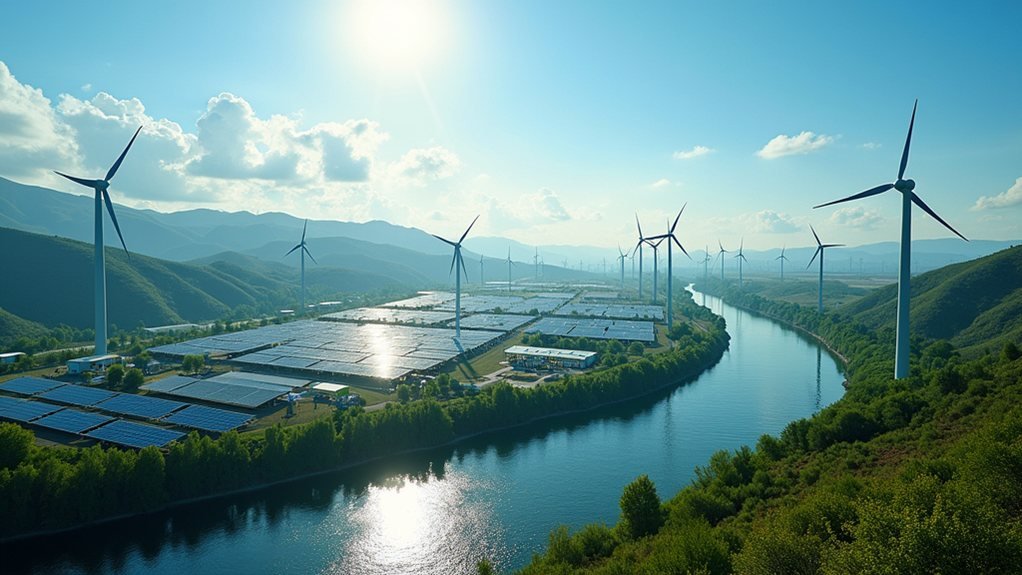

The U.S. clean energy sector is buzzing with excitement as equity investments soar to $42 billion. This surge signals a booming climate tech revolution, overtaking fossil fuels for a second straight year. Electric vehicles and solar power are leading the charge, thanks to falling costs and investor enthusiasm. With innovative technologies like battery storage reshaping the market, sustainable solutions are finally hitting the mainstream. Curious about what’s next for clean energy funding? There’s a lot more on the horizon!
Quick Overview
- U.S. clean energy investment reached a record $378 billion in 2025, demonstrating significant growth in the sector.
- Electric vehicle sales significantly contributed to the $42 billion equity investment surge in the clean energy sector.
- Clean energy investments surpassed fossil fuels for the second consecutive year, highlighting a shift in market dynamics.
- Innovative technologies like battery storage and microgrids are reshaping the clean energy landscape, driving further investment.
- The funding landscape is rapidly evolving, with blended finance and partnerships addressing funding gaps in the clean energy market.
Key Factors Fueling the Climate Tech Investment Boom
As the world grapples with climate change, it turns out that the tech sector is not just about flashy gadgets and social media scrolls; it’s become a powerhouse for climate tech investment.
The soaring energy demands of data centers, expected to jump 130% by 2030, are pushing companies to secure clean energy solutions. Clean energy investment grew by 31% to $14.4 billion in 2025, reaching a three-year high. Investment benefits are expected across hardware, software, and utility-scale energy storage sectors.
Think of it as tech’s version of a “green revolution.” Hyperscalers are locking in carbon-free energy like it’s the latest smartphone.
Meanwhile, nuclear and geothermal technologies are gaining traction, proving that the quest for sustainable power is not just a trend, but a smart business move in today’s market. Grid modernization efforts are helping integrate advanced grid technologies to enable higher renewable penetration and improved efficiency.
US Clean Energy Equity Investment Surges
The surge in clean energy equity investment in the U.S. is like a rocket taking off, fueled by a mix of innovation, necessity, and a sprinkle of competitive spirit.
In 2025, U.S. clean energy investment soared to a record $378 billion, reflecting a 3.5% year-over-year increase. This boom, driven largely by electric vehicle sales, saw the clean energy sector surpass fossil fuels for the second consecutive year. Electric transport attracted a staggering $893 billion globally, highlighting the momentum behind this transformation. Utility-scale solar and storage were the stars, attracting $17 billion. Even amidst policy uncertainty, private investment thrived, proving that when it comes to clean energy, the sky’s the limit—unless you’re a fossil fuel. Global clean energy investment reached US$2.3 trillion in 2025, underscoring the widespread commitment to sustainable energy solutions. Solar, wind, and hydro technologies continue to benefit from falling costs and improved deployment practices.
What’s Next for Clean Energy Funding?
While many might assume that clean energy funding has reached its peak, the reality is that the landscape is shifting faster than a solar panel catching the morning sun.
With global energy investments soaring to $2.3 trillion by 2025, the focus is now on blended finance and strategic partnerships that bridge funding gaps. Climate tech investment ecosystem has expanded beyond renewables and electric vehicles, signaling a broader range of opportunities. As tax credits face expiration, 2026-2027 will witness a surge in activity, creating a race for safe-harbor projects. Moreover, the rapid growth of renewable technologies necessitates innovative market mechanisms to enhance affordability and access.
Global energy investments are set to reach $2.3 trillion by 2025, emphasizing blended finance and strategic partnerships to close funding gaps.
Meanwhile, innovative technologies like battery storage and microgrids are reshaping the market. This transition also accelerates the adoption of grid modernization to support higher shares of distributed clean resources.
Indeed, clean energy’s future holds promise, even if it requires maneuvering a few bureaucratic hurdles.