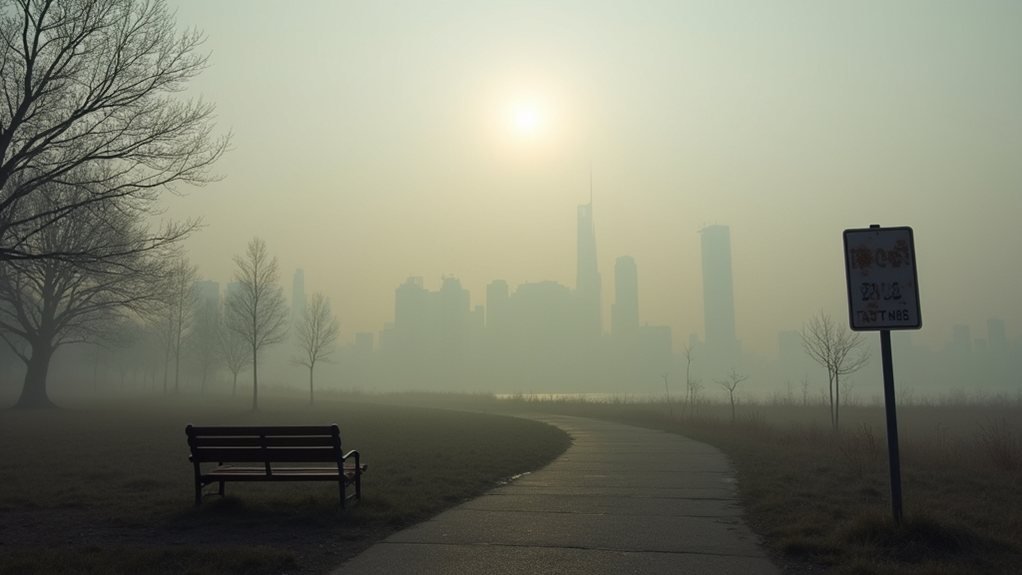
Air pollution can stealthily snatch away the health perks of your daily workout. When smog levels rise, the benefits of exercise drop greatly, especially for those living in areas with high PM2.5 levels. Vulnerable groups, like children and older adults, feel the brunt of it. Imagine running a marathon, only for the pollution to crash the party! Knowing when to exercise safely amidst smog can make a world of difference. Stay tuned to discover some savvy strategies!
Quick Overview
- Regular exercise significantly reduces mortality in clean air, but benefits drop sharply when PM2.5 levels exceed 25 μg/m³.
- Vulnerable populations, including children and older adults, face increased health risks from exercising in polluted air.
- Air pollution can negate the cardiovascular benefits of exercise, especially in areas with high PM2.5 levels.
- To minimize exposure, exercise during early mornings or late evenings when pollution levels are typically lower.
- Monitoring the Air Quality Index (AQI) is essential for determining safe outdoor exercise conditions and adjusting plans accordingly.
The Impact of Air Pollution on Exercise Benefits
Air pollution and exercise might seem like an odd couple, like oil and water at a dance party. Yet, they frequently share the same space, complicating fitness goals. Regular exercise can lower mortality rates by a whopping 30% in cleaner air, but that benefit plummets to just 12-15% when air pollution spikes above 25 μg/m³. In areas where PM2.5 exceeds 35 μg/m³, the protective effects on cancer mortality vanish. Notably, nearly half (46%) of the global population lives in areas exceeding 25 μg/m³ PM2.5 annually. HHS 2018 guidelines recommend physical activity and reference EPA’s AQI for pollution forecasts. Understanding how to interpret air quality data is essential for making informed decisions about outdoor exercise timing. While exercise still offers cardiovascular perks, high pollution levels can counteract these gains, leaving fitness enthusiasts to ponder whether their daily jog is truly worth the smog.
Identifying Vulnerable Groups and Risk Factors
Who’s most at risk when pollution levels rise? Older adults, children, and those with pre-existing heart or lung conditions are particularly vulnerable.
For seniors, pollution can exacerbate respiratory issues and lead to hospital visits. Air pollution contributes significantly to increased mortality rates, independent of factors like age and smoking. Studies show that PM2.5 exposure can significantly offset the health benefits of physical activity, making it crucial for vulnerable populations to be cautious.
Kids, with their developing lungs, inhale more pollutants during play, increasing asthma attacks. Air quality monitoring helps parents determine when outdoor activities should be limited for children’s safety.
Meanwhile, individuals with asthma or COPD often find that exercise in polluted areas turns into a wheezy nightmare.
Even pregnant individuals face risks, as pollution can impact both maternal health and fetal development.
In short, when smog rolls in, some folks should think twice before hitting the pavement for their daily jog.
Strategies for Safe Exercise in Polluted Environments
When it comes to exercising in polluted environments, a little strategy can go a long way in keeping fitness enthusiasts safe and sound.
Timing is everything; early mornings or late evenings are ideal to dodge peak pollution. Additionally, it’s important to remember that AQI 151+ can indicate hazardous conditions, making it essential to choose your workout times wisely. Monitoring the AQI measures pollution severity can help you decide whether to exercise outdoors or indoors.
Opt for moderate workouts on smoggy days—think brisk walking instead of sprinting—to minimize inhaled particles.
Understanding particle size distribution is crucial as smaller particles can penetrate deeper into your respiratory system when breathing heavily during exercise.
Prefer green spaces over roads; your lungs will thank you!
If pollution spikes, consider indoor alternatives with clean air systems.
And don’t forget to check real-time air quality indexes—your workout shouldn’t feel like a game of dodgeball with smog!
Stay smart, stay fit, and breathe easier.