
Antarctic sea ice is facing a dramatic transformation, with record lows and unexpected salinity shifts shaking up the Southern Ocean. In 2025, the sea ice extent hit a chilling 1.87 million square kilometers, marking an alarming 8% drop from the norm. Saltier surface waters are mixing with warmer deep layers, wreaking havoc on ice formation. This chaotic symphony of changes not only amplifies global warming but also disrupts weather patterns. Stick around to see how this impacts everything from ocean currents to our environment!
Alarming Changes in Antarctic Sea Ice
As the icy grip of Antarctica continues to loosen, the spectacle of melting sea ice is becoming a pressing concern for scientists and climate enthusiasts alike.
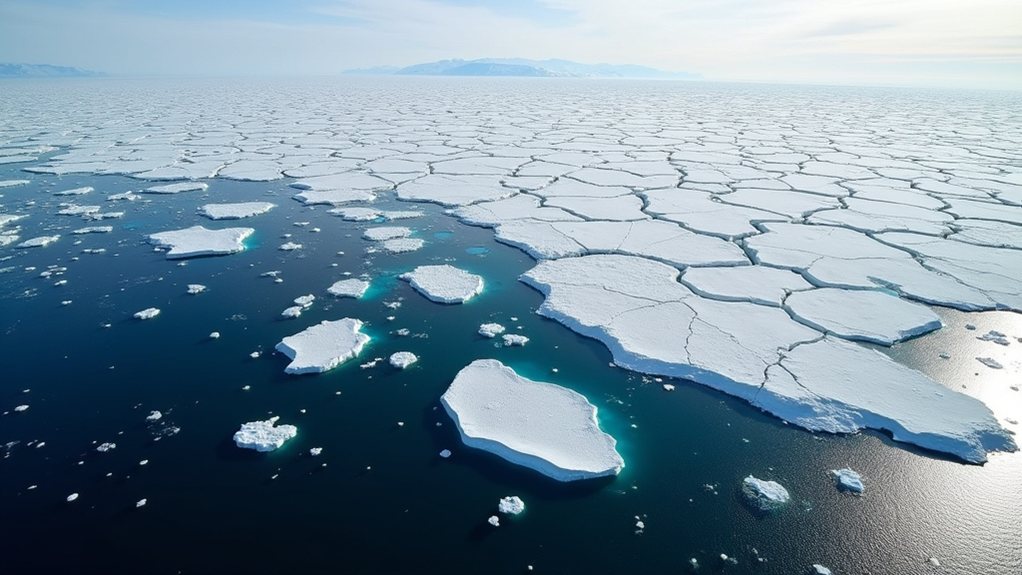
In 2025, the minimum extent of Antarctic sea ice plummeted to a staggering 1.87 million square kilometers, a size slightly larger than Texas and tied for the seventh lowest on record.
This figure marks an alarming 8% drop below the long-term average from 1993 to 2010, showcasing a troubling trend that has been worsening since satellite monitoring began.
An alarming 8% drop below the long-term average signals a troubling trend in Antarctic sea ice loss.
The Southern Ocean isn’t just having a bad hair day; it’s undergoing an identity crisis.
The surface waters are becoming saltier, reversing four decades of freshening. This increased salinity is like a bad cocktail at a party, resulting in weakened ocean stratification, which allows warmer deep water to mix with cooler surface layers. It’s like letting the hot soup mix with the cold ice cream—definitely not a recipe for maintaining sea ice!
As the ice retreats, it removes a crucial solar reflector, much like a disappearing sun hat on a scorching day. This means more heat is absorbed by the darker ocean surfaces, accelerating global warming.
Previous climate models, which had been sipping iced tea and predicting slow declines, are now caught off guard by this rapid change. The unexpected salinity-driven shifts in stratification are the plot twists nobody saw coming.
Given these unsettling developments, researchers are calling for continuous monitoring of the ice-ocean interactions. It’s as if the climate models need an urgent software update, and the scientists are scrambling to keep pace.
The recent years, with their record and near-record lows, reveal not just a story of sea ice loss, but a broader narrative of environmental change that could impact weather patterns and ocean currents globally. In fact, the data shows that the minimum extent for 2025 marks the second consecutive year below 2 million km², underlining the urgency of the situation.
Addressing this crisis requires implementation of marine protected areas that can help preserve critical habitats and build ecosystem resilience against climate impacts.
In the grand scheme of things, the Antarctic is telling us it’s not just melting; it’s sending out an SOS. Moreover, this alarming transformation is linked to a surge in Southern Ocean salinity that exacerbates the ice melt crisis.