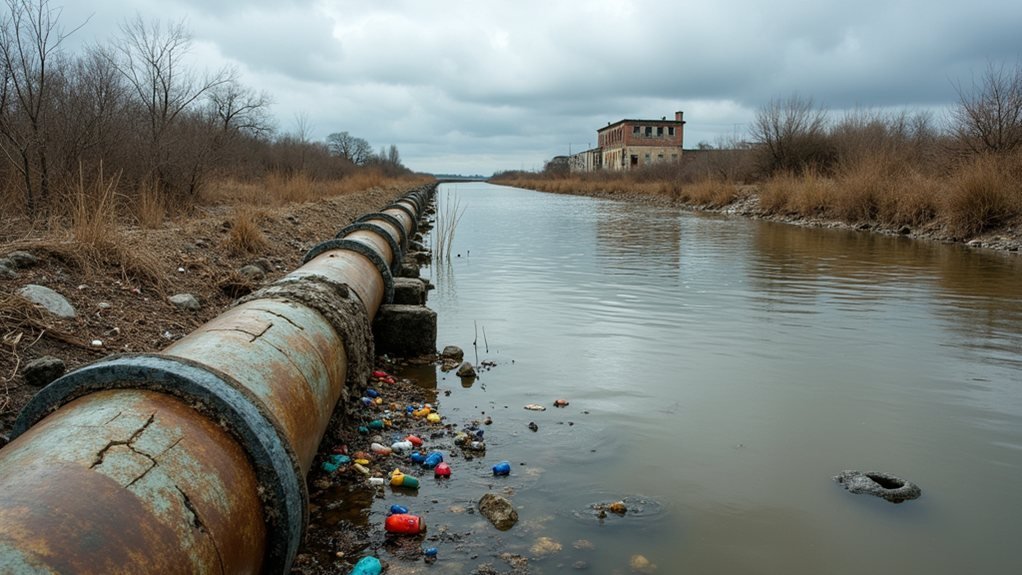

The UK is grappling with a water crisis, where nearly 1 million sewage discharges are reported each year—talk about a splash! Rising pollution incidents, a thirsty infrastructure, and growing water bills are draining household budgets. With reservoirs struggling at just 63.3% capacity, farmers are feeling the pinch too. As families brace for £33 yearly increases, the urgent need for savvy strategies and innovative tech is clearer than ever. Stick around to uncover how solutions are emerging!
Quick Overview
- The UK faces a worsening water crisis, with nearly 1 million sewage discharges recorded in 2024, the most since 2011.
- Rising water bills, increasing by an average of £33 in 2026, put additional financial strain on households, especially those in water poverty.
- Infrastructure remains under pressure due to drought conditions, with reservoirs at 63.3% capacity, necessitating urgent upgrades and smarter management strategies.
- A 29% increase in pollution incidents highlights the need for better wastewater management and reduced reliance on storm overflows by water companies.
- Long-term conservation strategies and innovative technologies are crucial for improving water quality and sustainability across sectors.
UK Water Crisis: Effects on Sewage Pollution
While it might seem as though clean water is a right as fundamental as breathing, the reality for the UK’s waterways is increasingly murky.
In 2024, nearly a million sewage discharges splashed into these waters—one every 30 seconds! The situation’s so dire that it marked the worst year for the water sector since 2011. In 2024, total pollution incidents reported reached an alarming 2,801, marking a 29% rise from 2023. Eight out of nine water companies faced an uptick in pollution incidents, and serious cases soared to record highs. Water companies are over-relying on storm overflows to manage rainfall instead of investing in infrastructure upgrades, exacerbating the crisis.
In 2024, the UK faced nearly a million sewage discharges—one every 30 seconds, marking the worst year for water quality since 2011.
With regions like Wales enduring a sewage spill more frequent than a coffee break, it’s clear that the UK’s water crisis is not just a drop in the bucket.
How Drought Forces Us to Rethink Our Water Infrastructure
As drought conditions continue to blanket parts of the UK, there’s an undeniable urgency to rethink the nation’s water infrastructure. With reservoirs below ideal levels and demand skyrocketing, it’s clear that building a few new pipes won’t cut it. Water companies are under pressure to innovate and reduce consumption—think of it as trying to fit a quart into a pint-sized jug. Recent improvements in England’s water resource position indicate a need for improved recovery status and smarter strategies. Meanwhile, farmers in drought-affected areas face challenges, struggling to refill irrigation reservoirs. This delicate balancing act demands smarter strategies and technology, or risk finding themselves in a hydrological game of musical chairs—only to discover that all the seats are gone. As of now, average reservoir storage is still at 63.3% capacity, which is below the typical level of 76%. This shift calls for long-term water conservation strategies across sectors.
Economic Impact of the UK Water Crisis on Households
The economic impact of the UK water crisis on households could be likened to a slow leak in a treasured vintage car; it may seem minor at first, but over time, it can drain the life out of a budget quicker than you can say “sudden bill increase.” Beyond price tags, the environmental cost is tracked using calculation methods to estimate the carbon footprint of water services. With average water bills set to rise by £33 annually from April 2026—a jump that translates to just under £3 a month—families throughout England and Wales are already feeling the pinch. Water bills have increased for those in water poverty, such increases mean choosing between essentials and a drop in quality of life, a precarious balancing act indeed. As a result, the average household water bills are now expected to increase by 5.4%, amplifying the pressures on already struggling households.