
As the world grapples with the pressing need to combat climate change, the recent COP28 agreements mark a significant turning point in the global energy shift, much like a pivotal moment in a thrilling sports match. For the first time, nations have collectively decided to shift away from fossil fuels, signaling the potential “beginning of the end” for this energy era. The agreements call for tripling renewable energy capacity by 2030 and doubling energy efficiency improvements—goals that seem ambitious, yet absolutely necessary.
The COP28 agreements signal a historic shift away from fossil fuels, heralding a new era of renewable energy and efficiency.
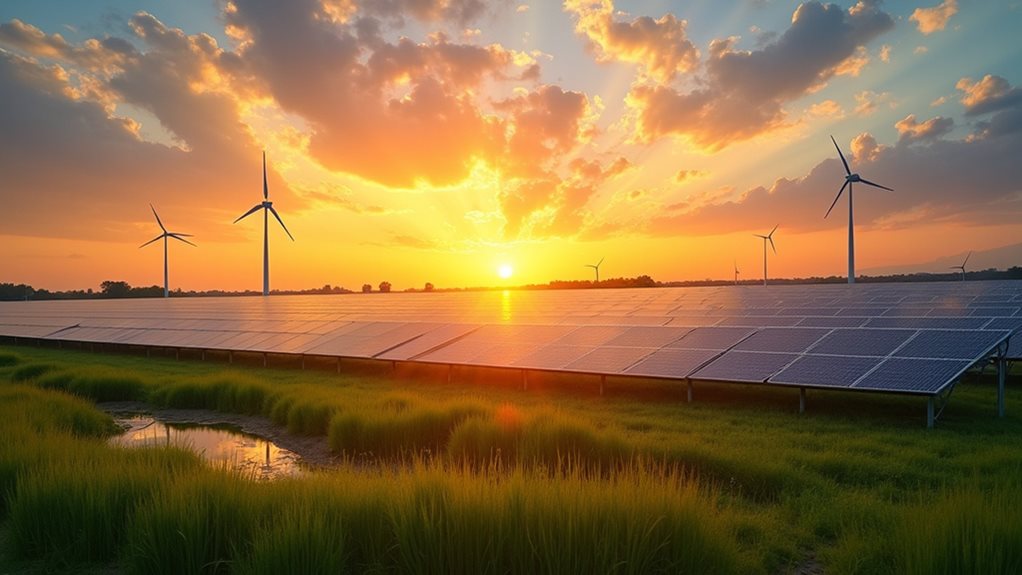
In 2024, global renewable capacity reached a whopping 4,448 gigawatts, with 585 gigawatts added that year alone. Solar energy, in particular, is booming; it alone saw an addition of 451.9 gigawatts. That’s enough energy to power a small city… or more realistically, your neighbor’s ever-growing collection of solar garden lights.
Wind energy is also on the rise, with global capacity hitting 1,133 gigawatts, thanks largely to the impressive strides made by countries like China and the U.S. The first Global Stocktake (GST) concluded at COP28, emphasizing the need for economy-wide emission reductions alongside the renewable energy goals. To achieve these ambitious targets, an additional USD 47 trillion in cumulative investment is necessary compared to the Planned Energy Scenario, highlighting the significant financial commitment required.
As ambitious as these numbers are, they come with challenges. High interest rates and supply chain hiccups threaten to slow deployment. Picture a traffic jam of energy projects waiting for approval—frustrating, right? Yet, with a projected global renewable energy market set to reach $2.026 trillion by 2030, the incentive is strong.
A major part of this shift also involves improving energy efficiency. The U.S. battery storage capacity nearly doubled in 2024 to 29 gigawatts, which means that clean energy storage is no longer a pipe dream but a burgeoning reality. The transition to renewables offers environmental advantages beyond carbon reduction, including improved air quality and reduced water consumption.
With the world’s electricity demand expected to soar, particularly from data centers, there’s a growing urgency for more renewable capacity. The COP28 agreements lay the groundwork for a promising, albeit challenging, future filled with the potential to reshape the energy landscape for generations to come.