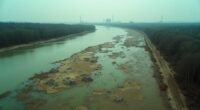
The UK has gained notoriety for issuing numerous oil and gas permits in protected nature sites, leading it to be labeled a top offender. With 120 permits overlapping 46 protected areas primarily in the North Sea, concerns for marine wildlife like seabirds and seals are escalating. Fossil fuel extraction disrupts ecosystems and contradicts the UK’s goal for net-zero emissions by 2050. The environmental implications are critical, and understanding the broader context can reveal more surprising facts about this pressing issue.
Quick Overview
- The UK grants oil and gas permits in 46 protected areas, leading globally in this practice.
- 120 permits overlap with vital habitats, raising concerns for wildlife like seabirds and seals.
- Fossil fuel extraction in these areas disrupts ecosystems and contributes to greenhouse gas emissions.
- Recent environmental policy reforms in the UK do not fully address biodiversity loss from drilling activities.
- The shale gas industry poses a dilemma between energy security and environmental protection goals.
Oil and Gas Permits: The Alarming Reality in Protected Areas
While nature enthusiasts might expect protected areas to be safe havens for wildlife, the reality is a bit more complicated, as the United Kingdom leads the world in granting oil and gas permits that overlap with these precious zones.
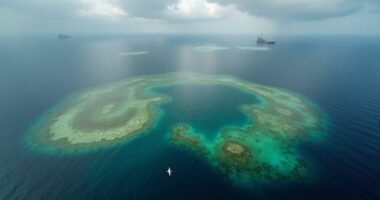
With 120 permits infringing on 46 protected areas, it’s like throwing a party in a library—utterly inappropriate. Many of these licenses are nestled in the North Sea, where seabirds and seals might wonder why their homes are suddenly under threat. This alarming trend highlights an essential question: can we truly protect nature while simultaneously digging it up for fossil fuels? Overlapping permits in protected areas have been found to exceed 690,000 km² globally, underscoring the scale of the crisis. Moreover, the shale gas industry in the UK has the potential to enhance energy security and create jobs, yet it raises significant concerns about environmental integrity in these vulnerable areas. Sustainable forest management demonstrates how resource use can be balanced with conservation through practices like biodiversity conservation and controlled harvesting.
Impacts of Fossil Fuel Extraction on Marine and Terrestrial Environments
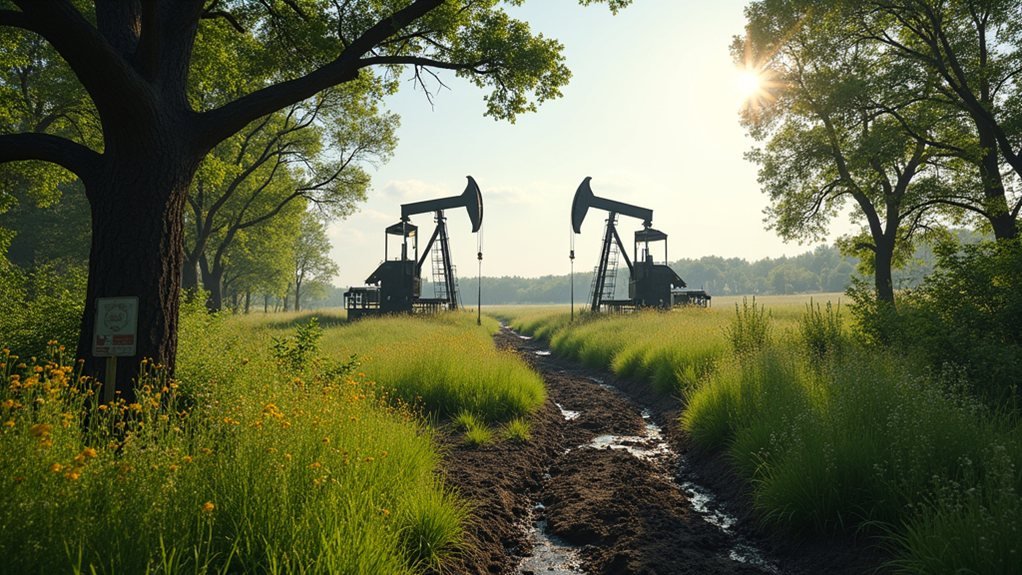
Fossil fuel extraction isn’t just a matter of sticking a pipe in the ground and hoping for the best; it’s a complex endeavor that sends shockwaves through both marine and terrestrial environments. Surface mining scars landscapes, while subsurface mining causes land to sink, disrupting agriculture. Meanwhile, oil rigs invade biodiverse waters, threatening ecosystems. The UK has committed to legal net-zero target by 2050, yet fossil fuel extraction continues to undermine these efforts. In 2021, transport accounted for 26% of total emissions, highlighting the urgent need for cleaner alternatives as extraction activities contribute to air pollution and greenhouse gas emissions. International reporting frameworks aim to standardize how such emissions are measured and disclosed, improving transparency around greenhouse gas accounting. Water pollution from mining operations introduces toxic chemicals, making it tough for farmers and fishers alike. As for air quality? Let’s just say that breathing near extraction sites can be as invigorating as inhaling a barbecue smoke cloud. The aftermath is a tangled mess for both nature and humanity.
Solutions for Fixing Gaps in UK Environmental Policy
As the world grapples with the urgent need for environmental reform, the UK is taking notable steps to address gaps in its environmental policy—a bit like patching up the holes in a well-loved pair of jeans.
Recent reforms, such as exempting smaller sites from biodiversity net gain requirements, ease the compliance burden. The introduction of environmental delivery plans allows developers to contribute to nature restoration through a levy, rather than individual assessments. Moreover, the upcoming digital waste tracking service will enhance accountability in waste management, further supporting environmental sustainability efforts. Businesses can also align operations with broader goals by integrating Sustainable Development Goals into their planning and reporting.
Meanwhile, the expansion of the UK Emissions Trading Scheme UK ETS aims to curb carbon leakage. Together, these initiatives form a proactive approach to environmental protection that aims to balance development and sustainability.