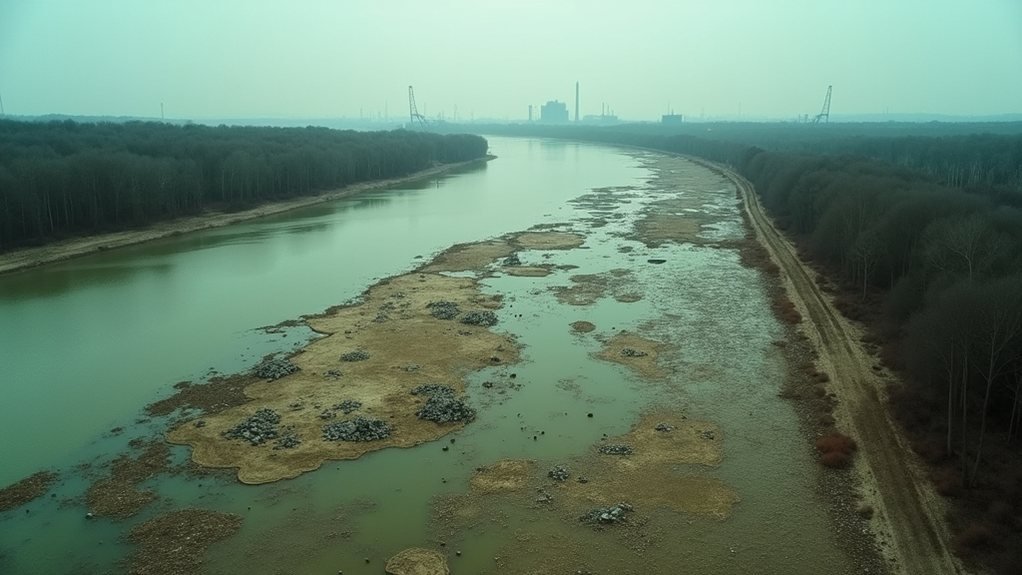

In January 2026, the Potomac River faced a monumental disaster when 300 million gallons of raw sewage polluted its waters, making it one of America’s largest sewage spills. E. coli levels soared to alarming heights, nearly 12,000 times higher than safe perimeters, posing serious health risks to anyone daring enough to dip a toe in. Fortunately, emergency responders sprang into action, launching recovery efforts and long-term plans to safeguard the river. The full story reveals even more urgent strategies for prevention.
Quick Overview
- In January 2026, 300 million gallons of raw sewage were released into the Potomac River over eight days, causing severe contamination.
- E. coli levels reached 4,884,000 MPN at the outflow point, posing significant health risks to the community.
- The spill resulted from aging infrastructure failures, highlighting urgent needs for waste management upgrades and preventive measures.
- Emergency responders implemented urgent actions, including temporary pumps to divert sewage and ensure community safety.
- A $3.8 billion Clean Rivers Project aims to prevent future spills and improve overall water quality in the Potomac River.
The Potomac River Sewage Spill: Scale and Risks
What happens when a massive sewage pipe decides to take a break—permanently?
In January 2026, the Potomac River faced one of the largest sewage spills in U.S. history, with 300 million gallons of raw sewage flooding its waters.
In January 2026, the Potomac River experienced a catastrophic sewage spill, releasing 300 million gallons of raw sewage into its waters.
For eight days, a staggering 40-60 million gallons poured out daily before a bypass system was installed.
E. coli levels skyrocketed, reaching 4,884,000 MPN at the outflow point—11,900 times the safe limit! E. coli contamination measured nearly 12,000 times above safe limits for human contact, highlighting the severe health risks posed by this disaster.
This disaster not only affected Maryland and D.C. but also raised alarms about aging infrastructure, proving that sometimes, city plumbing can be as temperamental as a teenager.
Experts warned that long-term remediation will require prioritizing waste reduction and infrastructure upgrades to prevent future catastrophes.
Health Risks: What to Watch Out For After the Spill?
Steering through the aftermath of the Potomac River sewage spill may feel like a high-stakes game of dodgeball, where the balls are germs and pathogens. With E.coli levels skyrocketing to nearly 12,000 times safe limits, vigilance is key. Avoid all contact with contaminated waters, and wash exposed skin immediately if contact occurs—think of it as a superhero move against nasty germs. Nearly 300 million gallons of sewage have entered the Potomac River, heightening the risk of exposure. The infrastructure failure that led to this catastrophe underscores the urgent need for better sewage management practices. Improving waste reduction and management strategies can help prevent similar disasters in the future.
Recreational activities, like swimming and fishing, are now risky business. Symptoms from E.coli exposure can include gastrointestinal issues and more serious health problems. Stay informed, monitor symptoms, and consult a doctor if feeling unwell; your health is the ultimate goal.
How We Are Responding and Preventing Future Spills
In the wake of the Potomac River sewage spill, efforts to counteract the fallout are in full swing, resembling a team of emergency responders racing against the clock. Temporary pumps have been installed to divert the sewage, while DC Water crews braved the icy weather to stabilize the situation. The serious threat to public health posed by the spill has prompted urgent measures to ensure the safety of the community. Additionally, the ongoing rehabilitation plan is critical in preventing future incidents and improving infrastructure. The Little Falls Pumping Station is on hold until water quality improves, ensuring drinking water remains unaffected. Future spills are being tackled with a $625 million rehab plan for the Potomac Interceptor and a $3.8 billion Clean Rivers Project. It’s a race against time, but the stakes are high, and everyone’s on board. Ecosystem recovery efforts are also underway to restore stream health affected by contamination.