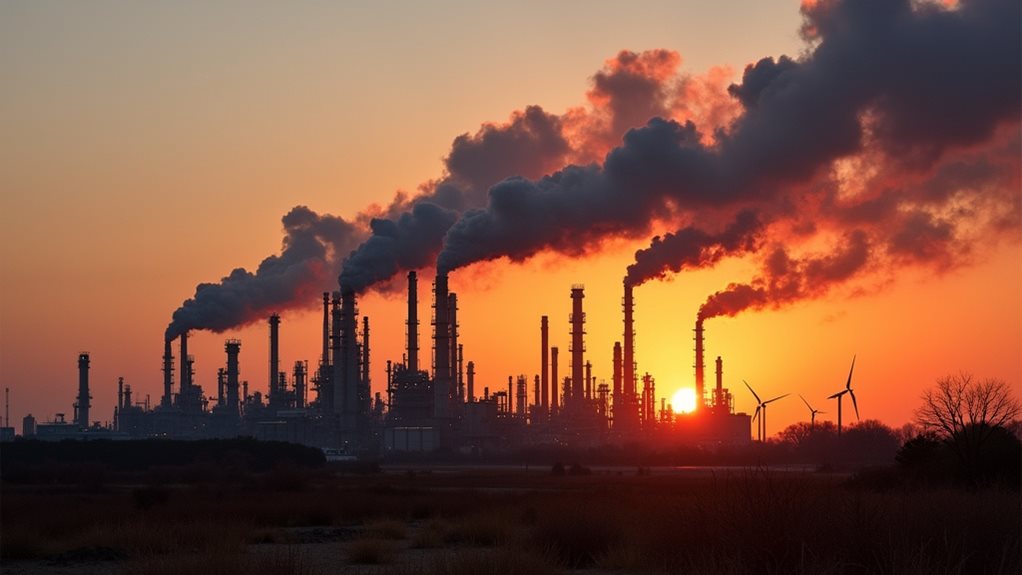

PetroChina’s carbon credit purchases have drawn eyes and raised eyebrows, particularly over concerns of greenwashing. Despite buying 1.2 million carbon credits in 2024 and leading the oil and gas sector, critics argue this could be just a smokescreen for a lack of real emissions reductions. With only eight of the top ten carbon credit buyers coming from heavily polluting industries, the skepticism about their genuine commitment to sustainability is palpable. Curious about the details? There’s more to this story.
PetroChina’s Carbon Credit Strategy Under Fire
In the world of carbon credits, PetroChina is like a heavyweight boxer stepping into the ring—big, bold, and ready to throw punches. With a reported purchase of approximately 1.2 million carbon credits in 2024, this giant ranks among the top buyers in the oil and gas sector. But as they lace up their gloves for carbon trading, the scrutiny over their environmental impact looms large, like a persistent referee watching for questionable moves.
PetroChina’s recent ventures include engaging in the first physically traded Japanese carbon credits, or J-credits, on the Tokyo Stock Exchange in 2023. While this sounds impressive, the details of these trades remain shrouded in mystery, with no specific types, volumes, or prices disclosed. It’s a bit like ordering a mystery box online—exciting until you realize you have no clue what’s inside. Their participation in carbon-neutral LNG transactions, including the receipt of their first carbon-neutral LNG cargo in 2021, adds another layer to their strategy of creating a vast pool of carbon assets. Additionally, the company is aligned with the coal India Ltd. in terms of exploring sustainable energy options, which could redefine its operational footprint. Furthermore, PetroChina aims to achieve net zero verified targets as part of its long-term strategy.
However, the company faces backlash for its carbon credit purchases, often viewed as greenwashing—a tactic of using offsets to mask the lack of real emissions cuts. After all, eight out of the top ten lifetime carbon credit buyers hail from heavily polluting industries, raising eyebrows about the integrity of the system. Critics argue that relying on these credits is akin to trying to eat cake while claiming to be on a diet. The lack of genuine sustainability often undermines their environmental claims, making consumers increasingly skeptical of their green initiatives.
PetroChina’s carbon credit purchases are often criticized as greenwashing—an offset strategy that conceals real emissions reductions.
PetroChina has established specialized teams to navigate this evolving landscape, positioning itself to capitalize on new carbon trading platforms. Yet, while they aim to play the part of a green champion, the public remains skeptical. Transparency is a critical issue, with limited disclosure on their voluntary carbon market transactions and methodologies. In a world increasingly concerned about climate change, PetroChina’s moves in the carbon credit arena may need to be sharper—and more genuine—to earn the trust of the spectators watching from the sidelines.