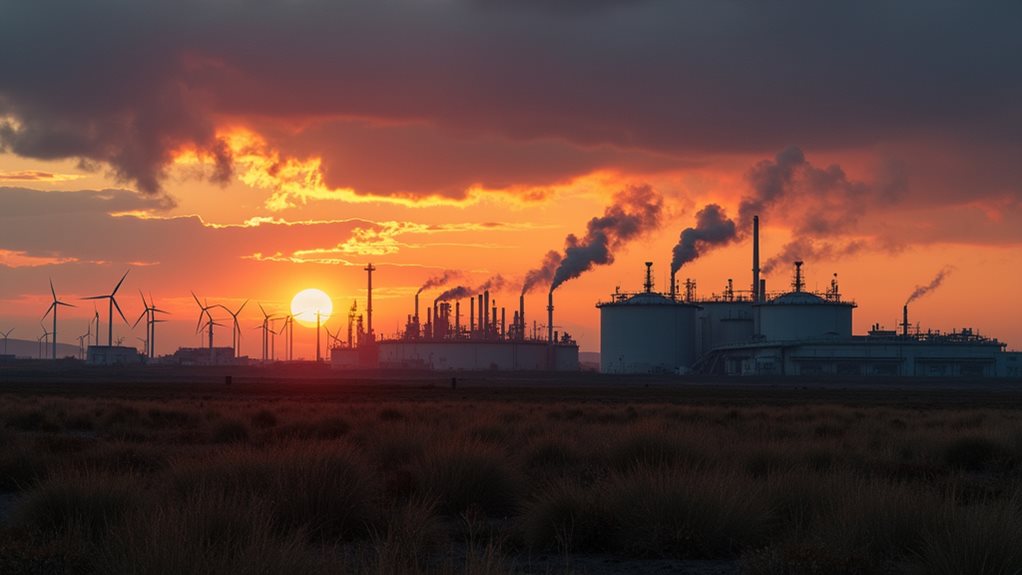

U.S. LNG exports might sound like a climate savior, but they’re more of a hidden culprit in the environmental game. While they promise cleaner energy, they leak potent methane, making it a heavyweight greenhouse gas. This slick operation could lead to massive CO2-like emissions, while most of their output merely swaps one fossil fuel for another. Add soaring domestic energy prices into the mix, and it’s clear this gambit may jeopardize a greener future. Curious? There’s more to unpack!
The Hidden Costs of LNG Exports
The climate consequences of U.S. liquefied natural gas (LNG) exports are not just a footnote in the environmental narrative; they are a headline that demands attention.
While LNG is often touted as a cleaner alternative to coal and oil, the reality is more complicated, resembling a high-stakes game where the house always seems to win—at least for the fossil fuel industry.
One of the main players in this drama is methane, a greenhouse gas that packs a punch, being over 25 times more potent than carbon dioxide in the short term.
Methane is a heavyweight contender in the climate fight, over 25 times more potent than carbon dioxide in the short term.
The LNG supply chain leaks methane at various stages—from extraction to transport—offsetting any potential climate benefits.
According to the Department of Energy, LNG exports could lead to a staggering 710 million metric tons of CO₂-equivalent emissions between 2020 and 2050. US LNG exports could grow from less than 0.1 Bcf/d in 2015 to nearly 12 Bcf/d in 2023, highlighting the urgency of addressing these emissions.
That’s like throwing a party for a few million of your closest greenhouse gas friends!
Understanding your carbon footprint helps quantify the environmental impact of individual choices against large-scale industrial emissions like those from LNG.
Now, let’s talk about substitution effects.
Only a meager 13% of U.S. LNG exports are expected to replace coal, and only 6% are set to swap out oil.
Most of this LNG is merely displacing other natural gas sources, which doesn’t help reduce fossil fuel use in a meaningful way.
Even worse, some of these exports may even replace zero-emission energy sources like wind and solar, akin to trading a bicycle for a gas-guzzler.
The lifecycle of LNG is another area of concern.
It’s not just about burning gas; emissions leak from every step of the process, like a leaky faucet in an old house.
Facilities that export LNG contribute to localized air pollution, adding another layer of environmental impact. LNG facilities often release harmful pollutants like methane and particulate matter, exacerbating health risks for nearby communities.
In the grand scheme, these factors create a significant roadblock to achieving climate goals.
Increased LNG exports raise domestic energy prices, disproportionately affecting low-income households.
As the U.S. ramps up fossil fuel infrastructure, the vision of a cleaner, greener future becomes clouded, leaving everyone to wonder if this gamble is worth the risk.