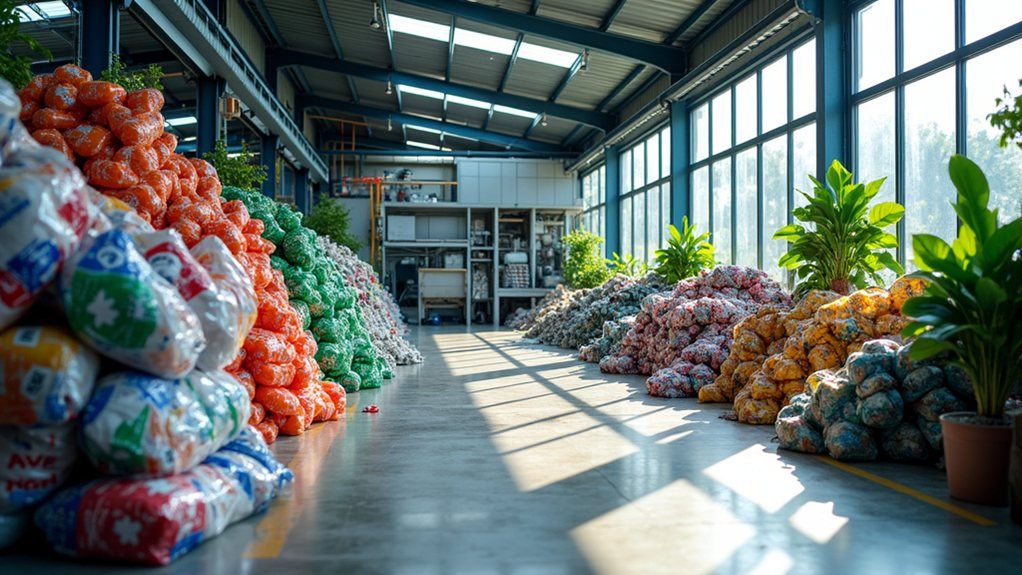

The UK is all about revamping hard plastics recycling with public tenders popping up like daisies in spring. Local councils like BCP are on the hunt for fresh solutions, like collecting garden furniture, while Belfast sets its sights on a 2026 bid. Compliance is key, with regulations ensuring plastics have a sprinkle of recycled content. It’s a race against time to tackle plastic pollution, and the excitement is palpable. Stick around to discover what innovative changes are on the horizon!
Quick Overview
- UK councils are seeking innovative solutions for hard plastics recycling through public tenders, like BCP Council’s tender for garden furniture collection.
- The Simplified Recycling Scheme launching in 2026 will standardize kerbside collections, enhancing infrastructure for recycled plastics.
- Compliance with Extended Producer Responsibility (EPR) and Plastic Packaging Tax (PPT) is essential for successful tender applications in recycled plastics.
- Local authorities are establishing drop-off points and improving recycling capabilities to support the UK’s recycling infrastructure.
- The UK Plastics Pact aims to increase recyclability targets, driving demand for public tenders focused on sustainable plastics solutions.
Key Insights Into UK Hard Plastics Recycling Tenders
As the UK grapples with its ever-growing plastic waste dilemma, the recent tenders for hard plastics recycling reveal both challenges and opportunities for local councils.
For instance, BCP Council’s tender seeks to restart collection of items like garden furniture, halted since August 2024. This tender, referenced as GBT Ref No: 133436329, emphasizes the importance of adhering to submission requirements for potential bidders. Additionally, this tender is part of an ICB (International Competitive Bidding) process, highlighting the competitive nature of these procurement opportunities.
Meanwhile, Belfast City Council is keen on separating and recycling hard plastics, with a bid deadline looming in January 2026. These tenders highlight the pressing need for innovative solutions in waste management. The environmental consequences of plastic waste demand urgent action from both government bodies and private sector partners.
Belfast City Council is eager to tackle hard plastics recycling, with a bid deadline approaching in January 2026.
As councils navigate procurement processes, they might just stumble upon the next big breakthrough in recycling—like finding a fiver in an old jacket!
Current Hard Plastics Recycling Opportunities
While the landscape of hard plastics recycling in the UK may seem intimidating, a wealth of opportunities is emerging that could transform the way waste is handled. The Simplified Recycling Scheme, starting in 2026, promises uniform kerbside collections, bidding adieu to the dreaded postcode lottery. Enter Shred Station, turning hard plastics into zero-waste wonders. Local authorities are stepping up, offering drop-off points for those pesky tubs and trays. High contamination rates affecting recycling efficiency highlight the need for improved systems to ensure that more plastics are properly processed. Supermarkets are joining the party too, with soft plastic collection services. With the UK Plastics Pact aiming for 70% of plastic food packaging to be recyclable, the future is looking brighter—and greener! Additionally, the widespread use of plastics in medical settings highlights the importance of effective recycling systems, as it demonstrates the significant role plastics play in various industries. Adopting conscious consumption habits can significantly reduce the amount of plastic waste that needs to be processed through recycling systems in the first place.
Understanding Compliance and Financial Frameworks for Tenders
Maneuvering the intricate world of compliance and financial frameworks for tenders can sometimes feel like trying to decipher a particularly challenging crossword puzzle—thrilling for some, head-scratching for others.
Extended Producer Responsibility (EPR) and the Plastic Packaging Tax (PPT) mean businesses must up their game, enhancing recycling capabilities while meeting rigorous standards. Compliance isn’t just a checkbox; it’s essential for securing tenders. With 51% of UK plastic packaging meeting the 30% recycled content threshold, businesses must ensure they are aligned with these standards to remain competitive.
Understanding state regulations across the U.S. can provide valuable insights for UK businesses looking to adopt international best practices for sustainable packaging strategies.
From mass balance certification, ensuring recycled content, to adhering to food safety regulations, every detail counts. Failure to comply? That’s like showing up to a potluck with empty hands—no recycled material claims allowed! Additionally, understanding the mass balance approach will be crucial for businesses to effectively track their recycled materials and meet the tax requirements.