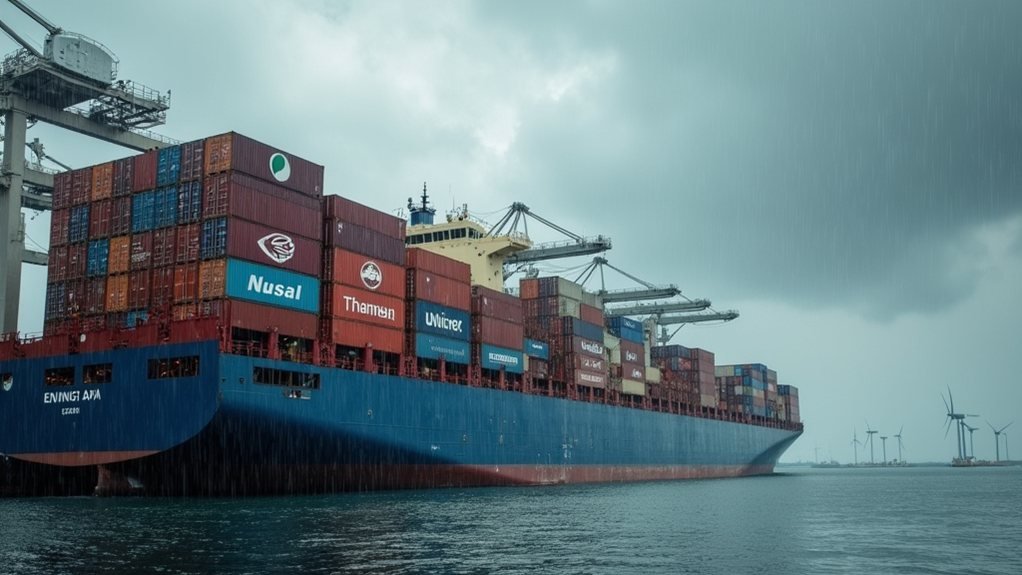

The UK Carbon Border Adjustment Mechanism (CBAM) is set to kick off on January 1, 2027, targeting high-carbon imports like steel and cement. Picture it as a carbon diet for trade, where importers face costs of £4–6 million annually unless they register with HMRC—think of it as getting a gym membership for emissions tracking. Compliance involves managing emissions certificates like a pro, and understanding this plays a vital role in future costs. Curious about how to prepare?
Quick Overview
- The UK CBAM will begin on January 1, 2027, targeting carbon-intensive imports such as steel and cement.
- Importers exceeding £50,000 in specified goods must register with HMRC by 2026 for compliance.
- Accurate reporting of embedded carbon emissions is essential, with direct monitoring techniques required for verification.
- Failure to manage emissions certificates can incur penalties, necessitating timely acquisition and surrender by September 30 each year.
- Robust IT systems are crucial for navigating compliance and avoiding penalties related to the CBAM.
What You Need to Know About the UK CBAM?
As the world gears up for a greener future, the UK’s Carbon Border Adjustment Mechanism (CBAM) promises to be a game-changer, particularly for industries that rely heavily on carbon-intensive products. Set to begin on January 1, 2027, it targets direct emissions from goods like steel and cement, much like a bouncer checking IDs at a club. Meanwhile, the CBAM Transitional Phase has already begun, setting the stage for this new regulatory environment. While small importers can breathe a sigh of relief, compliance will require meticulous record-keeping. Importers must also embrace a new carbon pricing system, ensuring they’re not caught short. With gradual adjustments, the UK CBAM aims to usher in a cleaner, more accountable trade landscape. This mechanism will target specific sectors such as aluminium, cement, and iron & steel, addressing the risk of carbon leakage. Implementing the CBAM represents one of several economic approaches to effectively reduce carbon emissions across various sectors while maintaining industrial competitiveness.
Impact of CBAM on High-Carbon Imports
While many may view the Carbon Border Adjustment Mechanism (CBAM) as just another regulatory hurdle, its impact on high-carbon imports is poised to reshape the UK’s trade landscape dramatically. Importers could face annual costs of £4–6 million as carbon permit prices fluctuate between £40–£60 per tonne. However, over 80% of importers may escape the burden due to a £50,000 registration threshold. This mechanism applies to sectors including aluminium, cement, fertiliser, hydrogen, and iron and steel which are critical in the fight against carbon emissions. This is particularly relevant since the CBAM targets countries with weaker climate laws, potentially encouraging more businesses to source cleaner materials. Companies implementing the CBAM will need to adopt evaluation methodologies to assess their suppliers’ environmental performance throughout the supply chain. Ironically, this also lightens the load for small businesses. With a shift towards less emissions-intensive suppliers, the CBAM may encourage greener practices, making it less about red tape and more about rethinking carbon-heavy imports altogether.
Essential Steps for UK CBAM Compliance in 2026
Steering through the maze of compliance for the UK’s Carbon Border Adjustment Mechanism (CBAM) in 2026 might feel like preparing for a pop quiz you didn’t study for, but fear not—this guide will help make sense of it all.
First, businesses importing over £50,000 of specified goods must register with HMRC.
Businesses bringing in over £50,000 of specified goods must ensure they register with HMRC for compliance.
Next, make certain accredited verifiers check your embedded emissions—otherwise, default values could inflate your costs. Properly implementing direct monitoring techniques can significantly improve the accuracy of your emissions data. To comply effectively, it’s essential to understand that CBAM requires businesses to report embedded carbon emissions accurately. Additionally, remember that actions in 2026 will affect future free allocation and compliance costs.
Don’t forget to acquire and surrender certificates for those emissions by September 30 each year.
Finally, develop robust IT systems to navigate this new landscape, keeping you in the compliance game and away from penalties.