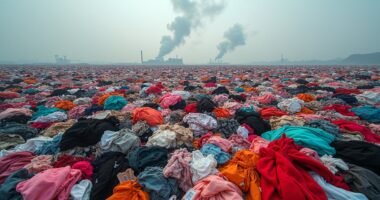

In a world where fashion often feels like a fast track to a landfill, waste-free textiles emerge as the stylish heroes of sustainability. These innovative fabrics aim to minimize waste at every stage of their lifecycle, from design to disposal. Imagine a world where every piece of clothing is crafted not only for style but also for the planet—a tantalizing thought, isn’t it? This approach aligns beautifully with circular economy principles, reducing our reliance on virgin resources and, in turn, helping to combat the staggering 92 million tonnes of textile waste generated annually—roughly one garbage truck every second!
Transitioning to zero-waste practices is not just a nice-to-have; it’s essential. By embracing methods that reduce greenhouse gas emissions and pollution from dyeing processes, the fashion industry could make a significant positive impact. Waste-free initiatives often go hand-in-hand with ethical labor practices and sustainable material sourcing, creating broader social benefits that are as invigorating as a cool breeze on a sweltering day. Effective recycling systems are also vital for achieving zero waste, promoting a circular and responsible system in the textile industry. Moreover, the use of ethical sourcing ensures that materials are produced under fair labor conditions, enhancing the overall sustainability of the fashion industry.
Transitioning to zero-waste practices is crucial for a sustainable future, benefiting both the planet and ethical labor.
Zero-waste design practices, like the clever “pattern tetris” technique, maximize fabric usage and minimize scraps. Think of it as a fabric puzzle where every piece counts! Creative minds repurpose deadstock fabrics into new products, reducing the demand for new materials. Made-to-order systems help limit overproduction, while projects like “Make/Use” encourage consumers to modify garments, extending their lifecycles and keeping them out of landfills. Switching to eco-friendly fabrics can dramatically reduce the environmental footprint of textile production while maintaining quality and functionality.
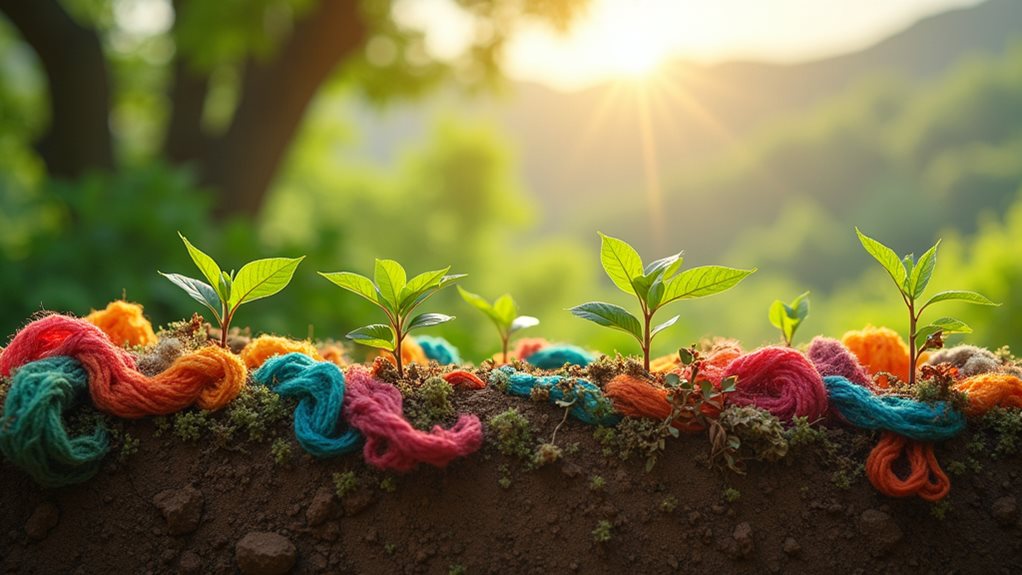
Sustainable fiber innovations are bursting onto the scene, with organic fibers like cotton and hemp leading the charge. These alternatives reduce the need for harmful pesticides and water-intensive farming. Biodegradable fibers decompose quickly in landfills, while recycled materials conserve resources, making them the eco-warriors of textiles.
With advances in technology, such as waterless dyeing methods, the industry is continuously evolving. By fostering robust recycling systems and embracing circular supply chains, waste-free textiles are not just a fleeting trend—they’re paving the way for a cleaner, greener future.