
The Red Chris Low-Carbon Copper Test showcases a game-changing achievement: a 70% reduction in greenhouse gas emissions! This is thanks to snazzy underground block-cave mining techniques that gently extract copper with minimal surface disruption. Think of it as nature’s way of mining without making a mess. By partnering with the Indigenous Tahltan Nation, the project enhances environmental stewardship while boosting operational efficiency. Curious about how these innovations might reshape the mining world? There’s more to explore!
Quick Overview
- The Red Chris Low-Carbon Copper Test achieved a 70% reduction in greenhouse gas emissions through underground block-cave mining techniques.
- This mining method minimizes surface disturbance and waste rock production, contributing to a smaller environmental footprint.
- Collaboration with the Tahltan Nation enhances environmental monitoring and ensures respect for sacred sites.
- Block-cave mining is projected to account for over 20% of copper supply growth by 2025, aligning with sustainability goals.
- The project emphasizes resource conservation and continuous improvement in mining practices for a cleaner future.
Achieving 70% GHG Reduction: Environmental Impact
While many might think that reducing greenhouse gas emissions is as challenging as finding a needle in a haystack, the Red Chris Low-Carbon Copper Test has proven that it can be done with a thoughtful approach. By shifting to underground block-cave mining, Red Chris achieved a stunning 70% reduction in greenhouse gases. This method cuts surface disturbance, minimizes waste rock, and drastically lowers acid-generating rock production—talk about a win-win! With consent from the Tahltan Nation, environmental monitoring becomes a team sport, ensuring the ecosystem stays in check. Fundamentally, this project is not just about copper; it’s about a cleaner, greener future. Notably, the expansion of the Red Chris Mine aligns with the major projects outlined in Canada’s Climate Competitiveness Strategy. Furthermore, the initiative demonstrates a strong commitment to sustainable mining practices, ensuring that ecological footprints are minimized. This approach exemplifies how resource conservation is crucial for maintaining environmental balance while meeting present needs without compromising future generations.
Efficiency Gains and Emission Reductions Through Block-Cave Mining
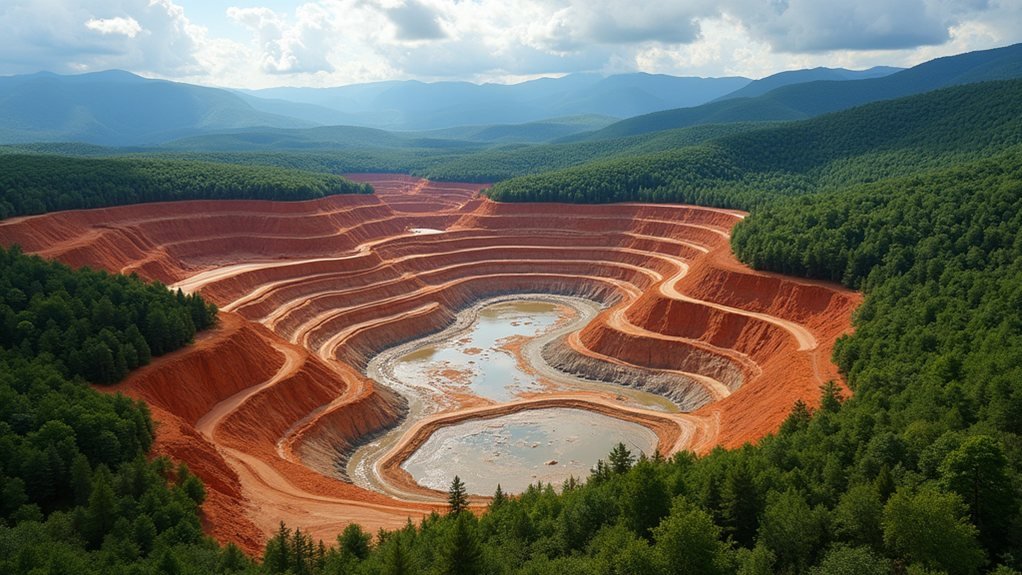
Block-cave mining is shaking things up in the copper extraction game, proving that efficiency and sustainability can go hand in hand. This gravity-based method smartly undercuts rock masses, allowing them to collapse into access tunnels. With operating costs between US$4-8 per tonne and production rates soaring to 100,000 tonnes per day, it’s like finding a cheat code in a video game. Plus, less waste rock handling means lower greenhouse gas emissions. Imagine using fewer explosives and energy while delivering ore to the mill. Post-mining operations include site rehabilitation efforts to restore ecosystems and minimize long-term environmental impacts. As open pits dwindle, block-cave mining emerges as the superhero of sustainable copper production. This technique is expected to contribute over 20% of copper supply growth by 2025, further cementing its role in the future of mining.
How Indigenous Partnerships Foster Sustainable Mining Practices
Mining practices are evolving, driven by the recognition that incorporating Indigenous knowledge can lead to more sustainable outcomes.
By blending traditional wisdom with scientific methods, companies can create environmental monitoring programs that respect sacred sites and guarantee biodiversity. Free, Prior, and Informed Consent ensures that Indigenous communities have a voice in decision-making processes, further enhancing the collaboration. Genuine equity involves ownership stakes with voting rights, profit sharing, and board representation, further solidifying the partnership.
Imagine consulting a local expert before planting a garden; that’s the essence of free prior informed consent!
Indigenous partnerships not only empower communities but also enhance equity ownership, as seen with the Tahltan Nation and Gulkula Mining Company.
This collaboration fosters environmental stewardship, training, and long-term benefits—a recipe for mining that’s good for business and even better for the planet. These partnerships often incorporate ecological practices that have sustained lands for generations, offering proven methods for maintaining environmental balance during and after mining operations.