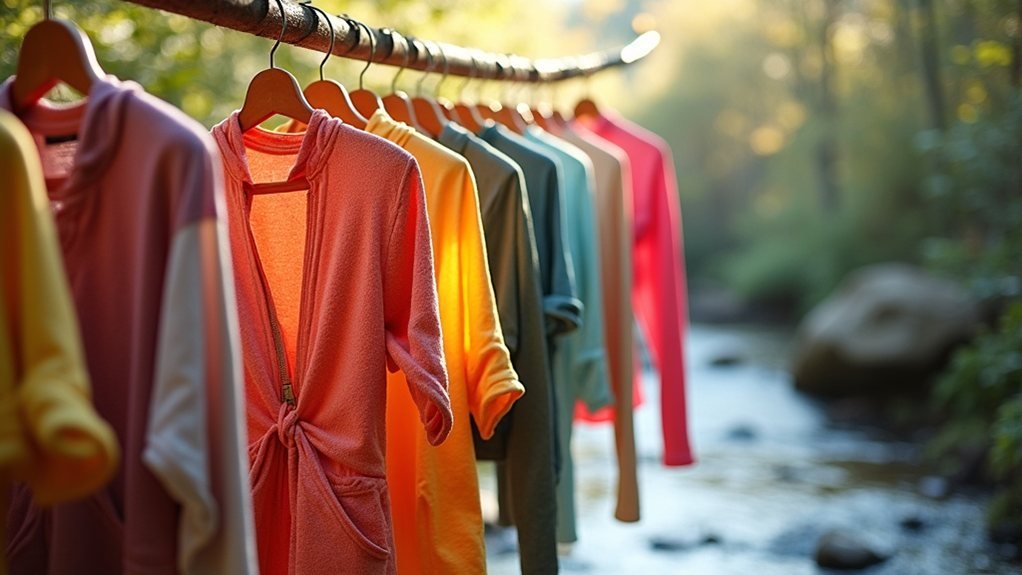

Activewear brands are turning to recycled polyester, made from post-consumer plastic bottles, to cut emissions and attract eco-conscious consumers. This sustainable fabric reduces CO2 emissions substantially—up to 75% compared to its virgin counterpart. With over half the revenue in the apparel segment, brands like Nike and Adidas are embracing this trend to meet the growing demand for planet-friendly gear. Curious about how these changes impact both the environment and consumer choices? There’s more to explore!
Quick Overview
- The global recycled polyester market is projected to grow significantly, driven by the apparel segment’s demand for eco-friendly materials.
- Major activewear brands like Adidas and Patagonia are increasingly adopting recycled polyester to align with sustainability goals and reduce emissions.
- Recycled polyester reduces CO2 emissions by up to 75% compared to virgin polyester, providing a substantial environmental benefit.
- Consumer demand for sustainable activewear is rising, with 75% of U.S. millennials prioritizing eco-friendly options in their purchases.
- Innovations in recycling PET bottles for activewear help address the plastic problem while appealing to ethically-minded consumers.
The Rise of Recycled Polyester in Activewear
In the ever-evolving world of activewear, recycled polyester is like that one friend who shows up to the party uninvited but ends up being the life of the event.
This material, derived from post-consumer PET bottles, is rapidly gaining traction, with the global market projected to soar from USD 15.52 billion in 2024 to USD 26.18 billion by 2030.
It’s the star of the apparel segment, snagging over half the revenue share.
As fitness culture thrives, brands are embracing recycled polyester for its performance features and eco-friendly benefits, aligning with the goal to increase recycled polyester market share from 14% in 2019 to 45% in 2025. Additionally, global sportswear fabric market valued at US$ 28.8 Bn in 2025 highlights the growing importance of sustainable materials in the industry.
Proper material disposal practices are crucial to maximize the environmental benefits of recycled polyester in the activewear industry.
Who knew old bottles could lead to a stylish workout wardrobe?
Environmental Challenges and Brand Commitments
While the allure of recycled polyester shines brightly in the activewear industry, it also brings along a few environmental challenges that require serious attention.
Despite reducing CO2 emissions by up to 75% compared to virgin polyester, the production still releases microplastic fibers during washes, which can infiltrate our food chain. This issue is exacerbated by the fact that an estimated 0.5 million tonnes of plastic microfibers are shed yearly from washing polyester and similar textiles. Additionally, recycled polyester is known for requiring less energy in its production process, which helps lessen its overall environmental impact.
These microplastic particles are particularly concerning as they can persist in aquatic ecosystems for hundreds of years, causing potential harm to marine life and human health.
Plus, recycling polyester isn’t a silver bullet; it can degrade over time, sometimes requiring new materials to maintain strength.
Major brands like Adidas and Patagonia are stepping up, but the journey toward sustainability is a marathon, not a sprint.
Every step counts, especially when dealing with our planet’s plastic problem.
Consumer Demand Driving Sustainable Innovations
Sustainable activewear is more than just a trend; it’s a movement driven by discerning consumers who are increasingly vocal about their values.
With 75% of U.S. millennials prioritizing sustainability, brands are jumping on the eco-bandwagon faster than a runner at a starting gun. Shoppers are willing to pay a premium for eco-friendly options, pushing companies to innovate with recycled polyester and organic materials. As the demand for eco-friendly options grows, the trend reflects a broader shift towards sustainable practices in the activewear market. Additionally, the market is estimated to grow to approximately $15 billion in 2025, highlighting the increasing consumer interest in sustainable products.
As wellness culture thrives, the demand for stylish, planet-friendly gear skyrockets. Consumers who take time to research brand ethics can make purchasing decisions that better reflect their environmental and social values.
Major brands like Nike and Adidas are racing to meet this demand, proving that sustainability isn’t just smart—it’s the new cool.